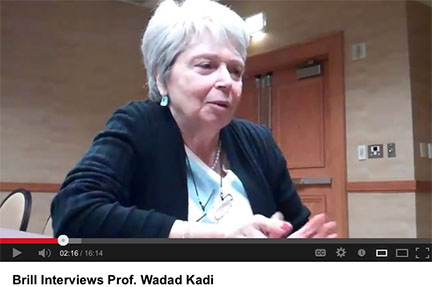
The well-known historian of Islam Wadad Kadi was interviewed at the 2012 MESA meeting in Denver about her work and her involvement in several projects with Brill. You can watch the interview on Youtube.
The well-known historian of Islam Wadad Kadi was interviewed at the 2012 MESA meeting in Denver about her work and her involvement in several projects with Brill. You can watch the interview on Youtube.
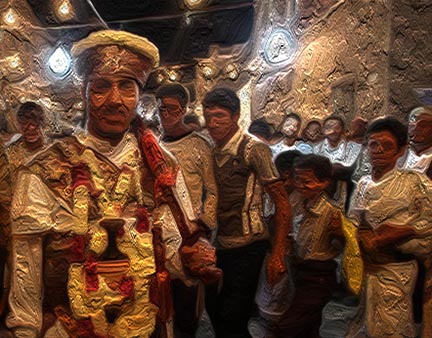
Yemenis seeking American citizenship pay exorbitant dowries in lucrative marriages of convenience
by Nadia Haddash, Yemen Times, March 7, 2013
Getting a visa from the American embassy in Sana’a is not easy for Yemenis hoping to travel to the U.S., and is especially hard for young, single men. So, many seek an alternative route: marrying a Yemeni-American woman.
By doing so, they typically become American, too, but could be in debt for years—they often have to pay huge dowries for their dual citizen brides.
Walid Al-Asimi, 28, met his wife, a Yemeni-American, in an English institute in Sana’a.
“When I knew that she would travel to America I decided to marry her,†he says. “I was surprised when her father asked me to give $30,000 as a dowry.â€
The majority of Yemeni youths who marry women with dual citizenship pay very high dowries, ranging between$10,000-50,000, or around YR 2 million- 11 million. By comparison, a typical dowry paid to a bride’s family in Sana’a is around $4,000 or YR 800,000. The dowry paid to brides’ families in rural areas of the country is much less still. Continue reading Passport Blues
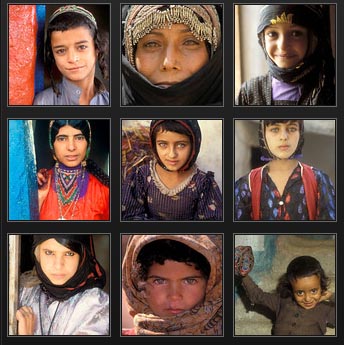
An exhibition of photographs of Yemenite Jews is on display from February 1- April 30, 2013 at the Katz Snyder Gallery in San Francisco. The entire collection can be seen online.
Israeli photojournalist Naftali Hilger’s breathtaking photos of Yemen reveal a nation and a landscape lost in time. His intimate portraits of the isolated Jewish communities of Yemen, taken over a period of 20 years, have been most recently seen in a widely heralded exhibition at the Museum of Islamic Art in Jerusalem.
Hilger’s life-altering love affair with the mysteries of Yemen began in 1987. Over six subsequent trips from 1987 through 2008, he documented not only one of the most ancient communities in the Jewish diaspora, but Muslim Yemen as well – its markets, its landscapes and the fascinating architecture of Sana’a and the rural villages.
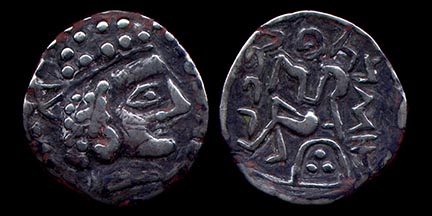
‘Great Ruler of Sogdiana, of the Tchao-ou Race’/Alram’s ‘Imitationsgruppe V’
Yueh Chih Principality of Sogdiana AR Tetradrachm, 130 BCE – 80 CE
The Fifth Seminar in Central Asian and Middle Eastern Numismatics in Memoriam Boris Kochnev will be held at Hofstra University on Saturday, March 16, 2013.
This seminar is free and open to the public. Hofstra is located in Hempstead, NY, easily accessible from NYC by the Long Island Railroad. For directions click here or here. The seminar will be held in Breslin Hall, room 112. For more information, contact Aleksandr Naymark or Daniel Martin Varisco.
Seminar Program:
10:00 am
Daniel Varisco (Hofstra University)
Opening Remarks
10:15
Vadimir Belyaev (Zeno.ru, Moscow) and Aleksandr Naymark (Hofstra University)
Archer Coins from South Sogdiana (1st – 3rd centuries C.E.)
10:45 pm
Pankaj Tandon (Boston University)
Notes on Alchon Coins
11:15 pm
Waleed Ziad (Yale University)
The Nezak – Turk Shahi Transition:
Evidence from the Kashmir Smast (mid 7th c. C.E.) Continue reading Central Asian and Middle Eastern Numismatics Seminar

The following Yemeni poem about qat (Catha edulis), accompanied by the photograph above of a Yemeni girl, was provided by a friend.
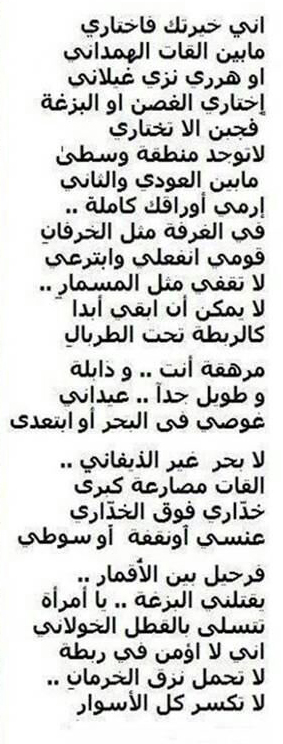
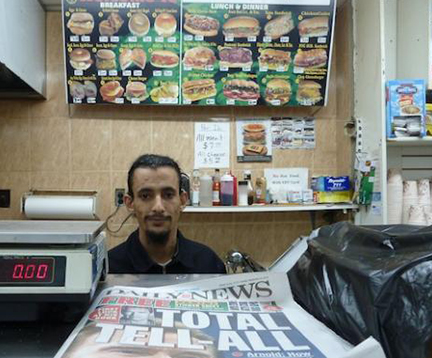
Photo by Kiran Sury
Yemeni Immigrant Saga
Every time you buy a beer or a lottery ticket at a bodega run by Mohamed Mohamed or one of his countrymen, you tap into a story of ethnic succession and a struggle to reconcile one culture with another
by Kiran Sury, The Brooklyn Bureau, Monday, Jan 7, 2013
On the corner of Flatbush Avenue and Glenwood Road in Brooklyn, Mohamed Mohamed runs Gold Star Deli Grocery with his father Mohamed and another employee, also named Mohamed, all of them from Yemen. This unique situation arises from Arabic nomenclature. “The customers get confused, but not us,” jokes the younger Mohamed. His father, whose full name is Mohamed Abdullah Alrohani, has come up with a more pragmatic solution: just call him Alex.
Across Glenwood Road, Sadek Almontaser mans the counter of the recently opened Glenwood Deli, a corner store. Cigarettes are sold behind the counter, drinks and chips line the walls, and a small deli section offers fresh sandwiches – staples for any bodega.
But to the discerning eye of a corner-store connoisseur, there are several features that are not so standard.
As Almontaser deals with a steady stream of lottery ticket buyers, he happily discusses how Iranian President Mahmoud Ahmadinejad isn’t a bad man, just misunderstood. His uncle Ali, who runs the deli station, is 11 years his junior, a genealogical feat made possible by his grandfather’s four wives back in Yemen. Ali will be happy to make you a BLT, though he may forget to mention that the bacon is made of beef, not pork. And every so often a man will enter the store, nod to Almontaser, and make his way downstairs. Not every bodega has a prayer room in the basement.
Across the street yet again, on the other side of Flatbush Avenue, the eponymous Yafai Deli and Grocery is run by Saad Yafai. He shares it with his brother Nabil, who is currently back home in Yemen. His entire family is in Yemen, and he and his brother take turns staying in America and running the family store.
Most New Yorkers would agree that the deli/convenience store, once the exclusive purview of Jews, Italians and Germans, has come to be associated with Latinos. The word bodega, which is used interchangeably with deli, is Spanish for “warehouse” or “cellar”. According to data from the Brooklyn Chamber of Commerce, the number of firms in the borough classified as supermarket or convenience stores almost doubled during the first decade of this century. But the three stores on the corner of Glenwood Road and Flatbush Avenue show that Latinos are no longer dominant, as shifting demographics have opened up a new ethnic segment of the market. An influx of Arabs has brought a corresponding increase in Arab storeowners, each eager to pursue his own version of the American Dream.
* * * * *
Clifton Clarke, professor of finance and business management at Brooklyn College, says that shifting populations opened a void for new businesses to fill, and that companies often change according to their target market. When Arab immigrants started to populate new neighborhoods, it made sense for them to manage the corner stores as they could better cater to Arabic needs. “Ethnicity, population, drives the type of businesses that are developed,” he says. “And these bodegas, which are now mostly run by Arabs, just fit in nicely.” Continue reading Bodega Yemeni Style in Brooklyn
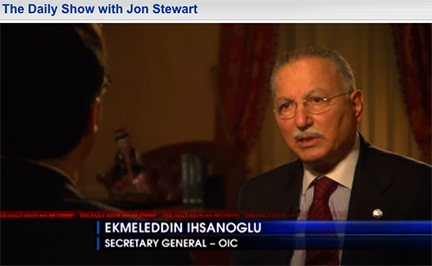
In case you were too busy eating your Valentine candy on February 14 and missed a rather hilarious interview of The Daily Show‘s John Oliver with Ekmeleddin Ihsanoglu, head of the Organization of Islamic Cooperation, this is available online here. My question is: how does The Daily Show, which is all about satire, schedule serious people for interviews?
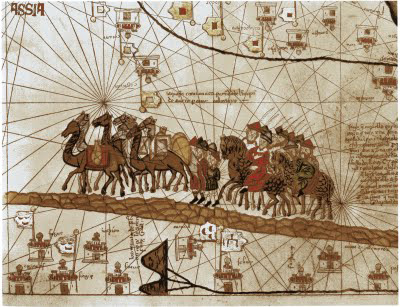
Silk Road
[One of the most widely read Holy Land travel narratives of the 14th century was attributed to a certain Sir John Mandaville. Some scholars believed it was compiled from writings of It appears to have been compiled from the writings of William of Boldensele, Oderic of Pordenone, and Vincent de Beauvais. Whoever the author, it is a fascinating read for the positive depiction of Islam. But part of the praise is to heap shame on the Christians for not keeping faith as well as these Saracens. Martin Luther used the same tactic, even accusing the Catholic Church of being worse in keeping faith than the Turks of his day. The entire book is online, but here is the part comparing Muslim and Christian devotion. For part one, click here.]
And, therefore, I shall tell you what the soldan told me upon a day in his chamber. He let void out of his chamber all manner of men, lords and others, for he would speak with me in counsel. And there he asked me how the Christian men governed them in our country. And I said him, “Right well, thanked be God!â€
And he said me, “Truly nay! For ye Christian men reck right nought, how untruly to serve God! Ye should give ensample to the lewd people for to do well, and ye give them ensample to do evil. For the commons, upon festival days, when they should go to church to serve God, then go they to taverns, and be there in gluttony all the day and all night, and eat and drink as beasts that have no reason, and wit not when they have enough. And also the Christian men enforce themselves in all manners that they may, for to fight and for to deceive that one that other. And therewithal they be so proud, that they know not how to be clothed; now long, now short, now strait, now large, now sworded, now daggered, and in all manner guises. They should be simple, meek and true, and full of alms-deeds, as Jesu was, in whom they trow; but they be all the contrary, and ever inclined to the evil, and to do evil. And they be so covetous, that, for a little silver, they sell their daughters, their sisters and their own wives to put them to lechery. And one withdraweth the wife of another, and none of them holdeth faith to another; but they defoul their law that Jesu Christ betook them to keep for their salvation. And thus, for their sins, have they lost all this land that we hold. For, for their sins, their God hath taken them into our hands, not only by strength of ourself, but for their sins. For we know well, in very sooth, that when ye serve God, God will help you; and when he is with you, no man may be against you. And that know we well by our prophecies, that Christian men shall win again this land out of our hands, when they serve God more devoutly; but as long as they be of foul and of unclean living (as they be now) we have no dread of them in no kind, for their God will not help them in no wise.†Continue reading Travels of Sir John Mandaville, 2