All posts by tabsir

Coffee and Yemen

Coffee and qahwa: How a drink for Arab mystics went global

By John McHugo, BBC News Magazine, April 17

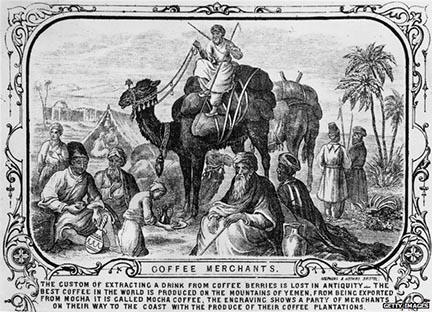
The Arab world has given birth to many thinkers and many inventions – among them the three-course meal, alcohol and coffee. The best coffee bean is still known as Arabica, but it’s come a long way from the Muslim mystics who treasured it centuries ago, to the chains that line our high streets.

Think coffee, and you probably think of an Italian espresso, a French cafe au lait, or an American double grande latte with cinnamon.

Perhaps you learned at school that the USA became a nation of coffee drinkers because of the excise duty King George placed on tea? Today ubiquitous chains like Starbucks, Cafe Nero and Costa grace every international airport, and follow the now much humbler Nescafe as symbols of globalisation.

Coffee is produced in hot climates like Latin America, sub-Saharan Africa, Vietnam and Indonesia, and you could be forgiven if you thought it is a product from the New World like tobacco and chocolate. After all, all three became popular in Europe at more or less the same time, in the 16th and 17th Centuries.

In fact, coffee comes from the highland areas of the countries at the southern end of the Red Sea – Yemen and Ethiopia. Continue reading Coffee and Yemen →
A Rich Look at the Kurds, #1

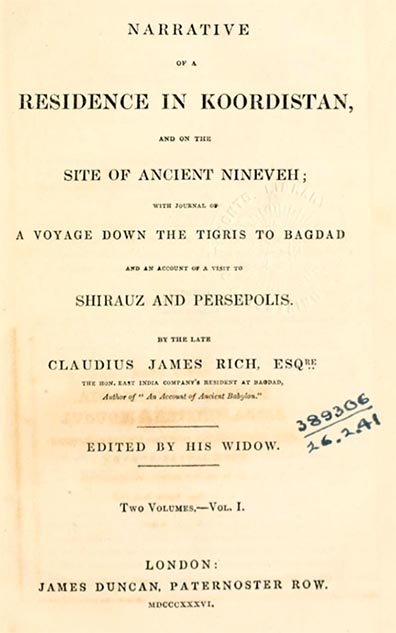
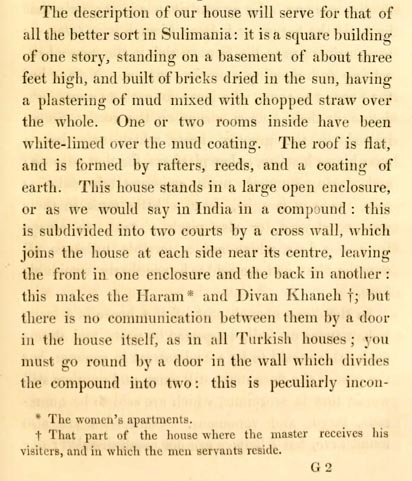
Old travel books never cease to delight me. While century-and-more books used to be available mainly in rare book collections of major libraries, the magic of archive.org brings digital life to the genre. Take, for example, the travel account of Claudius James Rich, whose 1820 trip from Baghdad, where he was posted as a British diplomat, to Kurdistan is a fascinating account of the Kurdish area almost two centuries ago. Born on March 28, 1787 near Dijon in Burgundy, the lad grew up in Bristol, England. He was tutored in Greek and Latin, but at the age of eight or nine he saw a book in Arabic and his appetite was whetted. By the age of fifteen, he had made great progress in Arabic, Hebrew, Syria, Persian and Turkish. Rich came of age when “Oriental Studies” carried no stigma. In 1804 he made his way through Malta and Italy to Istanbul and Egypt.

Like Burton, who would follow, Rich dressed as a Mameluke and left Egypt for Palestine and Syria. In Damascus he visited the Great Mosque. Then on he trekked to Aleppo and Baghdad before continuing on his way to India, where he arrived in 1807. A year later he married and set off to be the British Resident in Baghdad. He was an avid collector of manuscripts, many of which ended up in the British Library, coins and antiquities. He was one of the first Englishmen to describe the ruins of Babylon. His health began to deteriorate in 1813 and by 1821 he died of cholera in Shiraz.

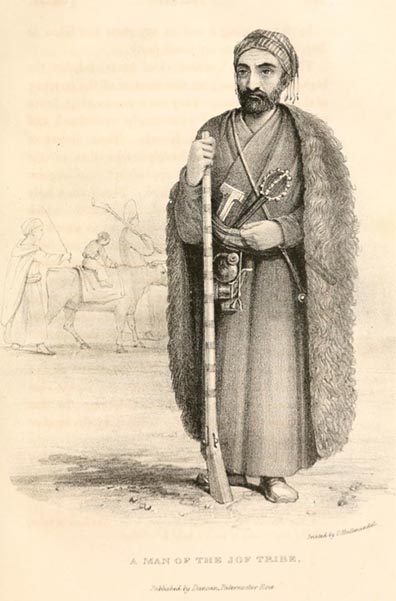
Among the people he met in Kurdistan were important members of the Jaff family, as he describes below:

Continue reading A Rich Look at the Kurds, #1 →

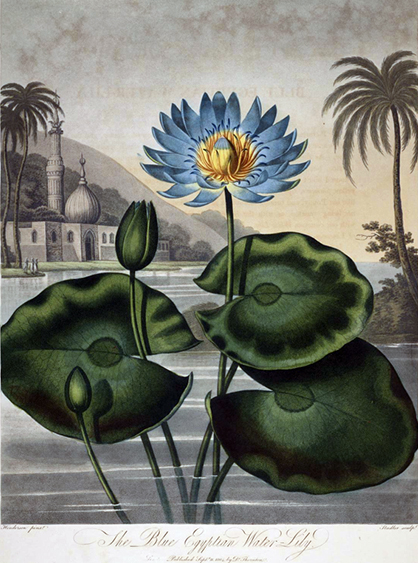
The Egyptian Blue Lotus

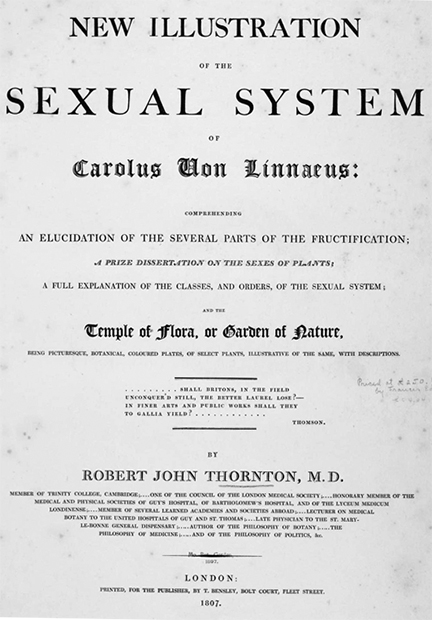
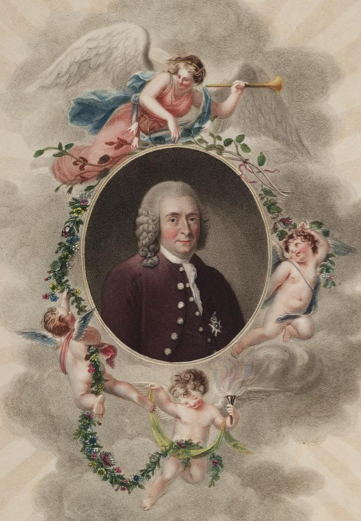
Few names are more revered in the early history of botany than Linnaeus, whose taxonomic system systematized the effective ordering of plants and animals according to sexual reproduction. Although he himself did not doubt that certain genera were created by the God of Genesis, his system could easily be adapted after Darwin introduced a mechanism that challenged the previous dogma of “fixity of species” since Eden. There were numerous artists who contributed to drawing the vast amount of new plants and animals that Linnaeus began to classify. One of my favorite works is by the physician Robert John Thornton, a fellow of Trinity College, Cambridge, who in 1807 published his New Illustration of the Sexual System of Carolus von Linnaeus.


Robert John Thornton

Thanks to archive.org, this beautiful volume can be read online. This is a delightful read, when it is not possible to visit a real garden. The volume is dedicated to the British queen, and begins with the following metaphor:

In Eastern Language high and mighty Potentates are compared to lofty Trees which afford Food and Shade to the sun-burnt Traveller. In the more temperate Regions of the Earth, Kings and Princes are contemplated as the Sun, which sheds his benign Radiance everywhere, inspiring each Object with new Life and Refreshment: by the Concurrence, therefore, of all Nations, the great Attribute of Sovereignty is Protection-, from conferring of which by Your Most Gracious Majesty, the Science of Botany in Great Britain chiefly owes its present Advancement…

The text consists of charts explaining botanical terms and a series of illustrations and basic descriptions of flowers. I present here the pages dealing with the blue Egyptian water-lily (Nymphaea coreulia), with the exquisite image of the plant.

Continue reading The Egyptian Blue Lotus →

Hezbollah and Bashar: Another Unholy Alliance


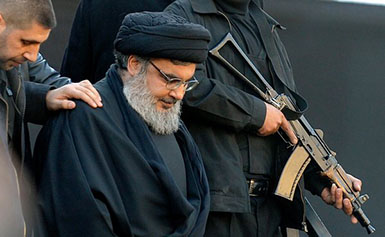
Hezbollah leader Hassan Nasrallah; Photograph by Wael Hamzeh/European Pressphoto Agency

My friend Omid Safi has created a provocative blog entitled What Would Muhammad do? Today I would like to ratchet up the commentary game to an approach which may, at first glance, seem sacrilegious. Given that the Lebanese “Party of God” (Hezbollah) is now known to be sending its fighters to support the Syrian dictator Bashar al-Asad, it is time to ask “What Would Allah do?” As much as I admire the spiritual sentiment of the crucified mystic al-Hallaj, I am not advocating oneness with the Supreme Being. But if I were to try and imagine what Allah would say about the current trials besetting his umma, I think I might begin by insisting that those who spread messages of hate and turn jihad into an excuse for political gain stop using my name. The Shi’a at least had the common decency to call themselves shi’at Ali, rather than presume from the start that they exclusively spoke for me. If these partisans of the hundreds of sects that have evolved since the Prophet Muhammad received the Quran want to hear me, they should stop selecting isolated verses from my message for their own agendas. Submission to Allah is the message of Islam, not submission to any party claiming to be Allah’s party.

Muslims should remember the history not only of their faith, but also the religions founded by other of my prophets. Jews and Christians are not infidels; their lives are as precious to Allah as those of Muslims. Muhammad was sent as the “seal” of the prophets, not to brag that he was superior to my other prophets. Each prophet was sent for a specific purpose, to guide people at different times in history. Muhammad received the Quran not so everyone after that could stop time and live as though it was still 7th century Mecca and Medina. Look at his life and you will see that he was a mediator, who preached salam and knew full well that the greater jihad took place within the individual. Jews and Christians heard from their prophets that humans are not divine, not perfect, and easily seduced to go astray. But Moses gave commandments to run society, Jesus showed the power of love to conquer hatred and Muhammad was a living example of how to live, but not an icon to follow blindly because of the recorded faulty memories of his companions. Continue reading Hezbollah and Bashar: Another Unholy Alliance →

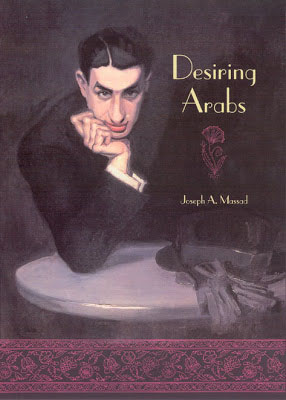
Less than Desirable Review of “Desiring Arabs”

Joseph Massad: an Occidentalist’s Other Subjects/Victims

by S. Taha, The Arab Leftist

Joseph Massad, an associate professor at Columbia University and a now prominent figure in the US academic field of Middle Eastern studies, came to acquire his status through a hotly debated and highly acclaimed book, Desiring Arabs. Massad, who claims to be the disciple of another foundational academic figure from Columbia, Edward Said, seeks to complete his patron’s Foucauldian project on Orientalism. Said, who strikes me as a much more modest, engaged and consistent intellectual than his self-styled “disciple”, is best known for his critical study of “Orientalism,” which looks into the representation and construction of the “East/Orient” as Other to the Western/European self, a construction that, as Said had shown, was deeply engaged with the process of modern imperial expansion and colonialism. This process of domination was what both produced the European “will to know” the subject “Other” and enabled its realization “in an increasingly profitable dialectic of information and control.” However, while employing Michel Foucault’s analytical grid of power/knowledge and his methods of discourse analysis, Said’s project remains incompletely Foucauldian, since it does not probe into the effects of the colonial discursive regime of power/knowledge on the formation of the modern Arab subjects who languished under it for centuries. Therein, Massad makes his academic intervention and contribution, armed with Foucault’s conceptual tools to investigate sexual identities and subjects as effects and products of colonial power. Such territory of “subject formation” under colonialism, which Massad has ventured into is indeed an extremely slippery and delicate one, fraught with questions of agency and subjectivity, since it is not only an investigation into the workings of colonial power, but rather into the very subjectivity and the very being of those whom power represents and brings into its domain and universe of discourse. It is an investigation into the relationship between Western and non-Western, between colonizer and colonized with all that an interrogative representation of such relationship might, adverdantly and inadverdantly, entail about the truths, histories and identities of the two sides of the imperial divide. Continue reading Less than Desirable Review of “Desiring Arabs” →