All posts by tabsir

Taksim is not (yet) Tahrir

By James M. Dorsey, The Turbulent World of Middle East Soccer, June 2, 2013

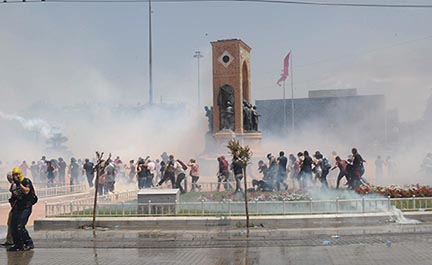
Almost a week of countrywide protests in Turkey have left an indelible mark on the country’s political landscape: broad discontent with the policies of Prime Minister Recep Tayyip Erdogan’s policies and increasing haughtiness bubbled to the surface; militant soccer fans thousands of whom joined the Taksim Square protests united and were politicized; and the role police force plays in solidifying opposition groups and resolve was highlighted.

Mr. Erdogan’s intransigence and hard-handed police attempts to suppress the protest with tear gas and water cannons swelled the ranks of the demonstrators and turned a demand for perseverance of a 75-year old Istanbul park into a massive call for the prime minister’s resignation. Thousands of militant fans of Istanbul’s three rival soccer clubs led by the left-wing, most politicized of the support groups Carsi, the ultras’ of Besiktas JK, joined forces for the first time in 30 years as they march to Taksim Square. So did rival soccer fans in other cities.

Comparisons between Taksim and Cairo’s Tahrir Square that has come to symbolize the ability of the street to topple a government are tempting. To be sure, there are superficial similarities but these are outstripped by the differences. The two square share the unification of rival soccer fans with a history of fighting one another; the occupation of a main city square; the protesters’ slogan: Erdogan, istifa! or Erdogan resign in imitation of Egypt’s Mubarak irhal! or Mubarak leave!; the violent police crackdown; and the ultimate at least partial government backdown.

But unlike mass demonstrations that toppled leaders in North African nations, the protests in Turkey are against a democratically elected leader who has won three elections with a respectable majority, presided over a period of significant economic growth and repositioned his country as a regional power with global ambitions. They also occurred in contrast to Arab countries in a country that despite all its warts is democratic and has a strongly developed, vociferous civil society. Continue reading Taksim is not (yet) Tahrir

Tabsir Redux: Traveling Light in Arabia

[Note: the following list of items for light camping in Arabia is provided by G. Wyman Bury for the early part of the 20th century.]

CAMP EQUIPMENT
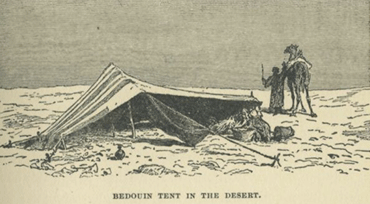
Try to do without a tent. Arabs hate pitching tents after a long day’s march, and seldom pitch them well. They draw fire and afford no protection, while preventing your own observation; they also betray the site of your camp to bad characters and casual callers on the look out for supper.

BEDDING
Avoid Wolseley valises or anything with pleats and folds, which become the permanent abiding places of parasitic insects.
‘Blankets.’ One each for the men. A few extra for convalescents or invalided men. Two for yourself.
‘Pillows.’ Carry your spare clothes in a green canvas sack. Continue reading Tabsir Redux: Traveling Light in Arabia

The Myth of the “Yemen Model”


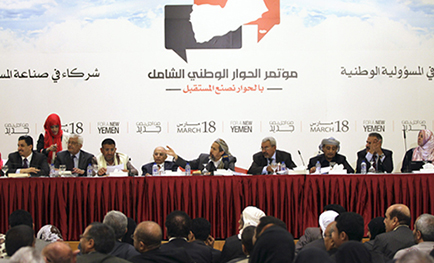
Yemen’s Abdul Wahab al-Ansi (C), secretary-general of the party Islah, speaks during a session of the National Dialogue Conference in Sanaa, March 23, 2013. (photo by REUTERS/Mohamed al-Sayaghi)

by Atiaf Zaid Alwazir, Huffington Post, May 29, 2013

Shortly following the internationally funded uncontested election in Yemen, a high-ranking western diplomat berated me for not voting. When I asked him, “would people in your country be happy with a one-person election?” He responded: “people in my country are not trying to kill each other!”

While not all diplomats think this way, unfortunately, that simplistic and ignorant statement is what drives much of western policy on Yemen — if there is a policy — and it is also why it is expected that Yemenis should accept half solutions — should in fact celebrate them!

Maybe misconceptions of Arabs as apolitical, who were just “awakened” by the “Arab Spring,” leads to the belief that anything is a step forward. These misconceptions, if internalized, lead to flawed analysis, and worse they can become disastrous policies.

This is egregiously exemplified by Thomas Friedman’s recent New York Times op-ed (on May 11) where, for example, he states that “the good news is that — for now — a lot of Yemenis really want to give politics a chance.” Friedman is referring to the internationally backed National Dialogue Conference (NDC) in Yemen. The NDC began in March 2013 and is to last for six months, with 565 delegates tasked with providing recommendations and culminating in writing of a new constitution. Friedman’s statement attempts to celebrate Yemenis, while in fact downplaying an entire history of political participation and ignores Yemen’s cultural tradition of dialogue and political pluralism. Yemen has had dialogues before and has operated in a relatively diverse political sphere. The movement for change in 2011 is a culmination of years of activities in the south and north.

Neglecting all of that naturally does not present a thought-out article. Continue reading The Myth of the “Yemen Model”

Timbuktu and the Missing Manuscripts


Destroyed manuscripts in Timbuktu; photograph by Eric Feferberg/Agence France-Presse — Getty Images

The Mali version of Nigeria’s Boko Haram, calling itself Ansar al-Din, not only went after Western knowledge but earlier Muslim sources as well. When the extremists ran amok in northern Mali last year, they destroyed Sufi shrines, beat women whose veils were not long enough, flogged men for daring to smoke or drink and did just about everything they could to drag Islam into the mud. But they did not get to burn the vast number, estimated at some 300,000, of Islamic manuscripts stored in collections across Timbuktu. The story of how donkeys and ingenious local men, with a million dollars in funding from abroad, were able to smuggle the precious written documents to safety is told with flair by Sudarsan Raghavan in yesterday’s Washington Post.

Below is the end of the article, styling the rescue operation as an Indiana Jones Moment…

It was the first stage of that mission that brought Traore and his donkey caravan to the old-city streets of Timbuktu on that August night. His grandfather had helped him load the donkeys, but he stayed behind as Traore and three other men set out with the manuscripts.

The rain, in the end, helped them. The jihadists were not at their checkpoints, preferring to stay indoors. Continue reading Timbuktu and the Missing Manuscripts

Coffee and Yemen

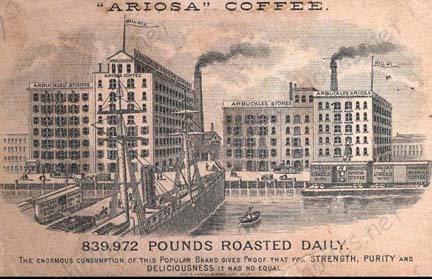
Coffee and qahwa: How a drink for Arab mystics went global

By John McHugo, BBC News Magazine, April 17

The Arab world has given birth to many thinkers and many inventions – among them the three-course meal, alcohol and coffee. The best coffee bean is still known as Arabica, but it’s come a long way from the Muslim mystics who treasured it centuries ago, to the chains that line our high streets.

Think coffee, and you probably think of an Italian espresso, a French cafe au lait, or an American double grande latte with cinnamon.

Perhaps you learned at school that the USA became a nation of coffee drinkers because of the excise duty King George placed on tea? Today ubiquitous chains like Starbucks, Cafe Nero and Costa grace every international airport, and follow the now much humbler Nescafe as symbols of globalisation.

Coffee is produced in hot climates like Latin America, sub-Saharan Africa, Vietnam and Indonesia, and you could be forgiven if you thought it is a product from the New World like tobacco and chocolate. After all, all three became popular in Europe at more or less the same time, in the 16th and 17th Centuries.

In fact, coffee comes from the highland areas of the countries at the southern end of the Red Sea – Yemen and Ethiopia. Continue reading Coffee and Yemen