All posts by tabsir

CyberOrient, Latest Issue Online

The latest issue of CyberOrient is available online.

Articles

Online and Offline Continuities, Community and Agency on the Internet
Jon W. Anderson
http://www.cyberorient.net/article.do?articleId=8355

The Earth Is Your Mosque (and Everyone Else’s Too): Online Muslim
Environmentalism and Interfaith Collaboration in UK and Singapore
Lisa Siobhan Irving
http://www.cyberorient.net/article.do?articleId=8336

Telling the Truth about Islam? Apostasy Narratives and Representations
of Islam on WikiIslam.net
Daniel Enstedt and Göran Larsson
http://www.cyberorient.net/article.do?articleId=8459

Comments

Digital Images and Visions of Jihad: Virtual Orientalism and the
Distorted Lens of Technology
Raymond Pun
http://www.cyberorient.net/article.do?articleId=8391

Reviews

Review: Arabités numériques. Le printemps du Web arabe
Luboš Kropáček
http://www.cyberorient.net/article.do?articleId=8352

Review: Media, Power, and Politics in the Digital Age. The 2009
Presidential Election Uprising in Iran
Zuzana Krihova
http://www.cyberorient.net/article.do?articleId=8386

Review: iMuslims: Rewiring the House of Islam. Islamic Civilization
and Muslim Networks
Vit Sisler
http://www.cyberorient.net/article.do?articleId=8385

Athletic dopes


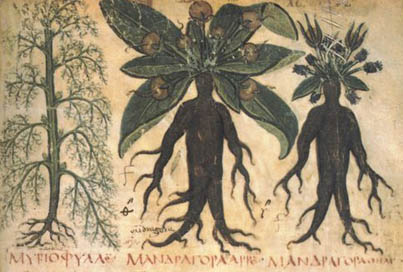
Mandrake (gr. ΜΑΝΔΡΑΓΟΡΑ, in capital letters). Folio 90 from the Naples Dioscurides, a 7th century manuscript of Dioscurides De Materia Medica (Naples, Biblioteca Nazionale, Cod. Gr. 1).

Ancient sportsmen took doping too, findings show

AYDIN – Anadolu Agency, Hurriyet Daily News, September 13, 2013

A large number of Turkish and international athletes recently banned for doping might have been born just 2,000 years too late, according to new archaeological findings in the Aegean province of Aydın that suggest using performance-enhancing drugs in ancient Greece was not only permitted but celebrated.

Locals living in the ancient city of Magnesia produced potions from the mood-altering plant mandrake, researchers have said, noting that their involvement with the drug gave them pride of place.

“Part of the [local] stadium was allocated for people who came from the ancient city of Ephesus. It is also observed that some political groups as well as bakers, gardeners, bird sellers had combined tickets. A tablet shows the most important part of the stadium, which has a capacity of 60 persons, was spared for a group of people called ‘Mandragoreitoi,’” said Turkish Professor Orhan Bingöl, who is leading archaeological excavations at the site, located in Aydın’s present-day district of Gemencik, noting that the Mandragoreitoi produced mandrake, the genus of which is mandragora. “That indicates that doping was not a crime back then, but rather that those who produced that substance had a special place in society and were encouraged.” Continue reading Athletic dopes

Up against a wall mural


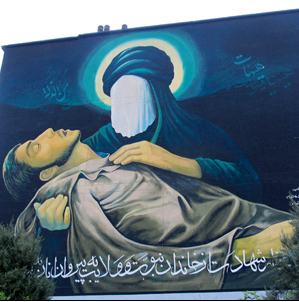
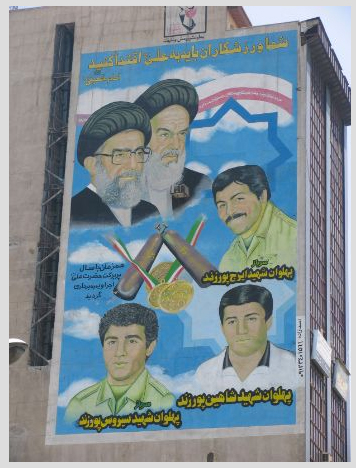
Martyrdom is the inheritance of the Prophet and his family to their followers (translated title). Three-storey high mural located on Mudarris Freeway, Abbas-Abad, Tehran, Iran, Fotini Christia, photographer.

Harvard College Library site. Here are two examples.


“You athletes should follow Ali (peace be upon him)”, Fotini Christia, photographer,

Playing Dice with God in the Middle East: The Putin Way

By Samson A. Bezabeh,

The World War II war time correspondent Emie Pyle once said that “there is no atheist in the fox hole”. What he meant does not only indicate the brutality of war but the honesty that can come out in war. In pronouncing these words, Pyle was pronouncing the truth about mankind, a deceptive being with layers of ideas. The whole thinking behind Pyle’s statement is that man need to be cornered to shade the various facades that he has adopted. As a Christian, the core for Pyle was the presences of God.

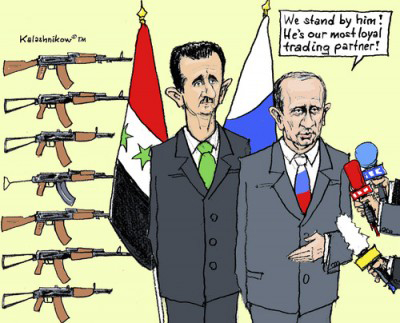
I am not here interested in Pyle or for that matter his view of God but on Putin and his recent comment on the ongoing Syrian affair in New York Times. Russia has been deeply enmeshed in the Syrian affair as a result of a number of strategic interests that the Assad government has been able to give to Russia. Yet Putin goes on to lecture about issues of morality to the American government without mentioning these issues. His focus in that essay was about the animosity as well as cooperation that his country had and is still having with the USA. His other focus was on the American exceptionalism that was pronounced by President Barack Obama. This point he apparently obtained after deeply studying Barack Obama’s recent speech.
Putin’s moralizing article was even more moralizing in its conclusion. Putin invoked the power of the people as he claimed that his article is addressed to the people of America. In his conclusion he even invoked a much higher power: God. He tells us:

There are big countries and small countries, rich and poor, those with long democratic traditions and those still finding their way to democracy. Their policies differ, too. We are all different, but when we ask for the Lord’s blessings, we must not forget that God created us equal (emphasis added).

Although hearing this from an x communist and a former KGB spy is stunning, it is even much more shocking when one realize the dishonesty that is embedded in Putin’s statement. Continue reading Playing Dice with God in the Middle East: The Putin Way

How to Kill a Terrorist


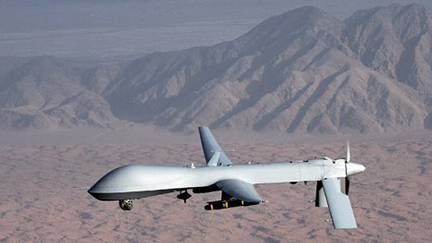
Predator drone

by Abdullah Hamidaddin, al-‘Arabiyya, September 11, 2013

On May 23, 2013 in a wonderful speech, that is yet to be translated into action, President Obama declared an end to the Global War on Terror (GWOT) which the U.S. has been waging since the early days after 9/11. Yet, killing terrorists is still on his agenda and that of other leaders around the world, albeit in a more “moderate” fashion. So here are some preliminary thoughts which I believe should guide this policy of killing.

The golden rule for killing a terrorist, actually the two golden rules, are simple and direct. The first golden rule is: do not become a terrorist in the process. The second rule is: do not create two or more terrorists for every terrorist you kill.

Very simple!

Yet the record of the past twelve years tells us that those two rules have been broken again and again and again. Some of those fighting terrorism have become as bad, and sometimes worse, than the terrorists they are fighting. Consequently, a new generation of terrorism has been born out of the very war that was supposed to fight and end terrorism. Moreover radicalization in our region has reached new and unprecedented limits; which is in itself a threat to civil peace. So what I will do here is register some of the ways in which those two rules have been broken, as things to be avoided in future killings.

Before I start with the first rule, I need to define what I mean by a “terrorist.” Continue reading How to Kill a Terrorist

Holy Land Photo Archive


Arab Settlement Of Kakun, in the Sharon valley, with carriage of European visitors, 1911

Many tourists flocked to the Holy Land in the 19th and early 20th centuries, not to mention the people who lived there. Quite a few took along cameras. There is a major archive of photographs of late Ottoman and Mandate Palestine here. The photographs are separated by area. It is well worth a look.


Bedouin camp in Jericho, 1893

Continue reading Holy Land Photo Archive