All posts by tabsir

What’s Up with Our Mosques?


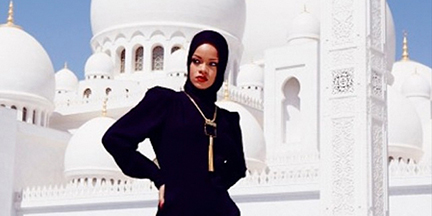
Image: Rihanna’s Instagram

by Fatimah Jackson-Best, Aquila Style, October 28, 2013

International pop icon Rihanna recently made the news after being asked to leave the Sheikh Zayed Grand Mosque in Abu Dhabi. According to a statement issued by the mosque, the singer’s removal from the grounds was based on several reasons, which include attempting to enter the mosque through a gate that was not allowed for visitors, failing to get the proper permission to visit and tour the mosque, and failing to behave in a way that was in accordance with the sanctity of the mosque.[i] Instagram photos of the singer posing in front of the mosque also sparked reactions from Muslims and non-Muslims around the world.

I learnt that she had been barred from entering the mosque on my Facebook wall, from a friend who jokingly reminded me that I could relate to the story, because I had also been prevented from visiting a mosque here in Barbados – twice. Continue reading What’s Up with Our Mosques?

Princeton Geniza Project

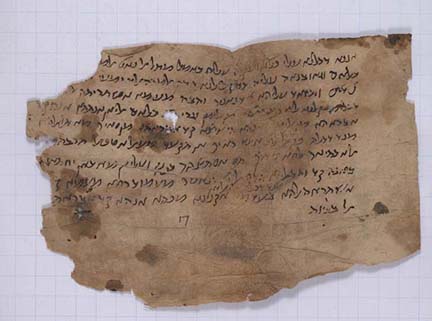
The Princeton Geniza Project of the Department of Near Eastern Studies at Princeton University seeks to extend the methodologies available to Hebrew and Arabic scholars working with the documents found in the Geniza chamber of the Ben Ezra Synagogue in Cairo in the late 19th century. The project is dedicated to transcribing documents from film copies to computer files, creating a full text retrieval text-base of transcribed documents, developing new tools such as dictionaries, semantic categories and morphological aids to further the study of Geniza texts. The project is committed to disseminating its materials as widely as possible to the international community of scholars with an interest in the life of the medieval Middle East, as well as to all with an interest in Judaica. It is our hope that by making materials from this very esoteric field widely available that new insights can be gained into the interaction of the peoples of the Middle East in past time. Since inception in 1986, funding has been provided by Princeton University, the Department of Near Eastern Studies, and from 2000 to 2005 by the Friedberg Genizah Project.

Please tell me, Mr President, why a US drone assassinated my mother

by Rafiq ur Rehman, theguardian.com, October 25, 2013

The last time I saw my mother, Momina Bibi, was the evening before Eid al-Adha. She was preparing my children’s clothing and showing them how to make sewaiyaan, a traditional sweet made of milk. She always used to say: the joy of Eid is the excitement it brings to the children.

Last year, she never had that experience. The next day, 24 October 2012, she was dead, killed by a US drone that rained fire down upon her as she tended her garden.

Nobody has ever told me why my mother was targeted that day. The media reported that the attack was on a car, but there is no road alongside my mother’s house. Several reported the attack was on a house. But the missiles hit a nearby field, not a house. All reported that five militants were killed. Only one person was killed – a 67-year-old grandmother of nine.

My three children – 13-year-old Zubair, nine-year-old Nabila and five-year-old Asma – were playing nearby when their grandmother was killed. All of them were injured and rushed to hospitals. Were these children the “militants” the news reports spoke of? Or perhaps, it was my brother’s children? They, too, were there. They are aged three, seven, 12, 14, 15 and 17 years old. The eldest four had just returned from a day at school, not long before the missile struck.

But the United States and its citizens probably do not know this. Continue reading Please tell me, Mr President, why a US drone assassinated my mother

A Wolff in Shepherd’s Clothing, #2

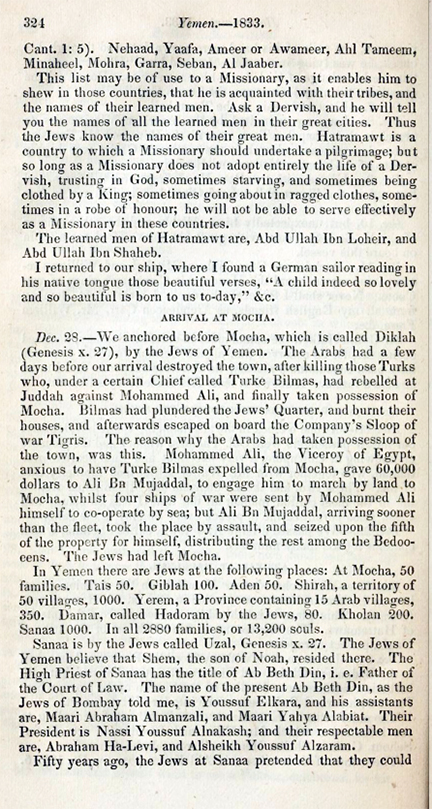
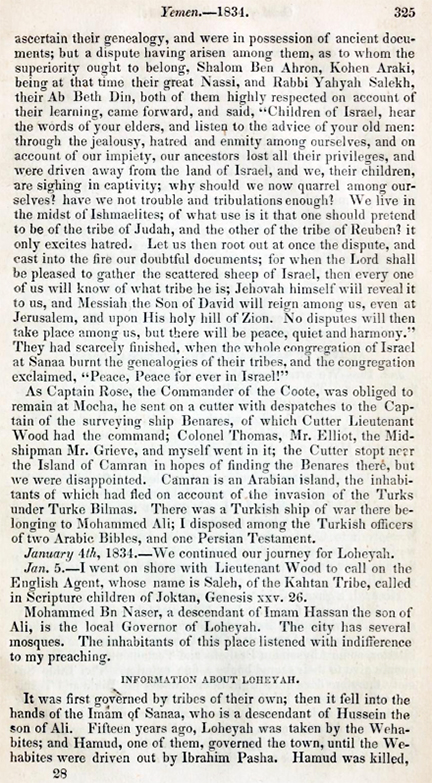
In the early 19th century there was a florescence of Protestant missionary interest in saving Muslim, Jewish and other kinds of Christian souls in the Middle East. This thread continues excerpts from one of the earliest accounts from the 19th century, that of Joseph Wolff (1795-1862), a convert from Judaism to Christianity. In 1837 he published a diary of his travels. Here are the passages related to a brief stop in several of Yemen’s ports:

to be continued…

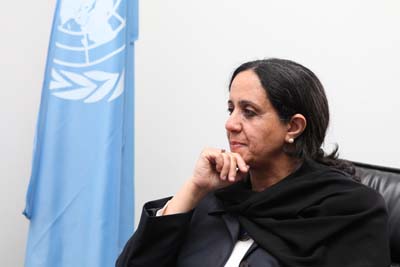
Amat al-Alim al-Soswa at Hofstra

The Middle Eastern and Central Asian Studies Program of Hofstra University is pleased to announce a public talk by the Yemeni diplomat Amat al-Alim al-Soswa, who will be speaking about her recent work on Yemen’s National Dialogue. Details are provided here. This will take place on campus in 101 Barnard Hall on Thursday, October 24 from 2:20-3:45. For more information, please contact me at daniel.m.varisco@hofstra.edu.

Since March 2013 , Amat Al-Alim Alsoswa has been a member of the Yemen National Dialogue Conference and a member of its State Building Team. She also chaired a subcommittee to prepare and suggest the criteria and term of reference for the constitutional drafting committee.

She was appointed in December 2005 by United Nations Secretary-General Kofi Annan as Assistant Secretary-General, Assistant Administrator of the United Nations Development Programme and Director of its Regional Bureau for Arab States. In this post, Alsoswa has led UNDP’s 18 programme offices in the Arab region in their efforts to develop national capacities for poverty reduction, democratic governance, sustainable development, crisis prevention and recovery, and women’s empowerment. She has also provided regional thought leadership through the launching of two editions of the Arab Human Development Report, in 2006 and 2009, and in the preparation of the for the 2012 edition. Continue reading Amat al-Alim al-Soswa at Hofstra

A Wolff in Shepherd’s Clothing, #1

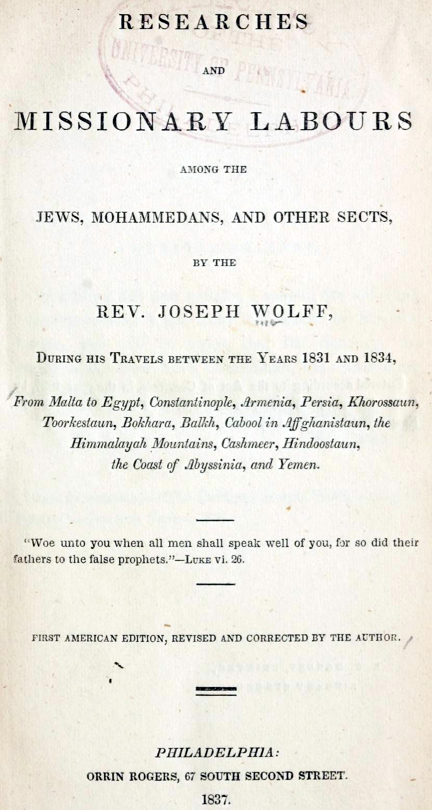
In the early 19th century there was a florescence of Protestant missionary interest in saving Muslim, Jewish and other kinds of Christian souls in the Middle East. One of the earliest accounts from the 19th century is that of Joseph Wolff (1795-1862), a convert from Judaism to Christianity. His missionary travels began in 1821 and he also went in search of the “lost tribes” of Israel. In 1837 he published a diary of his travels. This is a fascinating book to read, once one gets by the evangelistic fervor. He was considered by fellow missionaries to be somewhat of an “eccentric,” as he acknowledges in the frontispiece to his travels.

Here is how he begins his book… Continue reading A Wolff in Shepherd’s Clothing, #1

SULU SULTAN DEAD BUT NOT SABAH CLAIM


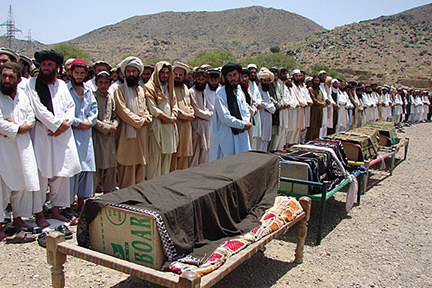
Relatives and supporters pray before the remains of Sulu Sultan Jamalul Kiram III (right) at the Blue Mosque in Maharlika Village, Taguig City. Kiram died Sunday at the age of 75. by NIÑO JESUS ORBETA

By Marlon Ramos, Philippine Daily Inquirer, October 21st, 2013

Read more: http://newsinfo.inquirer.net/510943/sulu-sultan-dies-sabah-claim-lives-on#ixzz2iMXdXXVi
Follow us: @inquirerdotnet on Twitter | inquirerdotnet on Facebook

The ownership claim of the sultanate of Sulu and North Borneo to Sabah will not be buried with Sultan Jamalul Kiram III.

Kiram made this clear to his family before he died at the Philippine Heart Center in Quezon City early Sunday, according to Abraham Idjirani, the sultanate’s secretary general and spokesman.

The 75-year-old sultan, the 33rd crowned ruler of one of the oldest sultanates in Southeast Asia, died from multiple organ failure due to complications of diabetes at 4:42 a.m.

Malacañang offered its condolences to the family of Kiram, who tried to force the government to press his clan’s claim to Sabah through an armed intrusion into the oil-rich territory in North Borneo in February, an adventure that left dozens of Filipinos and Malaysians dead.

But the death of Kiram does not mean the end of the Philippine government’s claim to Sabah, deputy presidential spokesperson Abigail Valte said.

She said the government’s study of the claim that President Aquino ordered in March was still going on.

Kiram’s wife, Fatima Celia, said her husband died in her arms at the hospital. She said that before he died, he ordered his family and followers to keep alive the historic territorial claim to Sabah. Continue reading SULU SULTAN DEAD BUT NOT SABAH CLAIM