All posts by tabsir

Qabilis and Huthis in Amran

رجال قبائل والحوثيون يوقعون اتفاقاً لوقف الاقتتال في عمران وإخراج المسلحين الوافدين إلى المنطقة

المصدر أونلاين – خاص
الثلاثاء 4 فبراير 2014 05:38:47 مساءً

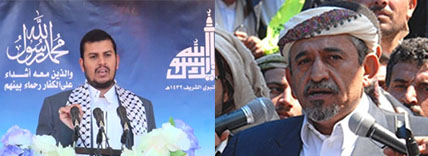
قالت مصادر محلية إن اتفاقاً جرى توقيعه اليوم الثلاثاء بين قبائل حاشد وجماعة الحوثيين المسلحة لوقف الاقتتال في محافظة عمران وإخراج المسلحين الوافدين إلى المنطقة وتأمين الطرقات.

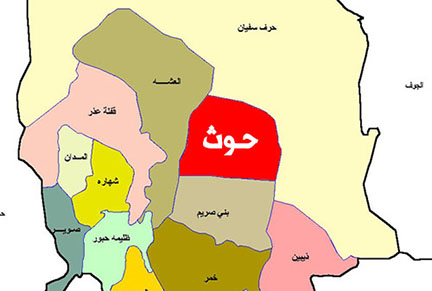
وذكرت المصادر لـ”المصدر أونلاين” إن القبائل والحوثيين اتفقوا على إخراج المسلحين الوافدين الى المنطقة، وفتح وتأمين الطريق العام وعدم التجوال بالأسلحة الثقيلة، ونشر قوات الجيش في عدد من المواقع في منطقتي خيوان وحوث.

وجاء الاتفاق برعاية اللجنة الرئاسية المكلفة بإيقاف إطلاق النار برئاسة قائد قوات الأمن الخاصة اللواء فضل بن يحيى القوسي وأمين العاصمة عبدالقادر هلال.

ونص الاتفاق على انسحاب الطرفين من مواقع الاقتتال، وعدم العودة إليها لاحقاً أو استحداث مواقع أخرى، وكذا منع الطرفين من “أي أعمال تثير الفتنة”.

كما نص الاتفاق على إعادة المهجرين من مديرية حوث إلى قراهم وبيوتهم وأموالهم.

لكن مصدراً قبلياً قال لـ”المصدر أونلاين” إن الشيخ حسين الأحمر غادر عمران بعدما حصلت ما وصفتها بـ”الخيانات”ØŒ من قبل عدد من مشائخ ريده وخيوان وحوث، الذين أعلنوا عدم محاربة الحوثيين والسماح لهم بالدخول إلى مناطقهم.

ونفى المصدر قيام الحوثيين بتطبيق الاتفاق، قائلاً إنهم يتجولون بأسلحتهم الخفيفة والثقيلة، ويتوسعون بشكل كبير، فيما لم تنتشر القوات العسكرية الا في مناطق محدودة.

وفي دنان، قالت مصادر محلية لـ”المصدر أونلاين” إن الحوثيين عرضوا على أهاليها توقيع صلح معهم، مقابل عدم الدخول في حرب معهم.

وأضافت المصادر أن الأهالي وافقوا على عقد الصلح مع الحوثيين، خشية من الدخول في معارك جديدة معهم.

وسيطر الحوثيون خلال اليومين الماضيين على مناطق في مديريتي (حوث، والخمري) بعمران بعد معارك عنيفة خاضوها مع رجال قبائل حاشد المسلحين أسفرت عن سقوط عشرات القتلى والجرحى من الجانبين.

Yemen: Ready for Change?

Yemen: Ready for change?
by Peter Salisbury, Al Jazeera Online, February 3, 2013

Yemen’s national dialogue has concluded, but the country remains beset by a slew of smouldering conflicts.

Yemen’s President Abd Rabbu Mansour Hadi is not known for his skill as an orator. During interviews and at public events he seems stiff, ill at ease and disconnected. He rarely speaks freely, choosing instead to read out pre-written comments. But at a recent meeting in Sanaa, Yemen’s capital, he was passionate, and seemed at several points to be on the verge of bursting into tears.

“I need you to stand by me, for the sake of Yemen,” he said in a rare moment of unscripted candour. “Serious decisions are going to be made.” Like many of those in the room at the upmarket Movenpick hotel, the president was carried away by a moment that many in Yemen had begun to doubt would ever come. The National Dialogue Conference, a months-long series of peace talks aimed at the creation of a new constitution, had finally come to an end.

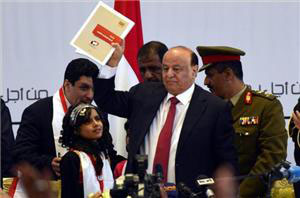
Four days later, on January 25, at a ceremony held to formally conclude the talks, Hadi held a copy of the agreement in the air, to rapturous applause. Describing the conference as an “unprecedented success”, he also sounded a warning that summed up the mood in the room. “Some people say that the problem is not in writing laws, it is implementation,” he said. “This is relatively correct… There is a big difference between our past and our future.” Continue reading Yemen: Ready for Change?

Reflections on the State of Islamic Studies

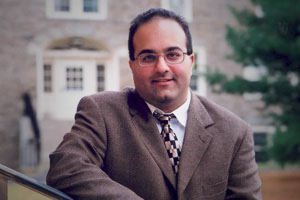
The prominent scholar Omid Safi has written a commentary on Jadaliyya entitled “Reflections on the State of Islamic Studies”. It is well worth reading. I attach the beginning paragraphs below.

I have been asked to share my impressions about the state of Islamic studies in the North American academy. Given that the pioneers of this field include many of my mentors, and many of my own peers have struggled for years to help advance the field to its current state, my observations will not be dispassionate. And since I have been fortunate to have a front-row seat along the development of the field over the last twenty years, I hope I’ll be able to do justice to the current state of the field.

I became a graduate student in the field of Islamic studies in the early 1990s. In those days, almost all of us were “converts”: no one went to undergraduate studies planning to become a professor of Islamic studies. For many, particularly Muslims of transnational background, the usual academic caste options were the familiar: doctor, lawyer, engineer, maybe the always dubious “business.” Almost all of us who entered the field did so by following the siren call of one mentor or another: Seyyed Hossein Nasr, Hamid Algar, Roy Mottahedeh, Bruce Lawrence, Vincent Cornell, Carl Ernst, Michael Sells, Annemarie Schimmel, and a few others.

My own path was similarly convoluted: I had been accepted to medical school, and turned that down to embark on a PhD. It was three or four years before it occurred to me to ask anyone what the likelihood of getting a job in this field was, or what kind of salary one could expect. Imagine my shock towards the end of finishing my PhD to find out that in 1999, there were four jobs in Islamic studies in all of North America That actually represented a remarkable improvement over the 1980s, when typically there was one tenure track job in Islamic studies in the whole country.

The game changer, of course, was 9/11. In the aftermath of those events, the overwhelming majority of American universities and colleges suddenly found themselves without the necessary faculty to “explain” the event to their students, to serve as a spokesperson in engagement with local communities, and to interact with the media. Those are not identical roles, and the list of desiderata was long and imposing. But quickly, the demand for Islamic studies positions went up dramatically: the next few years (until the market crash of 2008) saw between 40-50 tenure track positions per year…

For the rest of Omid’s article, click here.
An American Tabari, #4

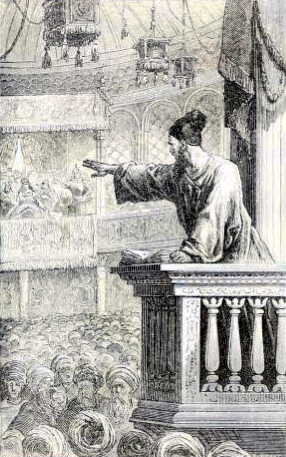
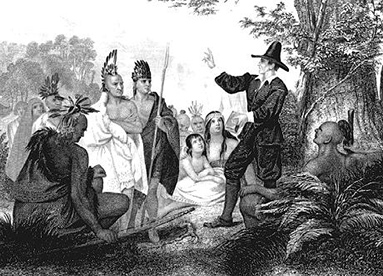
In a previous post I continued a series on the universal history of John Clark Ridpath. The image above is the classic image of a preacher, looking more Gospel than imamic to my eyes. I would question the sincerity of a famed imam who relied on a print version of the Quran rather than his own memory, as the image above suggests. The “preacher” with hands outstretched is a trope that crosses cultures, whether or not it is the cross being pounded on the pulpit (and certainly not on the minbar). Consider John Eliot who set his eyes on converting the “heathen” natives of the new world:

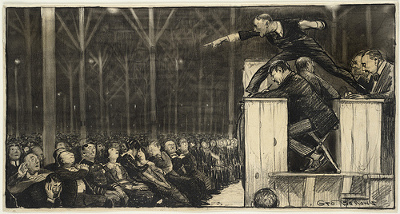
Or the long history of fire-and-brimstone wailing of American Protestants.

An American Tabari, #3

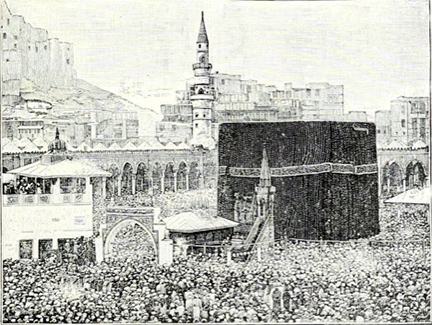
In a previous post I continued a series on the universal history of John Clark Ridpath. As one might expect, a particularly important place is reserved for Mecca itself. The image above is an ornamentation for the start of Ridpath’s discussion of Islam. The image below is a drawing of the hajj season where any sense of the individual is lost, resulting in a blur of heads.

to be continued

The Drone and the Wedding Party


Right before the first missile struck this Toyota Hi-lux — fourth in the line of vehicles — all three of its occupants fled, including the man whom eyewitnesses thought was the apparent target of the strike. Iona Craig

A little more than a month ago on December 12, 2013 a drone sent four missiles into a wedding convoy in rural Yemen, apparently targeting a senior al-Qaida figure. In this attack 12 men died. The secrecy surrounding this tragic event has prevented an accurate accounting of what actually happened. This report by Iona Craig, an independent journalist based in Sanaa, provides a thorough analysis, based on interviews with the people involved. This is the best analysis of the event that I have seen. Check it out on al-Jazeera.

An American Tabari, #2

In a previous post I introduced the universal history of John Clark Ridpath. In a section on the origins of Islam Ridpath includes several illustrations. The Orientalist trope of depicting the Prophet Muhammad, as seen in the image above, is interesting because it is a very Ottoman style of dress. The style looks like an Italian version of the Ottoman Sultan Mehmed the conqueror. Just as devout Protestant missionaries and preachers saw the Bedouin of 19th century Palestine as the exact image of the patriarchs, so it was no stretch of the Orientalist imagination (although it was indeed quite a stretch) to present Muhammad in Ottoman style.


http://en.wikipedia.org/wiki/File:Gentile_Bellini_003.jpg

For those curious about the illustration in the earlier post, this is said to be a scene of the tombs in Cairo.

to be continued