All posts by tabsir

Syria’s war must end

By Stephen Hawking, Washington Post, February 14

Stephen Hawking is the author of “A Brief History of Time” and a former professor of mathematics at the University of Cambridge.

The Greek philosopher Aristotle believed that the universe had existed forever. The reason humanity was not more developed, he believed, was that floods or other natural disasters repeatedly set civilization back to the beginning.

Today, humans are developing ever faster. Our knowledge is growing exponentially and with it, our technology. But humans still have the instincts, and in particular the aggressive impulses, that we had in caveman days. Aggression has had definite advantages for survival, but when modern technology meets ancient aggression the entire human race and much of the rest of life on Earth is at risk.

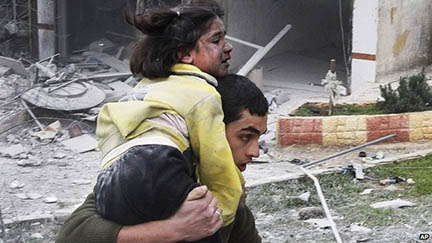
Today in Syria we see modern technology in the form of bombs, chemicals and other weapons being used to further so-called intelligent political ends.

But it does not feel intelligent to watch as more than 100,000 people are killed or while children are targeted. It feels downright stupid, and worse, to prevent humanitarian supplies from reaching clinics where, as Save the Children will document in a forthcoming report, children are having limbs amputated for lack of basic facilities and newborn babies are dying in incubators for lack of power. Continue reading Syria’s war must end

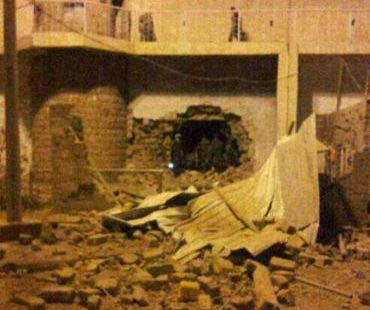
Prison Break in Sanaa

الاقتصاد نيوز ينشر اسماء السجناء الفارين من مركزي صنعاء مع التهم الموجهة لكل واحد منهم

كشف مصدر قضائي التهم المدان فيها 29 سجينا فرو يوم امس في عملية خاطفة يعتقد بوقوف تنظيم القاعده وزرائها وقال المصدر بان من بين الفارين من السجن اسماء قيادات خطرة من تنظيم القاعده ومحكومين بالاعدام وخاطفي اجانب الاسماء مع التهم والعقوبات الصادرة :

.1 وليد محمد محمد العبشي -قاعدة محكوم بالسجن 7 سنوات في أكتوبر 2013 -متهم بأعمال إرهابية بأبين

.2. علي عبدالرحمن علي القباطي3. يحيى يوسف محمد حيدره -قاعدة محكوم بالسجن 6 سنوات بأكتوبر 2013 -متهم بأعمال إرهابية بابين

.4. عهد محمد سعيد عامر -قاعدة محكوم بالسجن 6 سنوات في أكتوبر 2013 -متهم بأعمال ارهابية في أبين

.5. سامح محمد محسن الشجري -قاعدة محكوم بالسجن 6 سنوات بأكتوبر 2013 -متهم بأعمال إرهابية بابين

.6. عمر احمد محمد فضل الألاء -قاعدة محكوم بالسجن 7 سنوات باكتوبر 2013-متهم بأعمال ارهابية في أبين

.7. جميل يسلم علي شيخ -قاعدة محكوم بالسجن 6 سنوات باكتوبر 2013 -متهم بأعمال ارهابية بأبين

8. وهيب علي عبدالله مهدي- تابع للقاعدة مسجون منذ 2008..

9 امين محمد احمد مشوص -قاعدة محكوم بالسجن 6 سنوات في اكتوبر 2013 -متهم بأعمال ارهابية في أبين
Continue reading Prison Break in Sanaa

As Egypt bleeds

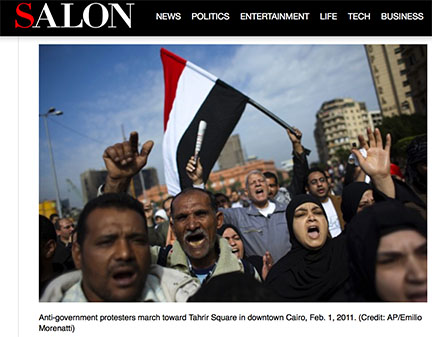
The euphoria of the Arab Spring has abated in Egypt. Many saw the election of Ibrahim al-Morsy as hope for a transition to a government that respected religion and still maintained secular values for diverse Muslim and non-Muslim views in Egypt. This hope was dashed by the “coup” that removed Morsy from office and has led to criminalization of the Muslim Brotherhood. It is not a case of the military regaining control as in the old days of Mubarak, since the military never lost control. Nor are there any clear cut “good guys” in the current political environment. An excellent overview of the situation is provided by H. A. Hellyer in Salon. Check it out online.

Sanctions on the Yemeni Horizon?


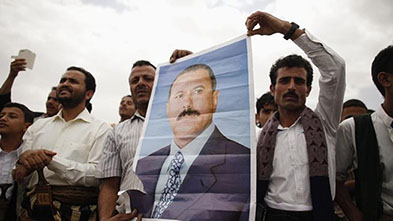
Yemen’s former president, Ali Abdullah Saleh (pictured on the poster), is clearly at risk for the imposition of sanctions as his name is mentioned in the draft as a spoiler. (File photo: Reuters)

No Yemen sanctions for now, but schemers be warned

by Talal al-Haj | Special to Al Arabiya News, February 10, 2014

The P3 (U.S., UK and France), with the potential support of Russia and China, are engaged in intensive discussions over the content of a British drafted resolution on Yemen. The draft resolution, seen by Al Arabiya, calls for the creation of a sanctions committee, but does not actually sanction anyone.

If the draft becomes a Security Council resolution, the sanction committee will possess the power to impose travel bans and to freeze the assets of those who hinder the successful completion of the transitional period in Yemen which aims to change the country into a Federal Democratic one.

The draft “welcomes the Yemeni government’s Asset Recovery Law, and supports the efforts of the government and people of Yemen to implement this law.” This excerpt can be interpreted as a clear warning to the men of the old regime ,who engage in any obstructionist effort to hinder the creation of the new Yemen, that they risk having their assets – gathered during their reign of power – recouped for the benefit of the people of Yemen.
An interesting part of the resolution

However, the most interesting part of the resolution remains the creation of a Sanctions Committee under article number 41 of chapter seven, capable of banning the travel or freezing the assets of those who try to “ act to undermine the successful completion of the political transition, as outlined in the GCC Initiative and Implementation Mechanism Agreement, including article 45 of the National Dialogue Conference’s Good Government Working report.” Continue reading Sanctions on the Yemeni Horizon?

Yemen’s Houthi-Ahmar sectarian framing


Abd al-Malik al-Huthi, left; Hashid Shaykh Sadiq al-Ahmar, right

by Abdullah Hamidaddin, al-Arabiyya Online, February 8, 2014

Framing matters. It shapes the way we react to a story. It focuses our attention to some details and distracts us from others. It connects a story to another set of stories, and separates it from others. Framing can make a story relevant or irrelevant. Ideally framing would be made through a serious process of observation and analysis. But more than often it is guided by the interests of those framing or their audiences.

Sometimes writers lack the sophistication to see the complexity of the world, so they select simple frames. Other times politicians see that a certain frame serves their interests more than another. Thus they only hear stories framed in their preferred way.
Sticking to Nonsense

I am saying this because of the ways the conflicts in the Middle East are framed as a Sunni/Shiite conflict. And I keep asking myself; why this insistence on retaining such a superficial way of analyzing the region and its conflicts? Why insisting on reincarnating Huntington’s clash of civilization thesis albeit in a ‘clash of sects’ variety? Continue reading Yemen’s Houthi-Ahmar sectarian framing