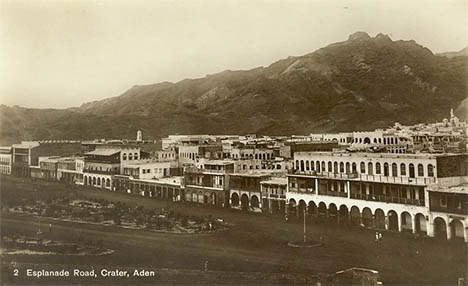
There are many postcards on the Internet from old Aden under British control. This continues the series with more general views of Aden.
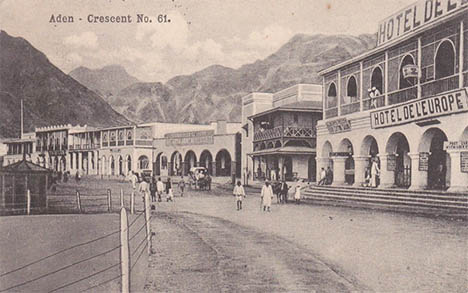
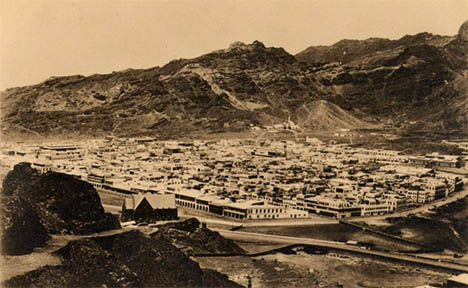
to be continued… for #13, click here.
There are many postcards on the Internet from old Aden under British control. This continues the series with more general views of Aden.
to be continued… for #13, click here.
by Edward E. Curtis IV, Religion Bulletin, May 2, 2014
Editor’s note: This post is part of the Reflections on Islamic Studies series.
By any measure, Islamic studies is a vibrant field. In the last several decades, the number of tenure-track positions dedicated to the study of Islam as a religion and to Muslim politics and societies has expanded. New journals have appeared; book sales are good; and interest in Islamic studies has led to important public humanities projects such as the National Endowment for the Humanities’ Muslim Journeys Bookshelf.
What makes Islamic studies so dynamic? For one, its ever-expanding body of participants, who come from a number of disciplinary perspectives. The field is populated by intellectual networks rather than one identifiable set of intellectual authorities. Islamic studies finds institutional homes not only in religious studies and Near Eastern languages departments, but also in history, anthropology, sociology, political science, ethnomusicology, and art and architecture, among other academic units.
Islamic studies attracts some of the very best scholars in the world. There are now so many scholars producing so much scholarship that it is impossible for one person to know all of the literature in this vast field. Questions about where to do a graduate degree must be followed by the question of what the applicant wishes to study.
The multi-disciplinary study of Islam nurtures ever-expanding circles of conversation about the significance of Islam to both specialized disciplinary concerns and interdisciplinary inquiry. The origins of Islamic studies may be found in orientalism, that is, the scholarly, philological study of Islamic religion and Muslim cultures. But today, Islamic studies is a field defined by shared and intersecting questions, themes, and data, not any one methodology or set of texts. Its practitioners are not tied together by any one canon—one needn’t be an expert on the Qur’an to be in Islamic studies. Continue reading Ode to Islamic Studies: Its Allure, Its Danger, Its Power
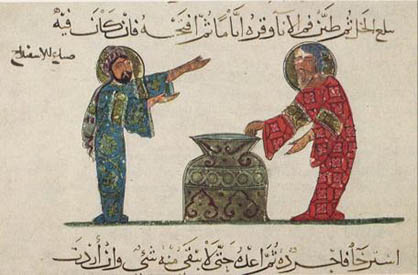
[The Wellcome Trust is generously funding a joint University of Oxford/University of Warwick publishing project online of an important 13th century medical text. Read about it below and on their website.]
KitÄb Ê¿UyÅ«n al-anbÄʾ fÄ« á¹abaqÄt al-aá¹ibbÄʾ
كتاب عيون الأنباء ÙÙŠ طبقات الأطباء
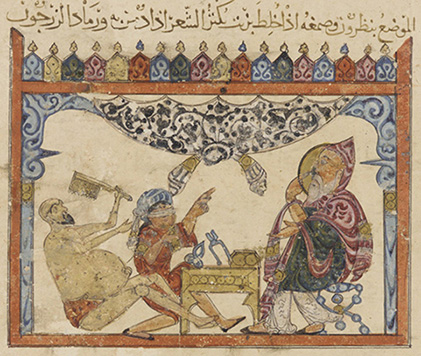
In the mid-13th century, a practising physician in Syria named Ibn AbÄ« Uá¹£aybiÊ¿ah set himself the task of recording the history of medicine throughout the known world. His book The Best Accounts of the Classes of Physicians covers 1700 years of medical practice, from the mythological beginnings of medicine with Asclepius through Greece, Rome, and India, down to the author’s day. Written as much to entertain as to inform, it is not only the earliest comprehensive history of medicine but the most important and ambitious of the medieval period, incorporating accounts of over 442 physicians, their training, practice, and medical compositions, all interlaced with amusing poetry and anecdotes illustrating their life and character. The ‘Herodotean’ breadth of the book reflects the geographical and cultural reach of the Islamic empire. Written by a man who was a medic and a poet, this highly readable history reflects considerable medical experience and lies at the interface of the serious medical practice of the day with society’s interest in biography and gossip.
The Wellcome Trust is generously funding a joint University of Oxford/University of Warwick project that will make this remarkable historical source available for the first time in a reliable and readable translation and study, as well as a critical edition of the text itself, resulting in a step-change in our knowledge of medical history in Medieval Islam. For nearly 300 years attempts to translate this monumental work have failed owing to the extraordinary range of skills needed to tackle it. This joint project is the first to assemble a team of senior and junior scholars with the required skills and interests to make it happen.
As work proceeds during the three- and one-half-year project, samples of biographical entries will be placed on this web page, with an opportunity provided for general discussion and comment.
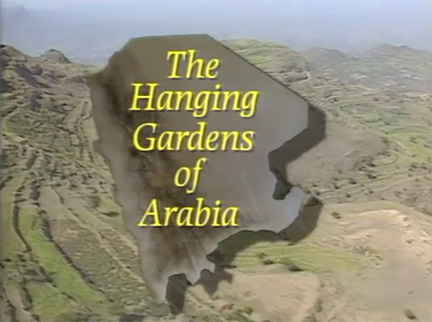
Here is a Youtube trailer for an environmental documentary film about Yemen, produced by Tony Milroy of Arid Lands and Sustainable Communities Trust for the Channel 4 series ‘Fragile Earth’.
By Abdullah Hamidaddin | Special to Al Arabiya News
Sunday, 4 May 2014
Last March, the “First Kiss†video was released on YouTube attracting more than 80 Million views so far. Not many people in this region were excited about it. For many here it symbolized the decadence and corruption of the West. Yet there were those who considered it interesting enough to inspire them into making a parody of it: “First Noseâ€. In it you have a set of guys ready to give each other a ‘first nose’.
In the “First Kiss†video the participants are embarrassed and nervous; it’s an awkward moment particularly because of the intrusive effect of the camera. And the same feelings were acted in the “First Nose†video.
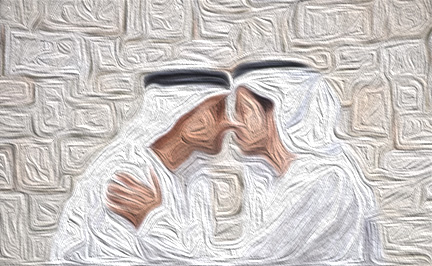
There is a difference of course between a “first kiss†and a “first nose.†A kiss is an intimate act and so to kiss an absolute stranger in the presence of a camera can be quite awkward. But a “nose†is merely – or mainly – a handshake using other means. There’s no intimacy at all there. It would be hard to imagine anyone feeling awkward because he/she had to shake hands with complete stranger; camera or not. Even though the video is a parody it led to some misunderstanding. Continue reading Nose kiss, anyone? How the Gulf Arab greeting has evolved
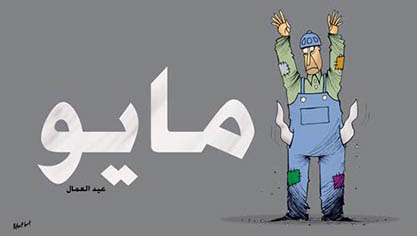
Enjoy May Day?
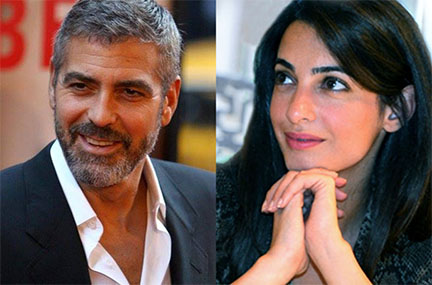
What is the religion of George Clooney’s fiancé, Ms. Amal Alamduddin? Druze? Muslim?
by Omid Safi, What Would Muhammad Do, April 29, 2014
The news that George Clooney, the perpetual bachelor, had gotten engaged to Amal Alamuddin, a stunning Arab beauty, who (ahem, ahem) is also a badass brainy Oxford-educated international human rights lawyer—pardon us, barrister—has now officially gone viral. Here and here and here.
On social media, many professional women, in their 30s and 40s, have expressed joy that Clooney was wedding a brainy (Ok, and stunning) professional woman.
Many human rights activists see this as an opportunity to bring attention to catastrophes like Syria.
Many Arabs are naturally seeing this as a confirmation of the attractiveness of Arabs. [Just check out the outburst of pride on FB!] Continue reading Omid Safi on George Clooney
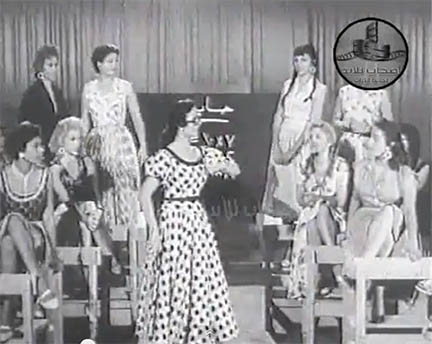
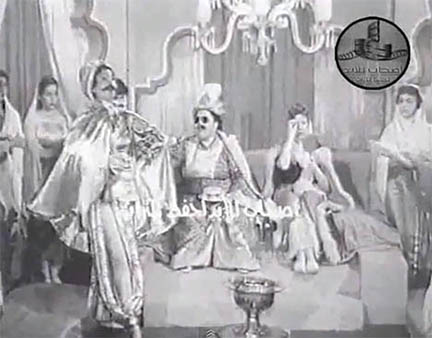
Half a century ago the Egyptian film industry was in full swing. Here is a clip from a 1955 film called مدرسة البنات. This was only 13 years after the classic Road to Morocco with Bob Hope and Bing Crosby. Are these films Orientalist? Indeed, that is there appeal, but there is also an undertone of satire in both. Check out the moustaches on the harem beauties in the Egyptian film.