All posts by tabsir

Darwin in Arabic

Here is a short review of an exciting new book:

Marwa Elshakry, Reading Darwin in Arabic, 1860-1950 University of Chicago, 2013.

by Carla Nappi on May 23, 2014, New Books in Science, Technology and Society

The work of Charles Darwin, together with the writing of associated scholars of society and its organs and organisms, had a particularly global reach in the late nineteenth and early twentieth centuries. Marwa Elshakry’s new book offers a fascinating window into the ways that this work was read and rendered in modern Arabic-language contexts. Reading Darwin in Arabic, 1860-1950 (University of Chicago Press, 2013) invites us into a late nineteenth-century moment when the notions of “science” and “civilization” mutually transformed one another, and offers a thoughtful and nuanced account of the ways that this played out for scholars working and writing in Syria and Egypt. The early chapters of Elshakry’s book focus on the central role played by popular science journals like Al-Muqtataf (The Digest) in translating and disseminating Darwin’s ideas. We meet Ya’qub Sarruf & Faris Nimr, young teachers at the Syrian Protestant College who were instrumental in translating scientific works into Arabic there and, later, in Egypt. An entire chapter looks closely at Isma’il Mazhar’s work producing the first verbatim translation of Darwin’s Origin of Species into Arabic, but the book also looks well beyond Darwin to consider broader Arabic discourses on the relationship between science and society, as those discourses were shaped by engagements with the work of Herbert Spencer, Ludwig Büchner, and many others. Elshakry pays special attention to the ways that this story is embedded in the histories of print culture, the politics of empire, and debates over educational reform, materialism, and socialism in the late nineteenth and early twentieth centuries, and concludes with a consideration of the continuing reverberations of these issues into late twentieth century Egypt and beyond. It is a must-read for anyone interested in the entanglements of science, translation, and empire in the modern world, and it will change the way we understand the place of Arabic interlocutors in the history of modern science.

Kidnapping of Foreigners in Yemen 2010-2014

Changing Tactics & Motives – Kidnapping of Foreigners in Yemen 2010-2014

A study conducted by Safer Yemen.

DOWNLOAD THE FULL REPORT

EXECUTIVE SUMMARY

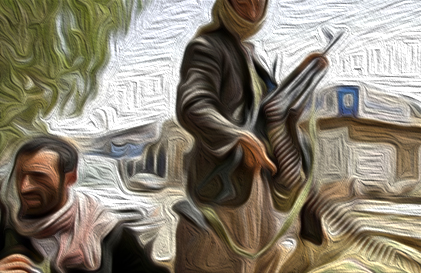
From 2010 to March 2014 there have been 47 realised kidnapping cases and more than 76 foreign victims held by kidnappers in Yemen. The country has witnessed a dramatic increase in kidnappings in this period, going from only one incident in 2010 to 19 in 2013, the highest number of incidents recorded in one year since the kidnapping of foreigners started in Yemen in the late-1980s.

The kidnappings in Yemen can be broken down into three different types: tribal, political and criminal. Each type involves a distinct set of perpetrators, motives and tactics; however, in the past three years these have often overlapped and the actors and motives of a kidnapping are often blurred. Prior to 2011, almost all kidnappings were tribal, with only one case of criminal kidnapping and very few political kidnappings. Post-2011, most kidnappings have been criminal and political and with high impact due to increased levels of violence, prolonged captivity, ill-treatment of victims and complex negotiations.

There are a number of reasons behind this trend, which have emerged from the political crisis in 2011 and the subsequent political transition. First, the Yemeni state’s capacity to provide security throughout the country has been severely restricted since 2011. Second, in parallel to tribal kidnappings in rural areas, a new form of criminal and political kidnappings in urban centres has emerged in recent years and has specifically targeted the international community and served as a political pressure tool. Third, the lack of political, legal or military consequences for kidnappers has inspired more actors to get involved. Fourth, the payment of high ransoms in several high-profile kidnapping cases involving European citizens has contributed to a perception that kidnapping is a highly lucrative activity. Continue reading Kidnapping of Foreigners in Yemen 2010-2014

Knowledge as Politics by Other Means


The first part of an interview with Wael Hallaq by Hasan Azad has just been published on al-Jadaliyya. Below is the introduction and the first part of a much longer exchange which can be followed here.

Throughout the last three decades, Wael Hallaq has emerged as one of the leading scholars of Islamic law in Western academia. He has made major contributions not only to the study of the theory and practice of Islamic law, but to the development of a methodology through which Islamic scholars have been able to confront challenges facing the Islamic legal tradition. Hallaq is thus uniquely placed to address broader questions concerning the moral and intellectual foundations of competing modern projects. With his most recent work, The Impossible State, Hallaq lays bare the power dynamics and political processes at the root of phenomena that are otherwise often examined purely through the lens of the legal. In this interview, the first of a two-part series with him, Hallaq expands upon some of the implications of those arguments and the challenges they pose for the future of intellectual engagements across various traditions. In particular, he addresses the failure of Western intellectuals to engage with scholars in Islamic societies as well as the intellectual and structural challenges facing Muslim scholars. Hallaq also critiques the underlying hegemonic project of Western liberalism and the uncritical adoption of it by some Muslim thinkers.

Hasan Azad (HA): One of the debates raging nowadays has been about the inattention that Muslim intellectuals receive in the West. One can say that, with relatively minor exceptions, the modern Muslim presence in, or contribution to, the intellectual world of the West is near nil. In the closing pages of your Impossible State, you have pointed out that a robust intellectual engagement between Muslim thinkers and their Western counterparts is essential, not only for the sake of better Western understanding of Islam, but also for the sake of enlarging the scope of intellectual possibilities in the midst of Euro-American thought. Your argument, I believe, meant to convey the idea that there is much that the Islamic worldview and heritage can contribute toward enriching our reflections on the modern project, in the West no less than in the East. What is that contribution, and why is it not happening? What are the obstacles standing in the way?

Wael Hallaq (WA): To speak of the potential contributions of Islam to a critique and restructuring of the modern project is a tall order, one that should come subsequent to a diagnosis of the present modern condition and its causes. The obstacles you alluded to are numerous and multilayered, and originate in both sides of the divide. If there are any failings—and there are many indeed—they cannot be located on one side only. The first, and most obvious of course, is the linguistic obstacle, the only means to communicating ideas. The West (by which I here mean Europe, its Enlightenment, distinctively modern institutions and culture and the spread of all these mainly to North America), has seen it sufficient to consider its two or three major languages so universal as not to care to learn other languages well, if at all. Even Orientalism, as an academic discipline, has not been successful in producing sustained command of Islamic languages, despite the fact that it did produce individuals whose linguistic competence even in more than one Islamic language was no less than masterful. It remains the case however that those who can navigate an Islamic language or text are a miniscule—in fact insignificant—minority in Western societies.

But there is a larger sense to Orientalism involved here. In many ways, the field of Orientalism is surrounded by an outer, immensely extensive layer; that is, countless numbers of influential voices who really never bothered to do any of the hard intellectual and philological work on Islam; yet, they feel quite justified and confident to pronounce on the “Orient,” both within the classrooms of academia or as so-called “experts” in mass media. This “peripheral” Orientalism usually escapes our common definitions of that discipline, but it forms the bulk of common and popular Western knowledge about the rest of the world, especially Islam. In any case, this is roughly the linguistic obstacle.

South Arabian Agriculture

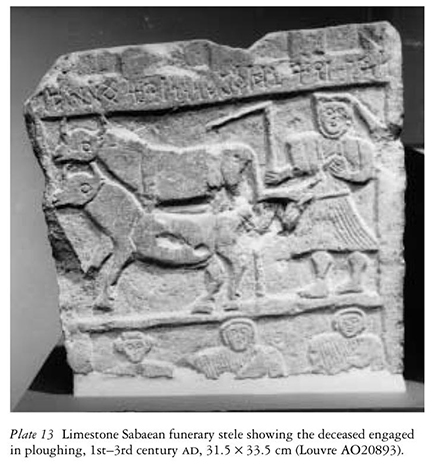
The following is the abstract of a Yemeni MA thesis on agricultural crops in ancient South Arabia.

زراعة المحاصيل الزراعية في اليمن القديم
الباحث: أ / ليبيا عبد الله ناجي صالح دماج
الدرجة العلمية: ماجستير
الجامعة: جامعة صنعاء
الكلية: كلية الآداب
القسم: قسم التاريخ
بلد الدراسة: اليمن
لغة الدراسة: العربية
تاريخ الإقرار: 2009
نوع الدراسة: رسالة جامعية

الملخص:
موضوع هذه الدراسة “المحاصيل الزراعية في اليمن القديم” لا تتناول ماهية تلك المحاصيل فقط وإنما تتناول كل ما يتعلق بها من كافة الجوانب، من حيث البدايات الأولى لظهور الزراعة في اليمن القديم، والآراء المختلفة والمتباينة حول ذلك، وما كان يزرع من محاصيل آنذاك. وكذا بداية ظهور الري والاعتماد عليه في سقي المزروعات. بالإضافة إلى توضيح الوسائل المستخدمة في العملية الزراعية خلال تلك الحقب الزمنية. ثم تدرس باستفاضة المواسم الزراعية وفصول السنة وشهورها، بالإضافة إلى مصادر المياه المتمثلة بالأمطار وطرق الري المختلفة والمتناسبة مع هذا المصدر، منذ سقوطها على الجبال وانحدارها نحو الأودية وحتى وصولها إلى الأراضي الزراعية. وكذا المصدر الثاني وهو المياه الجوفية، وما يتطلب من حفر أبار لاستخراج تلك المياه من باطنها. كما تتطرق الدراسة إلى كيفية تقسيم المياه بين الأراضي الزراعية، والقائم بتلك العملية.
Continue reading South Arabian Agriculture

40 Maps that Explain the Middle East

There is a very interesting set of 40 maps that Max Fisher has put together on one website to explain the history of the Middle East. Check it out here.

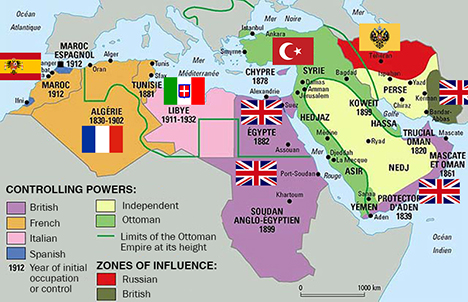
Below are Map #7 and Map #23

What the Middle East looked like in 1914

This is a pivotal year, during the Middle East’s gradual transfer from 500 years of Ottoman rule to 50 to 100 years of European rule. Western Europe was getting richer and more powerful as it carved up Africa, including the Arab states of North Africa, into colonial possessions. Virtually the entire region was ruled outright by Europeans or Ottomans, save some parts of Iran and the Arabian peninsula divided into European “zones of influence.” When World War I ended a few years later, the rest of the defeated Ottoman Empire would be carved up among the Europeans. The lines between French, Italian, Spanish, and British rule are crucial for understanding the region today – not just because they ruled differently and imposed different policies, but because the boundaries between European empires later became the official borders of independence, whether they made sense or not.

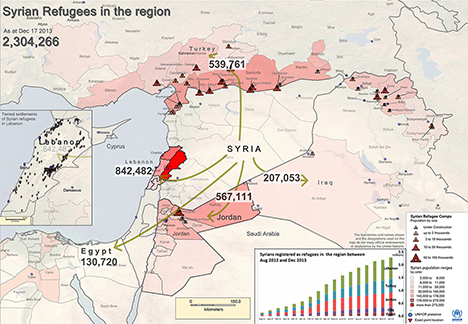
Syria’s refugee crisis

Syria’s civil war hasn’t just been a national catastrophe for Syria, but for neighboring countries as well. The war has displaced millions of Syrians into the rest of the Middle East and into parts of Europe, where they live in vast refugee camps that are major drains on already-scarce national resources. This map shows the refugees; it does not show the additional 6.5 million Syrians displaced within Syria. Their impact is especially felt in Jordan and Lebanon, which already have large Palestinian refugee populations; as many as one in five people in those countries is a refugee. While the US and other countries have committed some aid for refugees, the United Nations says it’s not nearly enough to provide them with basic essentials.

Ode to Islamic Studies: Its Allure, Its Danger, Its Power

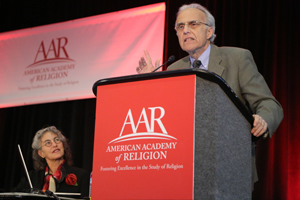
by Edward E. Curtis IV, Religion Bulletin, May 2, 2014

Editor’s note: This post is part of the Reflections on Islamic Studies series.

By any measure, Islamic studies is a vibrant field. In the last several decades, the number of tenure-track positions dedicated to the study of Islam as a religion and to Muslim politics and societies has expanded. New journals have appeared; book sales are good; and interest in Islamic studies has led to important public humanities projects such as the National Endowment for the Humanities’ Muslim Journeys Bookshelf.

What makes Islamic studies so dynamic? For one, its ever-expanding body of participants, who come from a number of disciplinary perspectives. The field is populated by intellectual networks rather than one identifiable set of intellectual authorities. Islamic studies finds institutional homes not only in religious studies and Near Eastern languages departments, but also in history, anthropology, sociology, political science, ethnomusicology, and art and architecture, among other academic units.

Islamic studies attracts some of the very best scholars in the world. There are now so many scholars producing so much scholarship that it is impossible for one person to know all of the literature in this vast field. Questions about where to do a graduate degree must be followed by the question of what the applicant wishes to study.

The multi-disciplinary study of Islam nurtures ever-expanding circles of conversation about the significance of Islam to both specialized disciplinary concerns and interdisciplinary inquiry. The origins of Islamic studies may be found in orientalism, that is, the scholarly, philological study of Islamic religion and Muslim cultures. But today, Islamic studies is a field defined by shared and intersecting questions, themes, and data, not any one methodology or set of texts. Its practitioners are not tied together by any one canon—one needn’t be an expert on the Qur’an to be in Islamic studies. Continue reading Ode to Islamic Studies: Its Allure, Its Danger, Its Power