All posts by tabsir

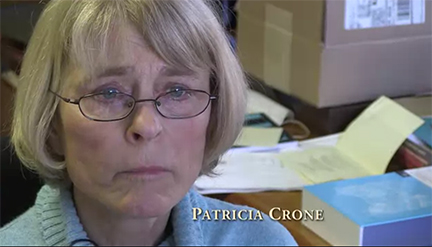
Film on Patricia Crone

One of the most original and intriguing scholars of the Islamic era in recent times is Patricia Crone, who has been at the Institute for Advanced Study at Princeton since 1997 and is now emeriti. Her, co-authored with Michael Cook, Hagarism: The Making of the Islamic World (1977) brought in a fresh and controversial angle to what had been a rather staid academic subject. She is currently battling cancer and a film is being made about this battle by her sister, a professional documentary maker. To find out more about this film, and how can you support it, click here.

The Floating Basket Homes of Iraq

MessyNessy has put a page about the Marsh Arabs with some fabulous pictures. Check it out here.

It was Iraq’s ‘Garden of Eden’; unique wetlands in southern Iraq where a people known as the Ma’dan, or ‘Arabs of the marsh’, lived in a Mesopotamian Venice, characterised by beautifully elaborate floating houses made entirely of reeds harvested from the open water.

Nabil Matar’s New Book

[Go to the website for an audio interview with Nabil Matar.]

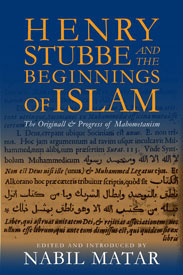
Nabil Matar, Henry Stubbe and the Beginnings of Islam: The Originall & Progress of Mahometanism­
Columbia University Press, 2014

by Elliott Bazzano, New Books in Islamic Studies, September 18, 2014

In Henry Stubbe and the Beginnings of Islam: The Originall & Progress of Mahometanism­ (Columbia University Press, 2014), Nabil Matar masterfully edits an important piece of scholarship from seventeenth-century England by scholar and physician, Henry Stubbe (1632-76). Matar also gives a substantial introduction to his annotated edition of Stubbe’s text by situating the author in his historical context. Unlike other early modern writers on Islam, Stubbe’s ostensible goals were not to cast Islam in a negative light. On the contrary, he sought to challenge popular conceptions that understood Islam in negative terms, and although there is no evidence that Stubbe entertained conversion, he admits many admirable characteristics of Islam, ranging from Muhammad’s character to the unity of God. The English polymath was well versed in theological debates of his time and therefore equipped all the more to write the Originall, given the benefit of his comparative framework, which in part explains why the first portion of his text devotes itself to the history of early Christianity. Strikingly, however, it seems that Stubbe never learned Arabic, even though he studied religion with a leading Arabist of his time, Edward Pococke. Indeed, one novelty of Stubbe’s work was precisely his re-evaluation of Latin translations (of primary texts) that were already in circulation. Stubbe’s contributions to scholarship also speak to the history of Orientalism—a word that did not yet exist at Stubbe’s time—or how scholars in the “West” more broadly have approached Islam. Stubbe’s Originall offers insights into present-day Western discourses that still struggle—at times with egregious incompetence—to make sense of Islam and Muslims. In this regard, Matar’s detailed scholarly account of Henry Stubbe and his carefully edited version of the Originall remains as timely as ever. Undoubtedly, this meticulously researched book will interest an array of scholars, including those from disciplines of English literature, History, and Religious Studies.

Those Levantine British Libertines…

[Webshaykh’s Note: This study is perhaps a bit dated and overstretched, but it can help explain why Iraq and Syria still matter (well, sort of…). I sort of doubt all the handsome men were farmers back then… or could it be that handsome Turks turned the eyes of lassies in Ireland independent of their farming expertise?]

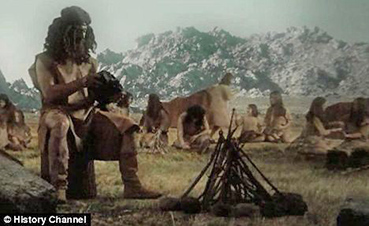
Most Britons descended from male farmers who left Iraq and Syria 10,000 years ago (and were seduced by the local hunter-gatherer women)

By David Derbyshire for MailOnlineUpdated: 13:37 GMT, 20 January 2010

Most Britons are direct descendants of farmers who left modern day Iraq and Syria 10,000 years ago, a new study has shown.

After studying the DNA of more than 2,000 men, researchers say they have compelling evidence that four out of five white Europeans can trace their roots to the Near East.

The discovery is shedding light on one of the most important periods of human history – the time when our ancient ancestors abandoned hunting and began to domesticate animals. Continue reading Those Levantine British Libertines…

The Undefeated Brooklyn Qabili Boxer

The fighting is not all in Yemen these days. Take the boxing world, for example. In the past there was “Prince” Naseem Hamad.

Now there is Sadam Ali from Brooklyn, who was inspired by Naseem. He has an impressive ring record so far. On November 8, 2014 in Atlantic City he defeated Luis Abregú with a TKO to achieve a record of 21 wins (13 knockouts) and no losses or draws. It is still early in his career, but so far things have gone very well for the young welterweight. He has his own Wikipedia page and a Facebook Page. Stay tuned.

My thanks to Jihan Varisco for bringing this to my attention.