All posts by tabsir

Sharpening Contradictions: Why al-Qaeda attacked Satirists in Paris

By Juan Cole | (Informed Comment)

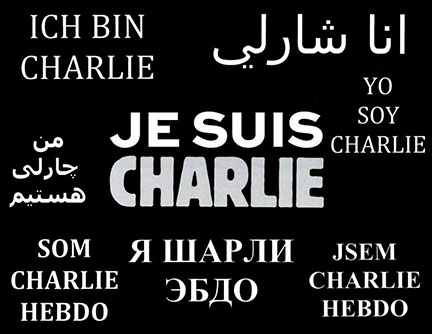
The horrific murder of the editor, cartoonists and other staff of the irreverent satirical weekly Charlie Hebdo, along with two policemen, by terrorists in Paris was in my view a strategic strike, aiming at polarizing the French and European public.

The problem for a terrorist group like al-Qaeda is that its recruitment pool is Muslims, but most Muslims are not interested in terrorism. Most Muslims are not even interested in politics, much less political Islam. France is a country of 66 million, of which about 5 million is of Muslim heritage. But in polling, only a third, less than 2 million, say that they are interested in religion. French Muslims may be the most secular Muslim-heritage population in the world (ex-Soviet ethnic Muslims often also have low rates of belief and observance). Many Muslim immigrants in the post-war period to France came as laborers and were not literate people, and their grandchildren are rather distant from Middle Eastern fundamentalism, pursuing urban cosmopolitan culture such as rap and rai. In Paris, where Muslims tend to be better educated and more religious, the vast majority reject violence and say they are loyal to France.

Al-Qaeda wants to mentally colonize French Muslims, but faces a wall of disinterest. But if it can get non-Muslim French to be beastly to ethnic Muslims on the grounds that they are Muslims, it can start creating a common political identity around grievance against discrimination. Continue reading Sharpening Contradictions: Why al-Qaeda attacked Satirists in Paris →

Tabsir Redux: Picturing Bethlehem

December eyes are fixed on Bethlehem, which has been an inspiration for artists over many years and indeed centuries. On this Christmas day, take a look at Bethlehem as it might have looked more than a century ago.


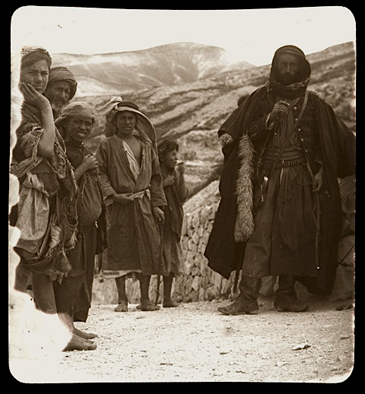
Left hand element of a stereoscopic photograph of the Bethlehem region circa 1900. Courtesy of Glenn Bowman.


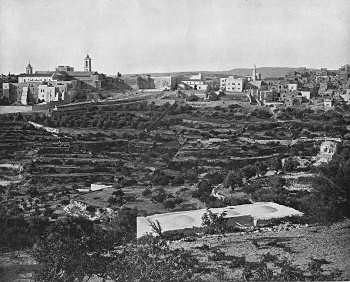
Approaching Bethlehem. Source: Earthly Footsteps of the Man of Galilee.

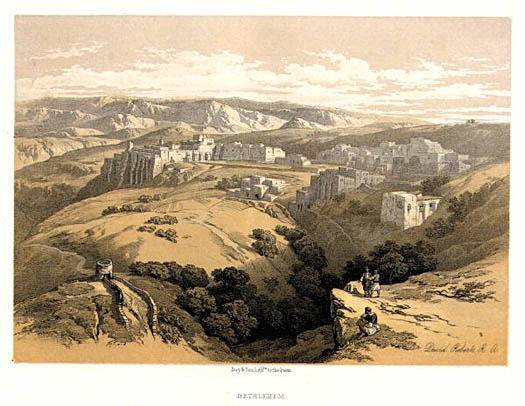
The following two illustrations of Bethlehem can be found on the website (Jerusalem in 19th Century Art) put up by James E. Lancaster.


Bethlehem Tinted lithograph printed by Day & Son, after David Roberts, published about 1855.

Continue reading Tabsir Redux: Picturing Bethlehem →

Heroic Teachers in Peshawer

[This story of incredible bravery needs to be widely distributed. As we try to make sense of such a senseless cowardly act, it is well to remember such bravery by these incredible women]

Pakistanis for Gender Equality, December 18, 2014

As the nation mourns the Peshawar school attack, let us also commend the exemplary bravery shown by these women (amongst others) who gave their lives in the hopes of protecting Pakistan’s tomorrow. Who says women are weak? Can our leaders show this kind of resolve to save this country from the TTP barbarians? Let us not let their sacrifices be in vain.

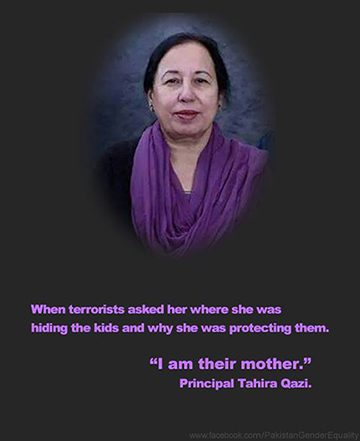
1) Tahira Qazi. Her personal assistant says she had the opportunity to escape the school but instead chose to stay with the students. As the militants fired shots, she rushed from classroom to classroom, shouting at those inside to lock themselves in. She consoled, protected, and ushered many students to safety. She even phoned parents to come and collect their children. One source says, “the honourable principal was asked by the terrorists ‘where are the students and why are you hiding them?’ She replied: ‘Talk to me, I am their mother.’ The terrorists replied ‘Ok, you die first, in a miserable way.’ She was burnt and bullets were fired in her head directly.” Continue reading Heroic Teachers in Peshawer →

Slavery in the Ottoman Era

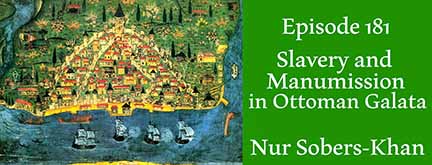
Check out the new podcast by Nur Sobers-Khan on the Ottoman History Podcast Site. Here is a description of the podcast:

The legal and social environments surrounding slavery and manumission during the early modern period varied from place to place and profession to profession. In this episode, Nur Sobers-Khan presents her exciting research on the lives of a particular population of slaves in Ottoman Galata during the late eighteenth century, how they were classified and documented under Ottoman law, and the terms by which they were able to achieve their freedom.