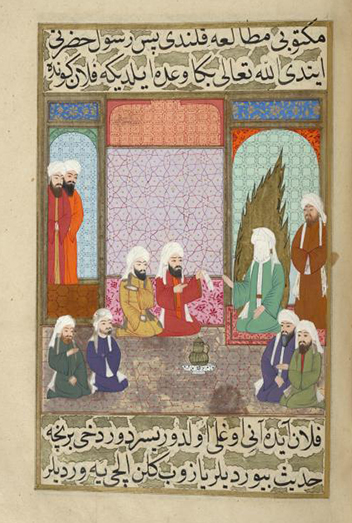
The following illustration is preserved in the New York Public Library. It features Muhammad receiving a letter from Bazan, the king of Yemen. It was created for Murad III, Sultan of the Turks, 1546-1595 by Darîr Erzurumî, fl. 14th cent.
The following illustration is preserved in the New York Public Library. It features Muhammad receiving a letter from Bazan, the king of Yemen. It was created for Murad III, Sultan of the Turks, 1546-1595 by Darîr Erzurumî, fl. 14th cent.
Islamic State’s latest victims: poor defenceless Christian Ethiopians
by Samson A. Bezabeh, Open Democracy, April, 21, 2015
After all, what IS wants is to create a polarized world of Muslim vs Christians by tapping into local discontent of various sorts.
The killing was horrific for anyone with enough resolve to see the video footage. Killing a defenceless human being with no military training, with no gun or weapon in his hand, for the colour of his skin, his country of origin and/or religious faith has been the hallmark of the Islamic State (IS).
In places such as Libya and Iraq being white has become a license for being kidnapped, then tortured. The colour bar, however, has not prevented IS from further killing. The latest victims are black Ethiopians who are adherents to Christianity. The 29-minute videos which IS released show a barbaric scene where poor migrants, as defenceless as their white counterparts, are shot and beheaded while a caption reads, “ followers of the cross from the enemy of the Ethiopian churchâ€.
Their crime is nothing other than being Christian and belonging to the Ethiopian church which has hardly gone out of its way to attack IS in any manner. Killing members of a poor minority for the faith that they are practicing does not have any honour. The many sympathisers of IS found in Africa, Europe or elsewhere in the globe should once again closely question the values that they are upholding. Every single gesture of admiration that is given IS either implicitly or explicitly, every “ like†clicked on Facebook pages, pulls the trigger on innocent Christian Ethiopians who have been butchered. Continue reading The killing was horrific…

by Hind Aleryani, Your Middle East, April 29, 2013
We used to play at my aunt’s garden when we were younger…girls and boys, there was no difference… we grew up together… we used to race, play, laugh… sometimes we would fight playfully… we used to watch TV together… cry at the end of sad cartoons together… we grew a bit older… we began to study for our classes together… whenever we’d fight we used to threaten the other that we’d tell on them to the teacher… we used to play practical jokes on one another… we’d laugh with all our hearts…
And so the days went by…
My cousin and I are staring outside the window… we are looking at the garden where my male cousin and his friends are playing… this is the garden where we used to play together… they used to be our friends once upon a time… these are the boys we used to play with… what happened? Why are we prisoners at home, while they play ball outside with all freedom… what did we do? Did we grow older? Did our bodies change? Did we become an object of temptation that needs to be covered from people’s eyes? Aren’t those the boys we knew since we were children? What changed? Why are we strangers? Why do I run and hide whenever I hear one of their voices? Is it just because the pitch of his voice changed? Is that why we aren’t friends anymore? Are we supposed to act differently towards one another? Different to how we acted just yesterday? We started to act shy and anxious whenever we’d speak… we stopped playing with one another… My cousin and I began spending our spare time watching Mexican soap operas, as if we were in our 50s…
And so the days went by… Continue reading Why Don’t Men Cover their Faces?
An interview with Tariq Ramadan
Interviewed by Hasan Azad, The Islamic Monthly, April 15, 2015
Hasan Azad: Muslims in the West are facing a great deal of scrutiny and questioning as to their “loyalty†to the countries of their citizenship and belonging. You have argued that the greatest challenge to such rhetoric is a committed citizenship on the part of Muslims that is engaged and contributes to the welfare of the wider community. And yet, there is a prevalent narrative amongst Muslims—which seems to me to be a vestige of old narratives of “us†vs. “themâ€â€”that makes many Muslims prefer to help Muslims in other countries, than help local communities and people in need, who may or may not be Muslim: as you have noted, poverty and suffering knows no religion or creed. How can Muslims reclaim the Prophetic imperative of caring for the neighbor, over and above identitarian-pettiness, which will only exacerbate the waves of Islamophobia that Muslims are experiencing?
Tariq Ramadan: This is what I’ve been saying for almost twenty-five years: we have to come back to the fundamentals and the principles of Islam. Understanding that there is something very important in our way of dealing with space: that anything that has to do with practicing religion has to do with where you are, and it is related to your neighborhood. For example, when the Quran refers to: “Those who, if We settle them in the land, establish prayer and give regular charity, promoting what is good and resisting what is bad†(Quran 22:41), what is important is that with the vertical dimension of prayer it means that when you pray somewhere you signify in symbolic terms, which are also practical, that this is home for you. This is what the sociologist Jocelyne Cesari has argued regarding the misunderstanding started in the West when people saw Muslims building mosques, and saw them as colonizing the space. It was in fact the opposite. It was an acknowledgement that we are home. It’s not to colonize, it’s to settle down, it’s to be part of the landscape.
Continue reading Western Muslims: Belonging to the Narrative
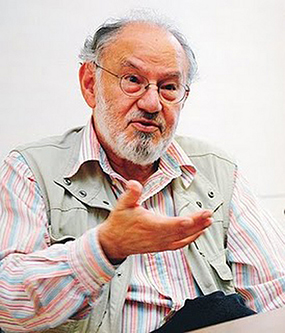
Thinking About Tradition, Religion, and Politics in Egypt Today
by Talal Asad, Critical Inquiry
I have used the term “tradition†in my writings in two ways: first, as a theoretical location for raising questions about authority, time, language use, and embodiment; and second, as an empirical arrangement in which discursivity and materiality are connected through the minutiae of everyday living.[1] The discursive aspect of tradition is primarily a matter of linguistic acts passed down the generations as part of a form of life, a process in which one learns/relearns “how to do things with words,†sometimes reflectively and sometimes unthinkingly, and learns/relearns how to comport one’s body and how to feel in particular contexts. Embodied practices help in the acquisition of aptitudes, sensibilities, and propensities through repetition until such time as the language guiding practice becomes redundant. Through such practices one can change oneself—one’s physical being, one’s emotions, one’s language, one’s predispositions, as well as one’s environment. Tradition stands opposed both to empiricist theories of knowledge and relativist theories of justice. By this I mean first and foremost that tradition stresses embodied, critical learning rather than abstract theorization. Empiricist theories of knowledge assert the centrality of sensory experience and evidence, but in doing so they ignore the prior conceptualization carried by tradition. My sensory experience is incommensurable with yours. It is only through language (integral to a shared form of life), and the conceptualization that language makes possible, that we can develop argument and knowledge as collective processes. Critique is central to a living tradition; it is essential to how its followers assess the relevance of the past for the present, and the present for the future. It is also essential for understanding the nature of circumstance, and therefore the possibility of changing elements of circumstances that are changeable. Relativist theories of justice assert that “justice” is simply the name for the norms that actually guide and regulate a people’s form of life. And yet what other people consider to be justice is part of the circumstance that confront the followers of every living tradition. As such it constitutes a challenge to every critical tradition, an invitation to change contingent aspects of one’s tradition, or of the circumstances in which it is embedded, or both. This is not a challenge of abstract theories but of embodied (and yet criticizable) ways of life.
For the rest of this article, click here.
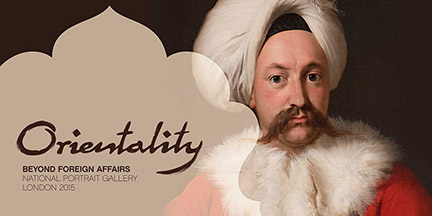
Orientality is a biennial conference series developed by the Orientalist Museum, Doha.
The inaugural conference took place at Cambridge University in 2013. Subsequent conferences are scheduled for the National Portrait Gallery, London, 2015.
The only conference of its kind, Orientality gives international art and museum professionals an opportunity to come together and discuss the art, history, politics and future of the Orientalist art movement.
In the process it aims to develop understanding between east and west, and showcase the continued vibrancy of the Orientalist art movement in the 21st century.
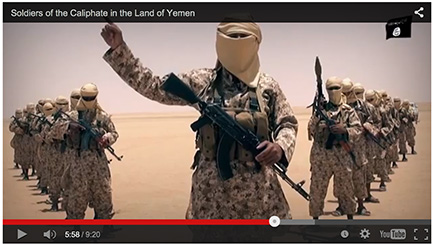
To add to Yemen’s woes, yet another wannabe player in the maelstrom of Yemeni politics has entered the picture, this time announced through a Youtube video picture. Out in the desert in Yemen about a dozen or so masked militia men wielding full battle gear go through basic training maneuvers choreographed for the video. The leader, or at least the spokesman, stands in front of his men about half way through the exercise and pledges his allegiance to Abu Bakr al-Baghdadi, the ISIS caliph who is apparently wounded and perhaps not even alive anymore. Move over al-Qaida, Huthis and loyalists of Ali Abdullah Salih, there is now a small group of video performers somewhere out in the desert who have extended the caliphate to Yemen.
Caliphate allegiance groups are now the rave and not just in Yemen. The ISIS franchise marketing strategy is pure video, sometimes slick but at other times — as in this video — rather poorly done. Imagine a dozen guys with kalashnikovs in a couple of pick-up trucks rolling into Sanaa and terrorizing the Huthis. The problem that the creators of this video face is that not that many Yemenis can see their call due to the lack of electricity. If they are planning to attract disaffected American and European youth, a better format would be a hiphop or rap production, showing a MacDonalds or KFC Chicken or Pizza Hut in the background (there actually is a Pizza Hut in Sanaa, so that could be an incentive for the foreign fighters to take the capital for ISIS).
I think I have seen an earlier version of this video, but with a better ending. Check it out here also on Youtube…