All posts by tabsir

“when I asked him what a Moslem was”

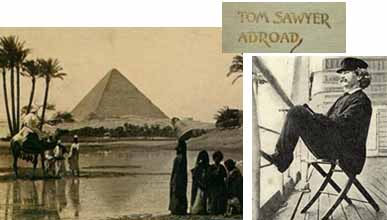
According to all three major monotheisms even God needed time to take a rest and so the sabbath was created. With the spate of mosque bombings, torture of prisoners and outright mayhem dominating the news about the Middle East these days, it might help to sit back and read what the American humorist Mark Twain wrote about his Missouri-born creation Tom Sawyer set loose in the Holy Land more than a century ago. Continue reading “when I asked him what a Moslem was”

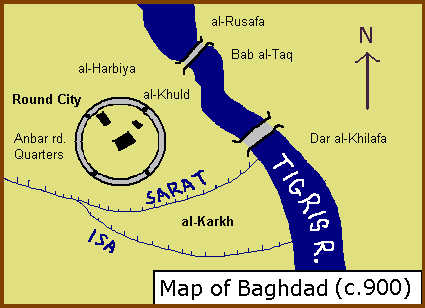
The Founding of Baghdad

The Founding of Baghdad
by
Ahmad ibn Abu Ya’qub ibn Ja’far ibn Wahb Ibn Wadih Yaqubi (died ca. 897 CE)

“I mention Baghdad first of all because it is the heart of Iraq, and, with no equal on earth either in the Orient or the Occident, it is the most extensive city in area, in importance, in prosperity, in abundance of water, and in healthful climate. It is inhabited by the most diverse individuals, both city people and country folk; people emigrate to it from all countries, both near and far; and everywhere there are men who have preferred their own neighborhoods there, their trade and commercial centers; that is why there is gathered together here what does not exist in any other city in the world. Continue reading The Founding of Baghdad

A Sailor and His Camel Ride


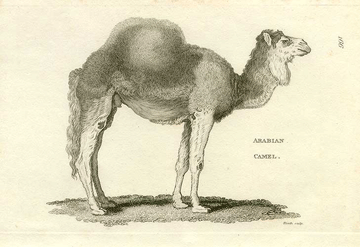
[Illustration: Arabian Camel from George Shaw, Zoology (1801)]

[Joseph Osgood was a Black American sailor who visited the Yemeni port of Mocha about a dozen years before the start of the American Civil War. He offers a rich, descriptive account of his visit to the Yemeni coast, including a sailor’s view of the ship of the desert.]

No wheel carriages are used here, the most general mode of transportation being by camels, for which the males along are serviceable. The flesh of the camel forms a staple article of food, the head and neck being excepted, because one of the race unwittingly rendered these parts unholy by obtrusively poking his head and neck into Mahomet’s tomb. Wellsted says that a camel is welcomed at its birth, by the Arab, with “another child is born unto us.” Continue reading A Sailor and His Camel Ride

The Book of Sanaa

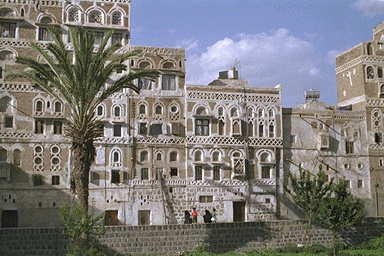
One of the Arab World’s most important modern poets is the Yemeni ‘Abd al-‘Aziz al-Maqalih. Dr. al-Maqâlih received his Ph.D. from ‘Ayn Shams University in 1977. He was President of Sanaa University from 1982-2001. He has received the title of “Knight of the First Rank in Arts and Letters” in 2003 from the government of France. The poem (translated here by Bob Holman and Sam Liebhaber) was written during the 70 day siege of Sanaa in 1968 when the poet was 31 years old. Sanaa is the capital of the modern Yemeni nation state, as it was for the Zaydi imamate when Dr. al-Maqalih was born.

The 26th Qasida
By ‘Abd al ‘Aziz al-Maqalih

Where are the gardens of Sanaa?
Dusty souqs have killed them,
covered them with corruption.
Nothing remains of their walls,
no one marched in their funeral.

Continue reading The Book of Sanaa

Mary in the Qur’an

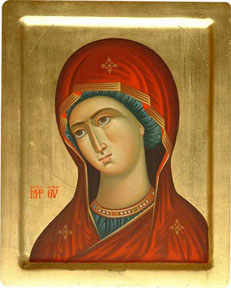
Illustration: Theotokos, Virgin Mary, Albanian icon

Bismillah al-Rahman al-Raheem. In the name of God, the Merciful, the Compassionate.
. . .And make mention of Mary in the Scripture, when she had withdrawn from her people to a place in the East, and had chosen seclusion from them. Then We [God] sent unto her Our Spirit and it assumed for her the likeness of a perfect human being. She said: “Truly I seek refuge in the Merciful One from you, if you are God-fearing”. He said: “I am only a messenger of your Lord, to give to you a pure son”. She said: “How can I have a son when no man has touched me, neither have I been unchaste”? He said: “Even so. Your Lord says: ‘It is easy for Me. And that We may make of him a revelation for humanity and a mercy from Us, and it is a thing ordained’”. And she conceived him, and she withdrew pregnant with him to a distant place. And the pains of childbirth drove her to the trunk of a palm-tree: She cried out: “Oh! Would that I had died before this! Would that I had been a thing forgotten and unseen!” Then (a voice) called out to her from beneath her: “Do not grieve, for surely your Lord has made a stream to flow beneath you; And shake towards you the trunk of the palm tree, it will drop on you fresh ripe dates: So eat and drink and refresh yourself. Then if you see any person, say: ‘Surely I have vowed a fast to the Merciful One, so I shall not speak to any one today’”. Then she brought the child to her own people, carrying him. They said: “O Mary! You have come with an amazing thing. O sister of Aaron! Your father was not a wicked man nor was your mother an unchaste woman”. Then she pointed to the child. “But they said, ‘How shall we speak to one who is still in the cradle, a little child?’ Jesus said, ‘Behold, I am God’s servant; God has given me the book and made me a prophet. God has made me blessed, wherever I may be; and God has enjoined me to pray and to give alms so long as I live, and likewise to cherish my mother; God has not made me arrogant or unblessed. Peace be upon me the day I was born, and the day I die, and the day I am raised up alive’”. Qur’an, Chapter of Mary, (19:16—35)

Good evening, al-salaamu alaikum, peace be upon you all.

I am, as ever, honoured to be here with you on this blessed night at Trinity-St. Paul’s. It is a great joy to be back in this church, both in the primary meaning of that word as this gathering of people, and in the secondary meaning of this amazing physical space that we share. Continue reading Mary in the Qur’an

Turning the World Upside Down

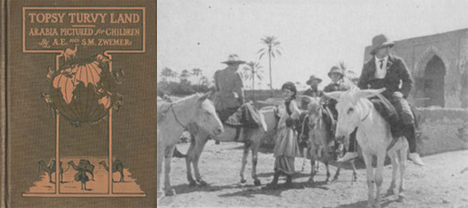
[Note: The following Islamophobic/Christophilic piece was written by the early 20th century missionary Samuel Zwemer and his wife Amy for Christian children. The overt Orientalism seen here through a virtually complete opposing of Arab Muslims to “civilized” American Christians is chilling; unfortunately it still resonates and not only with conservative Evangelicals intent on converting Muslims to their own brand of Christendom. I offer the following selection (the whole cloth is preserved at Project Gutenberg) as a reminder that the so-called “clash of civilizations” has deep roots. So on this Christmas Eve, as you count your blessings, consider also the many curses you can find in the following excerpt as a Muslim reader. A century or so after this book was written, a different kind of mission embroils Baghdad. On this Christmas Eve, for President Bush, mission not accomplished; for Samuel Zwemer, prayer not answered. For Iraqi Muslims the world has indeed been turned downside up. ]

The story of mission work in Arabia is not very long, but it is full of interest. From the day when Mohammed proclaimed himself an apostle in Mecca until about sixteen years ago when Ion Keith Falconer came to Aden as a missionary, all of Topsy-turvy Land lay in darkness as regards the gospel. For thirteen hundred years Mohammed had it all his own way in Arabia. Now his dominion over the hearts of men, is in dispute, and there is no doubt that the final, full victory will rest with Jesus the Son of God, the Saviour of the world.

Continue reading Turning the World Upside Down

Poetic Vengeance

The Critics
by Ceyhun Atuf Kansu (1919-78)

They know their English:
The Victorian Age,
Eliot schmeliot
Are complete on their shelves.

They know their French:
From its origins to the present
The grasshopper and the ant
From La Fontaine to our day.

I am not even mentioning
Those who know Italian or German
The erudite scholars
Those who did it the American way.

Continue reading Poetic Vengeance

Among the Earlier Ruins

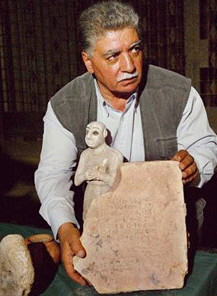
[Donny George at Iraqi exhibition of pre-Islamic antiquties.]

Muslims Need to be Sensitised to their Own Material Past
By Alastair Northedge, The Art Newspaper, November 2006

At the end of August, The Art Newspaper revealed the stunning news that Donny George, president of the State Board of Antiquities and Heritage in Iraq, had been forced to flee the country in fear of his life and take refuge in Damascus. In recent months, Dr George sealed up the treasures of the National Museum in Baghdad behind concrete walls, as it was too dangerous to leave them exposed. He was replaced by a relation of the Minister of Tourism, who comes from the party of Muqtada al-Sadr, the Shia cleric and leader of the resistance movement. Continue reading Among the Earlier Ruins