All posts by tabsir

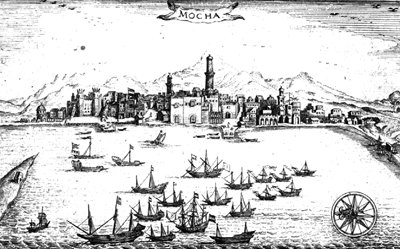
Mocha, Port of Coffee

[Joseph Osgood was a Black American sailor who visited the Yemeni port of Aden about a dozen years before the start of the American Civil War. He offers a rich, descriptive account, including information on the coffee cargo that may have brought his ship to this Red Sea port in the first place. The following is his rendition of a popular origin tale for the popular brew.]

Any communicative Arab will tell the following story about the early history of Mocha, with more or less modification.

A little over two centuries ago, there dwelt near the beach, enclosed by two sandspits forming the harbor, a worthy fisherman, whose learning, wisdom, and pious observance of all the tenets of the Moslem faith, had collected around his humble hut the dwellings of a band of devoted pupils to be instructed in the religion of their great Arabian legislator and prophet. One day a ship from India, and bound to Jiddah, was driven by adverse winds into the cove, and, while there detained, the crew visited the settlement near the beach, and were entertained by the holy Sheik, who regaled them with coffee, a beverage till then unknown to his guests. The Sheik, learning that the captain was ill on board his vessel, extolled the sanative virtues of coffee, and sent some as a present to the captain, by the returning crew. The prescribed medicine was taken, the captain recovered his health, visited the shore, made confidence with the people, bartered his cargo for coffee and sailed for home, where the worth of the rare and newly discovered product was quickly acknowledged, and successive voyages soon established a lucrative commerce, and thus founded and gave a world wide repute to the city of Mocha and many of the neighboring inland towns. Continue reading Mocha, Port of Coffee

A Taylor Made Bath in Damascus

The American man of letters Bayard Taylor (1825-1878) was one of many travelers to the Near East of his time. His tour in 1853 resulted in a travel account above the common lot of Holy Land roller overs. Of particular interest is his frank account of a Turkish bath in Damascus.

“The Bath is the ‘peculiar institution’ of the East. Coffee has become colonized in France and America; the Pipe is a cosmopolite, and his blue, joyous breath congeals under the Arctic Circle, or melts languidly into the soft airs of the Polynesian Isles; but the Bath, that sensuous elysium which cradled the dreams of Plato, and the visions of Zoroaster, and the solemn meditations of Mahomet, is only to be found under an Oriental sky. The naked natives of the Torrid Zone are amphibious; they do not bathe, they live in the water. The European and Anglo-American wash themselves and think they have bathed; they shudder under cold showers and perform laborious antics with coarse towels. As for the Hydropathist, the Genius of the Bath, whose dwelling is in Damascus, would be convulsed with scornful laughter, could he behold that aqueous Diogenes sitting in his tub, or stretched out in his wet wrappings, like a sodden mummy, in a catacomb of blankets and feather beds. As the rose in the East has a rarer perfume than in other lands, so does the Bath bestow a superior purification and impart a more profound enjoyment… Continue reading A Taylor Made Bath in Damascus

In and Out of Aden

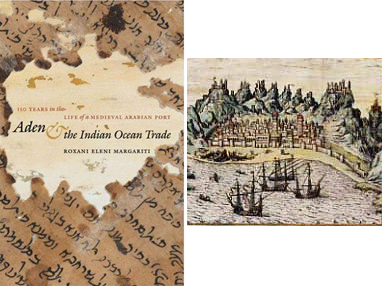
[The following is an excerpt from a recently published historical analysis of the Yemeni port of Aden in the 13th and 14th centuries by Roxani Margariti (Emory University), who reconstructs port life vividly through archival records in the Cairo Genizeh, relevant Arabic texts and archaeological research. This is a fascinating look at one of the most important medieval ports in the Red Sea/Indian Ocean trading network that ultimately linked Europe with the Far East before Portuguese galleons changed the complex equation of global trade.]

by Roxani Eleni Margariti

In the current era of giant container ships, GPS, and e-commerce, a single vessel can carry forty-eight hundred trailer-sized containers of merchandize from Bremen, Germany, to Elizabeth, New Jersey, in a single voyage. The exact position of a ship is knowable at the push of a button and the blink of any eye, and one can place an order one minute and have confirmation of its receipt in the next. It is therefore difficult to grasp the medieval dimensions of dimensions and time. A respectably sized medieval Arab ship held the equivalent of about two trailer-sized containers. Continue reading In and Out of Aden

The Wisdom of Chewing Fish Eyes

[The following is an excerpt from Gregor von Rezzori’s Tales from Maghrebinia with clever stories about the famous Turkish wit, Nasr al-Din Khoja.]

“Once, so they say, when the poverty in the country became so great that no one gave anything to the wise Hodscha any more, he went to the Gospodor, the king’s representative, and threatened, ‘Sir give me a bag of gold or I shall do what I have never done before.’ The magnaminous Gospodor, at that time a member of the House of Kantakukuruz, was frightened by the threat, and let him have the bag of gold. ‘Verily,’ said the Hodscha, ‘if you had not listened to me, oh administrator of the king’s domain, I would have been compelled to work.’… Continue reading The Wisdom of Chewing Fish Eyes

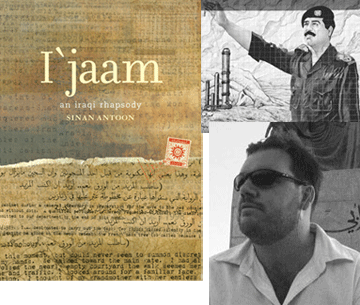
An Iraqi Rhapsody

[The following is an excerpt from Sinan Antoon’s recently published translation of his earlier Arabic novel about life in Saddam’s Iraq.]

Two clouds kissed silently in the Baghdad sky. I watched them flee westward, perhaps out of shyness, leaving me alone on the bench beneath the French palm tree (so called because it stood in the courtyard in front of the French department) to wait for Areej. I looked for something worth reading in that morning’s al-Jumhuriyya, and found a good translation of a Neruda poem in the culture section, besieged [beside?] on all sides by doggerel barking praises of the Party and the Revolution. The breeze nudged the palm fronds above my head to applaud. It was April, “the month of fecundity, the birth of the Ba’th and the Leader,” as one of the posters on the college walls announced. Continue reading An Iraqi Rhapsody

Wisdom from a Half Century Ago


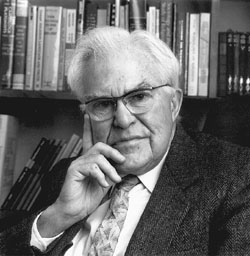
Wilfred Cantwell Smith

For those of us who have been reading about Islam for decades, it is somewhat of a shock that one of the classic studies, Islam in Modern History, by the noted historian of religion Wilfred Cantwell Smith, is now half a century old. Based on personal experience in Pakistan in addition to masterful knowledge of sources, Smith put “modern” Islam on the intellectual map. For a book written so long ago by a humble scholar aware of the pitfalls of political prophecy, you might wonder why such an obviously out-of-date analysis is worth reading and re-reading. I suggest that despite the spate of recent books on Islam, many of them well worth reading and rereading in their own right, a return to Smith’s penchant reading of Islam is well worth the time and effort, no matter how you view the infinitely debatable notion of the divine. Continue reading Wisdom from a Half Century Ago

An Unprofitable Prophet from Maghrebinia

[In 1953 Gregor von Rezzori published a fictional satire of an anonymous East European/Near Eastern land he called Maghrebinia. Here is an excerpt that is still poignant today…]

“I am about to report on the great and glorious country Maghrebinia. You won’t find it on a map, it isn’t in any atlas or on any globe. There are people who say it lies in southeast Europe, others like to think it is southeast Europe, but, for heaven’s sake, what is southeast Europe? … Of course pedantic people might make an effort to define the borders of Maghrebinia geographically and vaguely, but just these pedants would get it all wrong. For Maghrebinia’s true borders lie in the hearts and souls of its people, and pedants don’t know the first thing about the hearts and souls of people…”

“Maghrebinia is beautiful. Continue reading An Unprofitable Prophet from Maghrebinia

Tancred or the New Crusade


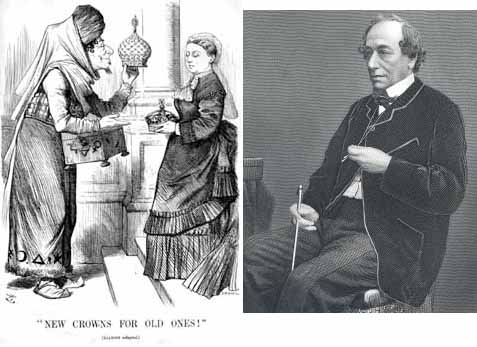
Benjamin Disraeli
(1804-1881) was one of the most colorful and literary of British Prime Ministers in the latter half of the 19th century. Among his novels was one about a young conservative English lord named Tancred who made a spiritual quest to the “Holy Land.” This is his Tancred, of The New Crusade, originally published in 1877. In the novel Tancred is disillusioned with the lack of morality in British politics. Instead of taking his inherited place in high society, he chooses instead to go on a quest for spiritual meaning to the land where his religion began. Disraeli, as novelist, uses the Levant as a backdrop for his psychological portrait of young Tancred, but it is as much about the foibles of the British political scene as it is an “Orientalist” rendering of the cradle of Judaism, Christianity and Islam. The novel is full of intrigue, as adventure stories should be. It has not made canonization as a “great” work, but it is still worth a read (if you can find a copy). Continue reading Tancred or the New Crusade