All posts by tabsir

Muhammad in and out of the Academy


Muhammad Sven Kalisch


Islamic Theologian’s Theory: It’s Likely the Prophet Muhammad Never Existed

By ANDREW HIGGINS, The Wall Street Journal, November 15, 2008

MÜNSTER, Germany — Muhammad Sven Kalisch, a Muslim convert and Germany’s first professor of Islamic theology, fasts during the Muslim holy month, doesn’t like to shake hands with Muslim women and has spent years studying Islamic scripture. Islam, he says, guides his life.

So it came as something of a surprise when Prof. Kalisch announced the fruit of his theological research. His conclusion: The Prophet Muhammad probably never existed.

Muslims, not surprisingly, are outraged. Even Danish cartoonists who triggered global protests a couple of years ago didn’t portray the Prophet as fictional. German police, worried about a violent backlash, told the professor to move his religious-studies center to more-secure premises.

“We had no idea he would have ideas like this,” says Thomas Bauer, a fellow academic at Münster University who sat on a committee that appointed Prof. Kalisch. “I’m a more orthodox Muslim than he is, and I’m not a Muslim.” Continue reading Muhammad in and out of the Academy

The Semiotics of Ayah

[Note: The following article is posted on the website forum for the Journal of Scriptural Reasoning, hosted at the University of Virginia.]

The Semiotics of Ayah: A Comparative Introduction”

by Basit Bilal Koshul, Concordia College

Introduction

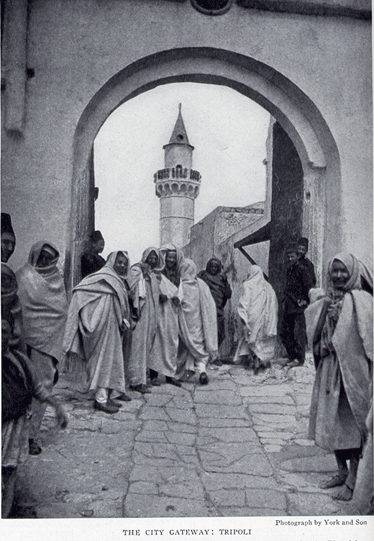
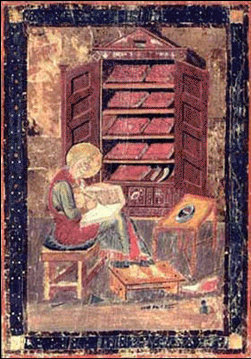
As is the case with non-Abrahamic religious traditions Judaism, Christianity and Islam are very much concerned with the sacred. But, as Paul Ricoeur points out, the Abrahamic religions have a different understanding of the sacred in contrast to other religions. In the Abrahamic traditions “the accent is placed on speech and writing and generally on the word of God” (Ricoeur, 1995, 48) when referring to the sacred. In contrast the non-Abrahamic religious traditions often see the sacred as being present in the natural world (and the human world that is part of the natural world.) From the non-Abrahamic perspective anything and everything in the natural world can be a place, object or occasion for a hierophany—the numinous irruption of the sacred: “The sacred can manifest itself in rocks or in trees that the believer venerates; hence not just in speech, but also in cultural forms of behavior” (Ricoeur, 1995, 49). Beginning with the Revelation at Mt. Sinai the revealed word “takes over for itself the function of the numinous” and rejects all claims of the numinous/sacred being present anywhere in natural or cultural phenomena (Ricoeur, 1995, 65). Continue reading The Semiotics of Ayah

Turkey’s Hero, Behind the Bronze Veneer


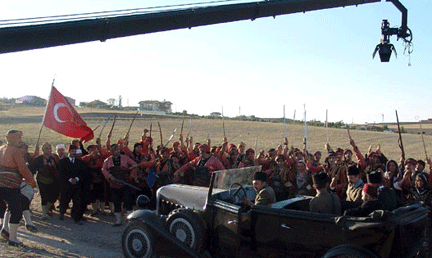
“Mustafa,” a documentary about Mustafa Kemal Ataturk, Turkey’s founder, is filmed in Istanbul.

Turkey’s Hero, Behind the Bronze Veneer
By SABRINA TAVERNISE, Istanbul Journal, The New York Times, November 13, 2008

ISTANBUL — After nearly a century of looking serious, Mustafa Kemal Ataturk, the founder of modern Turkey, has started to smile.

Ataturk — a war-hero-turned-statesman who defended Turkey during the partitioning of the Ottoman Empire — is the subject of what is perhaps the world’s longest personality cult.

His portrait hangs in every tea shop, government office and classroom. Insulting his memory is a crime under Turkish law. And every Nov. 10, Turkey observes a moment of silence to commemorate his death in 1938.

But the ironclad official version might be softening. Last month a documentary on Ataturk was released that looks at his human side. That might not sound like much, but in a country where official history is kept under lock and key, the film, “Mustafa,” was a brave endeavor. Continue reading Turkey’s Hero, Behind the Bronze Veneer

Obama’s Iranian Opening

by William O. Beeman, New America Media, News Analysis, November 12, 2008

New America Media Editor’s note: Diplomacy between the United States and Iran has been at a standstill. President-elect Barack Obama has a great opportunity to end the cold war between the two nations. NAM contributing writer William O. Beeman is professor and chair of the Department of Anthropology at the University of Minnesota.

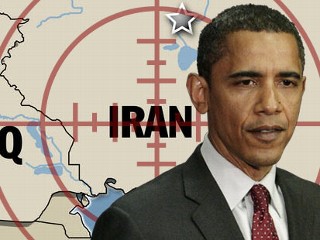
President-elect Barack Obama has a serious opening to improving relations with Iran, if he knows how to exercise it. Unfortunately, his transition advisory team is weak on Middle East affairs, and almost non-existent on Iran. This leaves the president-elect prey to the same forces that have tried to sabotage progress on rapprochement with Iran during the Bush administration.

Paradoxically the Bush administration in its last days is flirting with a thaw on Iranian relations. They have been giving serious consideration to establishing a real United States Interests Section in Tehran. Iranians have had an Interests Section in Washington for decades. By contrast, the Swiss Embassy has represented U.S. interests with Swiss personnel. Continue reading Obama’s Iranian Opening

The shoe is on the other fit

A Difference in Language

By Abdul Rahman Al-Rashed, Asharq Alawsat, November 11, 2008

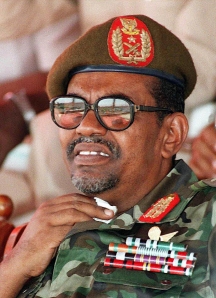
I can not imagine what Sudanese President Omar Hassan Al Bashir had for dinner the evening when he made his fervent speech in Darfur where he proclaimed ‘America, Britain, and France are all underneath my shoes’. I hope that the President’s shoes remain in good condition because he will surely need them over the coming days.

That said, it is Bashir’s good fortune that the metaphor of being underneath one’s shoes is lost in translation and is not such an insult in the West, as it is in our culture, for surely such a remark made by the President about an Arab country would have led to war. Continue reading The shoe is on the other fit

Yes, we can … chew qat


qat market in the Cheikh Othman area of Aden

Qat sales tripled on the eve of American Elections
by Mohammed al-Kibsi, Yemen Observer, Nov 5, 2008 – 2:05:47 AM

For the first time in Yemen’s history Yemenis at large spent the Wednesday’s night till Wednesday morning following up the American elections results. Abdul-Ghani al-Kazan a Yemeni lawyer said he didn’t sleep the whole night till the results were released and till Obama displayed the winning speech at 7 :30 am Sana’a local time.

Ali al-Thawr a qat dealer said he sold four folds of the daily quantity last Tuesday afternoon and night. “After I had finished selling the daily quantity of qat at 3 pm. I found more people searching for qat so I phoned a qat farmer to send me one more shipment of qat” said al-Thawr.” Continue reading Yes, we can … chew qat

A Fatwa that Hits Back

Fatwa Gives Women the Right to Hit Husbands

Riyadh, Asharq Al-Awsat – A fatwa originating from Turkey has given women the right to strike their husbands in cases of self-defense.

Sheikh Mohsen al Obeikan, an adviser to the Saudi Ministry of Justice and a member of the Saudi Shura Council agreed with some Islamic scholars in Turkey and Egypt in this regard. “This [issue] is acknowledged by Islamic jurists and it has roots in Islamic Shariah, the Quran and the Hadith [Prophetic traditions],” said the Sheikh. He referred to the following excerpts of the Quran: ‘The recompense for an injury is an injury equal thereto (in degree),’ [Surat Ashoura: 40] and ‘…whoever then acts aggressively against you, inflict injury on him according to the injury he has inflicted on you…’ [Surat al Baqara: 194] Continue reading A Fatwa that Hits Back

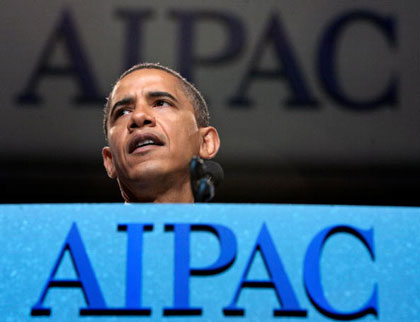
Obama and Islam

American Muslims overwhelmingly voted Democratic
Lorraine Ali, NEWSWEEK, November 7, 2008

For the past few months, not a day went by without the words “Muslim” and “Obama” being mentioned in the same sentence. From the divisive shouts and jeers at McCain rallies to the Op-Ed pages of The New York Times to an interview with Colin Powell on NBC’s “Meet the Press,” Muslims—or at least the mention of them—have been more prevalent this campaign year than “Joe the Plumber.”

But beyond the use of the term Muslim as a pejorative, and accusations by the far right that Obama was himself a secret follower of the Quran, what did real Muslim-Americans think of the Chicago senator? And how did they vote? The American Muslim Task Force on Civil Rights and Elections released a poll today of over 600 Muslims from more than 10 states, including Florida and Pennsylvania, and it revealed that 89 percent of respondents voted for Obama, while only 2 percent voted for McCain. It also indicated that 95 percent of Muslims polled cast a ballot in this year’s presidential election—the highest turnout in a U.S. election ever—and 14 percent of those were first-time voters. The Gallup Center for Muslim studies estimates that U.S. Muslims favored Obama in greater numbers than did Hispanics (67 percent of whom voted for Obama) and nearly matched that of African-Americans, 93 percent of whom voted for Obama. More than two thirds who were polled said the economy was the most important issue affecting their decision on Nov. 4th, while 16 percent said the wars in Iraq and Afghanistan informed their vote—numbers that put Muslims roughly on a par with the general population. Continue reading Obama and Islam