All posts by tabsir

A Century of Race Prejudice


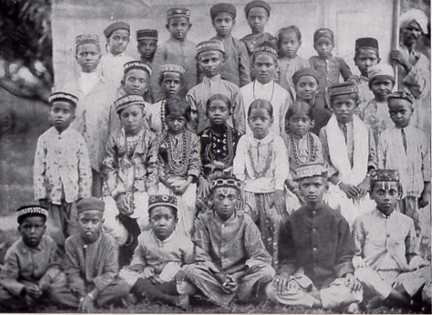
Some pupils of the Methodist Episcopal Day School, Bangalore, South India. The boy’s school has 80, the girl’s school has 50 pupils.

[Note: the following excerpt is from an extraordinary article in the National Geographic Magazine in December, 1910, written some 99 years ago. Time has moved on and the names of the principal players may have changed, but the refrain remains the same.]

Race Prejudice in the Far East
by Melville E. Stone, December, 1910

Although whole libraries have been written concerning Asia and the Asians, there is a widespread belief that, because of the differences in our mentalities, it is not possible for us ever to understand them, or they us. Kipling says that “East is East, and West is West, and never the twain shall meet.” The “oldest inhabitant” in India or China or Japan is sure to tell you that the Oriental mind is unfathomable. I have not the temerity to challenge these opinions. And yet I venture to suggest that there is an older authority holding a different view, and that I still have some respect for Cicero’s idea that there is a “common bond” uniting all of the children of men. Continue reading A Century of Race Prejudice

History of Frankincense


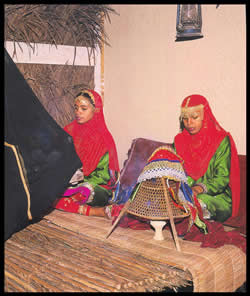
Omani women refreshing clothing with frankincense smoke

The website of the Sultan Qaboos Cultural Center has a number of interesting online pages. One of these is a pictorial history of frankincense and myrrh. Here are some of the tidbits about both of these important trade items:

• Almost all frankincense comes from western Oman, where it is used for everything from deodorant and toothpaste to food and drink flavoring.
• Frankincense and myrrh were so expensive in Europe that southern Arabia became known as Arabia Felix, “Arabia the Blessed.” Continue reading History of Frankincense

Unveiling Traditions


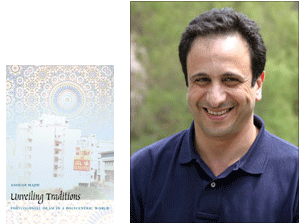
Anouar Majid

Unveiling Traditions

By Anouar Majid

Manufactured cultural biases and antagonisms deflect people’s attention from the more pressing issues facing humanity as a whole and energize the real powers undermining world cultures and ‘imagined communities.’ Although power relations and configurations have shifted dramatically in the last few decades, the languages of politics and scholarship still operate on dated assumptions whose effect is to freeze live histories into immutable and misleading stereotypes. One can understand how people without sufficient access to academic scholarship continue to believe that nations and cultures as they imagine them are real; but how does one account for the persistence of such beliefs in whole fields of academic study, despite a continuous barrage of information telling us that the world is being dramatically reconfigured by the rising powers of multinational organizations and extraterritorial bodies and laws? Continue reading Unveiling Traditions

Stoves for Darfur


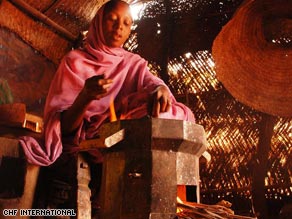
The $30 stoves help keep Darfur’s women safe
by reducing their time away from the refugee camps
.

Stoves help keep Darfur’s women out of harm’s way
Larry Lazo, CNN

In Sudan’s Darfur region, where violence and genocide are rampant, women risk their lives every day performing tasks as seemingly mundane as seeking out firewood.

But, from his suburban home, one Maryland teen has dedicated himself to making life a little safer for those women. Continue reading Stoves for Darfur

Islam in Australia

[The following is an excerpt from Understanding Muslim Identities: From Perceived Relative Exclusion to Inclusion by Samina Yasmeen (Centre for Muslim States and Societies , University of Western Australia), written in May 2008 and available as a pdf at http://www.omi.wa.gov.au/.]

Islam in Australia

Islam and Muslims are not new to Australia. The history of Muslim contacts with
Australia predates European settlement. Fishermen from Macasser regularly visited
Australia’s northern shores in December for four months to catch trepang. While self
sufficient and non-intrusive, the regular contacts left their mark on the language and
culture of the indigenous communities of the Arnhem Land and neighbouring areas.
These indigenous communities borrowed words from the Macassans’ vocabulary and
depicted their influence in their paintings. The first regular settlement of Muslims in
Australia, however, started in 1860 with the arrival of 3 camel-drivers from British India.
Over the next fifty years, their number exceeded 2,000. Continue reading Islam in Australia

What You Don’t Know About Gaza


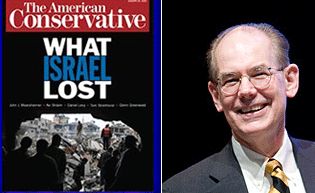
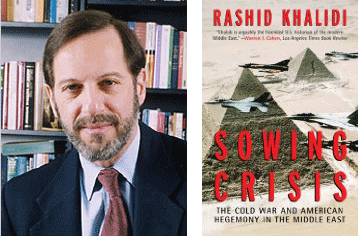
Professor Rashid Khalidi of Columbia University, left

What You Don’t Know About Gaza
By RASHID KHALIDI, The New York Times, January 8, 2009

NEARLY everything you’ve been led to believe about Gaza is wrong. Below are a few essential points that seem to be missing from the conversation, much of which has taken place in the press, about Israel’s attack on the Gaza Strip.

THE GAZANS Most of the people living in Gaza are not there by choice. The majority of the 1.5 million people crammed into the roughly 140 square miles of the Gaza Strip belong to families that came from towns and villages outside Gaza like Ashkelon and Beersheba. They were driven to Gaza by the Israeli Army in 1948.

THE OCCUPATION The Gazans have lived under Israeli occupation since the Six-Day War in 1967. Continue reading What You Don’t Know About Gaza

Lithographica Arabica 2: An Oriental Cafe


“An Oriental Café” from Bible Lands by Henry Van-Lennep, 1875, p. 779

For those who share the tactile thrill of fingers thumbing through brown-edged paper and caressing delicate bindings of century-plus-old books, I dedicate a new theme on Tabsir devoted to the art of lithographic representation of the Middle East. Lithographica Arabica — long live the line drawings and antiquated woodcuts of bibliophilic bliss.

The café (more properly kahweh) is a nearer approach to Western ideas, and deserves a passing notice, being an important institution of the East. Continue reading Lithographica Arabica 2: An Oriental Cafe

How Israel brought Gaza to the brink of humanitarian catastrophe


A wounded Palestinian policeman gestures while lying on the ground outside Hamas police headquarters following an Israeli air strike in Gaza City. Photograph: Mohammed Abed/AFP/Getty Images

How Israel brought Gaza to the brink of humanitarian catastrophe
by Avi Shlain, The Guardian, Wednesday 7 January 2009

The only way to make sense of Israel’s senseless war in Gaza is through understanding the historical context. Establishing the state of Israel in May 1948 involved a monumental injustice to the Palestinians. British officials bitterly resented American partisanship on behalf of the infant state. On 2 June 1948, Sir John Troutbeck wrote to the foreign secretary, Ernest Bevin, that the Americans were responsible for the creation of a gangster state headed by “an utterly unscrupulous set of leaders”. I used to think that this judgment was too harsh but Israel’s vicious assault on the people of Gaza, and the Bush administration’s complicity in this assault, have reopened the question.

I write as someone who served loyally in the Israeli army in the mid-1960s and who has never questioned the legitimacy of the state of Israel within its pre-1967 borders. What I utterly reject is the Zionist colonial project beyond the Green Line. Continue reading How Israel brought Gaza to the brink of humanitarian catastrophe