All posts by tabsir

Why they hate us: You can count on it

Why they hate us (II): How many Muslims has the U.S. killed in the past 30 years?(II): How many Muslims has the U.S. killed in the past 30 years?

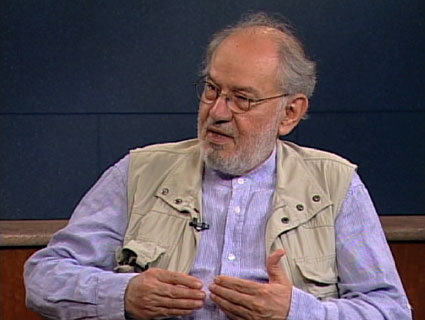
by Stephen M. Walt, The New ForeignPolicy.com, November 30

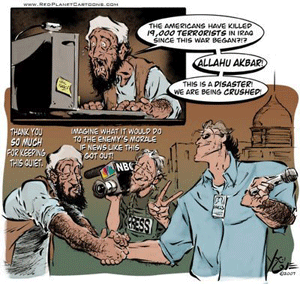
Tom Friedman had an especially fatuous column in Sunday’s New York Times, which is saying something given his well-established capacity for smug self-assurance. According to Friedman, the big challenge we face in the Arab and Islamic world is “the Narrative” — his patronizing term for Muslim views about America’s supposedly negative role in the region. If Muslims weren’t so irrational, he thinks, they would recognize that “U.S. foreign policy has been largely dedicated to rescuing Muslims or trying to help free them from tyranny.” He concedes that we made a few mistakes here and there (such as at Abu Ghraib), but the real problem is all those anti-American fairy tales that Muslims tell each other to avoid taking responsibility for their own actions.

I heard a different take on this subject at a recent conference on U.S. relations with the Islamic world. In addition to hearing a diverse set of views from different Islamic countries, one of the other participants (a prominent English journalist) put it quite simply. “If the United States wants to improve its image in the Islamic world,” he said, “it should stop killing Muslims.” Continue reading Why they hate us: You can count on it

Fear of Minarets

My compatriots’ vote to ban minarets is fuelled by fear

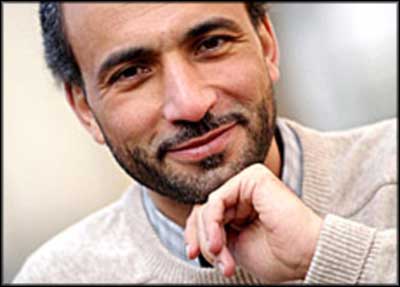
by Tariq Ramadan, The Guardian, 29 November 2009

It wasn’t meant to go this way. For months we had been told that the efforts to ban the construction of minarets in Switzerland were doomed. The last surveys suggested around 34% of the Swiss population would vote for this shocking initiative. Last Friday, in a meeting organised in Lausanne, more than 800 students, professors and citizens were in no doubt that the referendum would see the motion rejected, and instead were focused on how to turn this silly initiative into a more positive future.

Today that confidence was shattered, as 57% of the Swiss population did as the Union Démocratique du Centre (UDC) had urged them to – a worrying sign that this populist party may be closest to the people’s fears and expectations. For the first time since 1893 an initiative that singles out one community, with a clear discriminatory essence, has been approved in Switzerland. One can hope that the ban will be rejected at the European level, but that makes the result no less alarming. What is happening in Switzerland, the land of my birth? Continue reading Fear of Minarets

Darwin, Egyptian Style

MEMO FROM ALEXANDRIA
Harnessing Darwin to Push an Ancient Intellectual Center to Evolve

By MICHAEL SLACKMAN, The New York Times, November 26, 2009

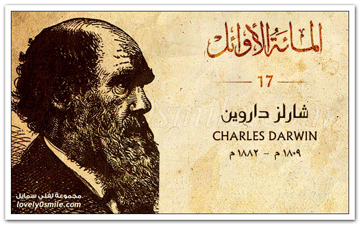
ALEXANDRIA, Egypt — It is not that Charles Darwin and the theory of evolution are unknown here. But even among those who profess to know something about the subject, the common understanding is that Darwin said man came from monkeys.

Darwin, of course, did not say man came from monkeys. He said the two share a common ancestor. But to discuss Darwin anywhere is not just to explore the origin of man. It is inevitably to engage in a debate between religion and science. That is why, 150 years after Darwin published “On the Origin of Species,” the British Council, the cultural arm of the British government, decided to hold an international conference on Darwin in this conservative, Sunni Muslim nation.

It was a first.

“A lot of people say his theories are wrong, or go against religion,” said Martin Davidson, chief executive of the British Council. “His ideas provoke, but if we are going to understand each other, we have to discuss things that divide us.” Continue reading Darwin, Egyptian Style

Just Rain?


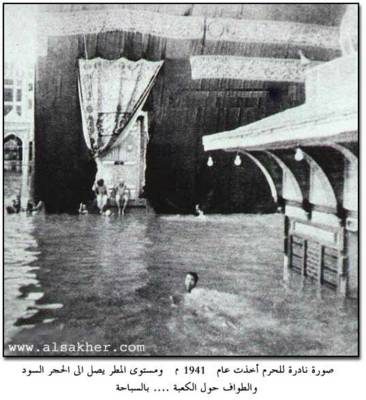
Flooding in Mecca in 1941, in which the circumambulation had to be swum

In many parts of the Middle East, where water is not an easily accessible resource, rain is baraka. The Arabic term baraka is only vaguely understood in the English sense of “blessing,” the lexical translation. Context makes this heaven-sent product a blessing some times and a curse other times. Pilgrims to Mecca this year have witnessed torrential rain, dampening the make-shift hotel tents and ihram garb, but perhaps not the enthusiasm of the hajjis and hajjiyyas. An article on today’s Al-Jazeera website notes that about three million Muslims are performing the pilgrimage; as for the number of umbrellas being used, Allahu a’lama. Normally, extra rain in the arid environs of Mecca and Medina would seem something to evoke al-hamdillah from the faithful, but in this case timing is a problem. Some 50 people have already been killed due to these rains, and the fear of spreading disease during an already concurrent high flu season is no doubt troubling to the health officials. The H1N1 flu has already claimed four pilgrims and some 67 have been diagnosed with the virus. Perhaps the Egyptian government missed a few of those dangerous swine of the Christian Zabbalin.

So if one assumes that this ordained ritual is important in the eyes of Allah, an old and nagging question arises: why does the rain fall on the just as well as the unjust. This ethical dilemma played out on the monotheistic stage has a long history. In the Gospels Jesus reminded his followers that God is an equal opportunity Creator: Continue reading Just Rain?

Yemen Stamps Deja Vu

An Attempt to Unravel Some of the Confusion
Surrounding Yemen Cancels, Post Office

by Bruce Conde, Linn’s Stamp News, 16 July 1956

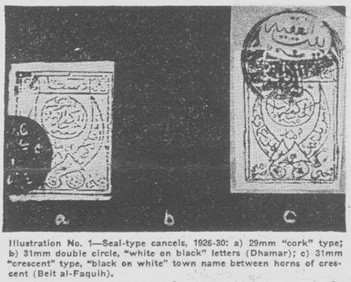
In 1926, His Majesty the Imam Yahia, king of the usually closed and forbidden mountain land of Yemen in southwestern Arabia, inaugurated a royal postal service for the first time, without benefit of outside postal advice and completely unaware of the fact that there was anything in the world called philately. Only eight years before, Yemen was still partly occupied by Ottoman troops, whose forerunner postal service (Hodeida, Taiz and Sana’a cancels on regular Turkish stamps for indifferent and irregular mail to Turkey, mostly by the military) had not been available to the population at large.

Two basic stamps, a “1/2 of 1/8 imadi” (5c U.S.), and “1/8 imadi” (10c US), corresponding to small pentagonal silver coins of the realm (40 bogash—1 imadi—80c U.S.) were produced locally by locking 20 individual cliches together in a single frame for each master sheet.


(Seal-type cancels)

Continue reading Yemen Stamps Deja Vu

Bringing al-Zabîdî to Light and to Life


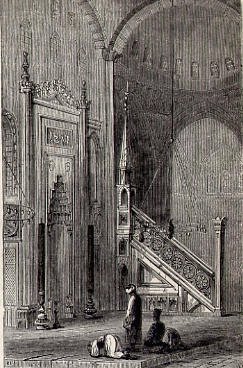
19th century Cairo mosque illustration from Henry Van-Lennep’s Bible Customs.

Those of us who spend hours using Arabic lexicons would be at a loss without the massive Tâj al-‘Arûs min jawâhir al-qâmûs of Muhammad Murtadâ al-Zabîdî. Completed by this consummate Muslim scholar in 1188/1774 after fourteen years of diligent research, the recent Kuwait edition comprises 40 volumes. Ironically, what took al-Zabîdî fourteen years to write and dictate seems a rapid turn-around, given that the Kuwait edition began in 1960 and was not completed until 2002 [There is a copy available for only £2,463 from Abe Books…, but I suggest you go to Lebanon, where the 40 volume set is only $325 from Fadak Books I am not aware of any online version of Tâj, although Lisân al-‘Arab is available online in searchable format.] Those of us who could never afford to house the 40 volume edition have managed to get by with reprints of the 19th century Cairo edition, funky font presence that it sheds. I remember buying my copy of the thick black-cover volumes in 1981, filling a suitcase with the hefty weight, paying the porter a handsome bakshish for his back-breaking effort at Cairo airport, and then having the suitcase implode from the weight as I crossed the threshhold of my home back in New York. I like to think that my own account would have made its way into al-Zabîdî’s inquisitive notes. Continue reading Bringing al-Zabîdî to Light and to Life

We Are All Moors

[Note: The latest book by Anouar Majid, We Are All Moors: Ending Centuries of Crusades against Muslims and Other Minorities (University of Minnesota Press, 2009) provides a provocative thesis, suggesting that we examine the issue of Muslim minorities in contemporary Europe through the prism of history, specifically the treatment of the Moors (los Moros) in Spain. Here is a sample of his argument (from pp. 3-4).]

Indeed, anyone watching the events unfolding in Europe and the United States in recent years cannot help but be struck by the confluence of the two overriding concerns of these two continental states: the mounting anxiety over coexisting with Muslims and the seemingly unstoppable waves of illegal and nonassimilable immigrants. All sorts of explanations have been offerd about these twin elements fueling the global crisis — bookshelves are filled with books about Islam, minorities, and questions of immigration — but no one seems to be reading the intense debate over immigration and minorities who resist assimilation as the continuation of a much older conflict, the one pitting Christendom against the world of Islam. We are often being asked to ponder “what is wrong with Islam” and “what is wrong with the West,” as if these two abstract, ideological entities suddenly bumped into each other in their travels and were jolted by the shock of discovery. The West encountered an archaic Islam stuck int he primitivism of pre-modern cultures, whereas Muslims discovered a dizzying, fast-dissolving secular West that is guided by the fleeting fantasies of materialism. All of this is by now amply documented. Yet what I propose in this book is that a secular, liberal Western culture and Islam were never really parted, that they ahve been traveling together since (at least) 1492, despite all attempts to demarcate, first, zones of Christian purity and , later, national homogeneity. Continue reading We Are All Moors

Amir Hussain at Fordham

Loyola Marymount Professor Amir Hussain will be responding to the inaugural lecture of Rev. Patrick J. Ryan at Fordham this coming Thursday. Details below for all those in the New York Metropolitan area.

Annual Fall McGinley Lecture: “Faith and the Possibility of Jewish-Christian-Muslim Trialogue”

Inaugural lecture of Rev. Patrick J. Ryan, S.J., as Fordham’s Laurence J. McGinley Professor of Religion and Society.

Thursday, 19 November 2009 | 8 p.m.
Keating First Auditorium | Rose Hill Campus

The inaugural lecture of Rev. Patrick J. Ryan, S.J., as Fordham’s Laurence J. McGinley Professor of Religion and Society, is titled “Faith and the Possibility of Jewish-Christian-Muslim Trialogue.” The lecture will be followed by responses by Professor Amir Hussain of Loyola Marymount University in Los Angeles and Rabbi Daniel F. Polish, spiritual leader of Congregation Shir Chadash in Poughkeepsie, New York. A reception will follow the lecture, which is open to the public without charge.

For more information, contact Sister Anne-Marie Kirmse, O.P., Ph.D., at (718) 817-4746 or kirmse@fordham.edu.