All posts by tabsir

Yemen – the return of old ghosts


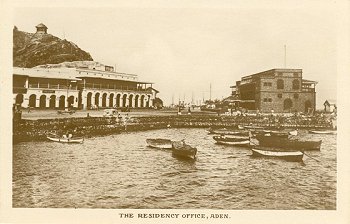
The British Residency Office, Aden

YEMEN – THE RETURN OF OLD GHOSTS

by Adam Curtis, BBC blog, January 8, 2010

What I find so fascinating about the reporting of the War on Terror is the way almost all of it ignores history – as if it is a conflict happening outside time. The Yemen is a case in point. In the wake of the underpants bomber we have been deluged by a wave of terror journalism about this dark mediaeval country that harbours incomprehensible fanatics who want to destroy the west. None of it has explained that only forty years ago the British government fought a vicious secret war in the Yemen against republican revolutionaries who used terror, including bombing airliners.

But the moment you start looking into that war you find out all sorts of extraordinary things.

First that the chaos that has engulfed the Yemen today and is breeding new terrorist threats against the west is a direct result of that conflict of forty years ago.

Secondly it also had a powerful and corrupting effect on Britain itself. To fight the war both Conservative and Labour governments in the 1960s set up international arms deals with the Saudis. These involved bribery on a huge scale which led to the Al Yamamah scandal that still festers today. Continue reading Yemen – the return of old ghosts →

What do Pakistanis want?

Secularism vs Islamism

By Iqbal Akhund, Dawn.com, 22 Feb, 2010

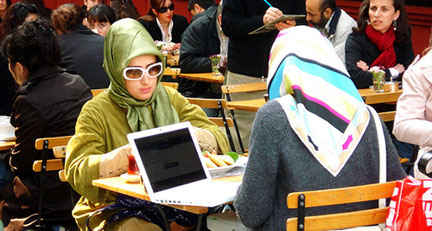
In a recent TV debate on this subject, the applause meter would have given the win to Islamism. The debaters, three on each side, faced a small mixed audience — quite a few girls, many wearing hijabs, also young men in jeans and a handful of beards.

The ‘secularists’ appealed, in measured tones, to the intellect, made references to European history, called for tolerance, pluralism and progress. The ‘Islamists’ were assertive, emotional and received applause when they spoke of the ‘moral decadence’ of the West and condemned, to louder applause, the West’s aggression against Muslims in Palestine, Chechnya and Iraq.

So do the people of Pakistan want an Islamist state? Well, yes and no. Continue reading What do Pakistanis want? →

Panorama in Palestine


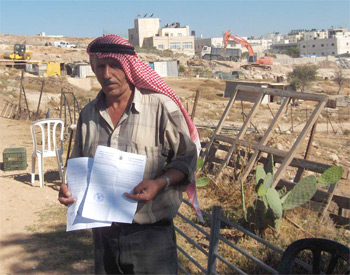
Bedouin from Bir Nabala village near Jerusalem

The controversy over displacement of Palestinian Arabs from Jerusalem is the subject of a British program called “Panorama.” This is available on Youtube. It is also enlightening to read the comments posted on the website.

Note: As a reader discovered recently, the episode has been removed from Youtube; it is available from the BBC Panorama website but only for viewing in Britain… However, an excerpt is posted at The Palestine Center.

Madrasa in Sufi Hands


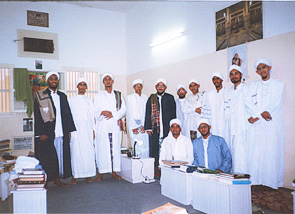
Students at Dar al-Mustafa in Tarim, Hadramawt

The image of the Islamic madrasa is severely tainted in the West. One of the oldest educational institutions in the world, and a pedagogical system that had influence on the evolution of colleges in medieval Europe, is generally portrayed in the media as a reactionary base for hateful anti-Western propaganda. Now that Yemen has surfaced as yet another “terrorist haven,” the idea of Islamic education in Yemen is likewise viewed negatively. One of the most important historical centers of Islamic education in Yemen remains Tarim in the Hadramawt valley. Yes, indeed the very Hadramawt from which the ancestors of Osama Bin Laden migrated. But Tarim has an international focus that many people are not aware of. For centuries Hadramis, including Sufi missionaries, have established strong ties with the people of India and Indonesia. The largess of Hadramis abroad has led to substantial support for schools back in Tarim. These are not backward enclaves with firebrands but devout Sufi masters who have long preached tolerance and the quest for spiritual truth. There is a video report posted on Al-Jazeera by Hashem Ahelbarra on “Students in Yemen fight Stereotypes” that is worth watching. For more information on Dar al-Mustafa, which is featured in the video, click here.

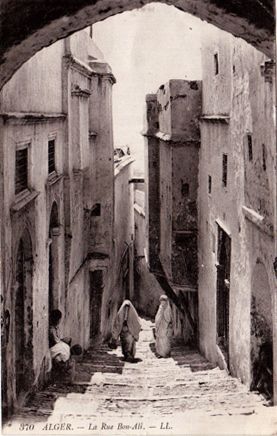
Alger Postcard

While looking over the postcards my grandmother saved from the start of the last century, I came across a beautiful street scene in Algiers, reproduced above. The card was sent from Italy in July, 1914 so it was obviously printed before then. It was addressed to my grandmother’s aunt, whose papers my grandmother inherited. The message itself is interesting in large part because it is so ordinary. The message reads:

Rome, 7/19/14
Dear Ida,
We have had a safe and happy journey so far, enjoying the beautiful stars en route. Went thro’ an Arab St. like this. I have bought some statuary which is being sent home to your address, and of necessity the duty, 75 cents about, must be paid at that end of the line. Am sorry to ask you to do it, but see no other way. We have seen some of the wonders of the “Eternal City.” Move on to Pisa and Florence tomorrow. A. K. Joy

Smashing the Silence Around FGM


Mona Eltahawy

by Mona Eltahawy, The Huffington Post, February 9, 2010

Imagine if 3 million boys had their penises cut off every year.

Imagine that despite accounts of the unfathomable pain boys endure to ensure chastity and passage into manhood, religious leaders for decades taught their communities that God had decreed such mutilation.

A world tongue-tied by cultural relativism says nothing.

Sounds absurd, doesn’t it?

It’s a painful reality for at least 3 million girls who each year have parts or all of their clitorises cut off in a procedure known as female genital mutilation (FGM). The clitoris has double the nerve endings of a penis so my analogy to chopping off little boys’ organs isn’t too far off.

This past weekend marked International Day of Zero Tolerance of FGM, so allow me to shake you out of oblivion by reminding you that 6,000 girls a day are subjected to one of four types of FGM. Continue reading Smashing the Silence Around FGM →

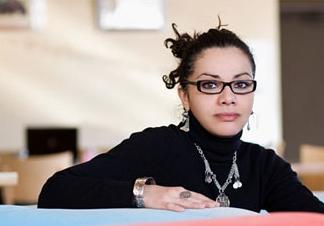
Understanding Islamic Feminism: Interview with Ziba Mir-Hosseini

Understanding Islamic Feminism: Interview with Ziba Mir-Hosseini

Yoginder Sikand, Madrasa Reforms in India, February 7, 2010

Born in Iran and now based in London, Ziba Mir Hosseini, an anthropologist by training, is one of the most well-known scholars of Islamic Feminism. She is the author of numerous books on the subject, including Marriage on Trial: A Study of Family Law in Iran and Morrocco (l.B.Tauris, 1993) and Islam and Gender, the Religious Debate in Contemporary Islam (Princeton, 1999). She is presently associated with the Centre for Islamic and Middle Eastern Law at the School of Oriental and African Studies, London.

In this interview with Yoginder Sikand she talks about the origins and prospects of Islamic feminism as an emancipatory project for Muslim women and as a new, contextually-relevant way of understanding Islam.

Q: In recent years, a number of Muslim women’s groups have emerged across the world, struggling for gender equality and justice using Islamic arguments. Most of them are led by women who come from elitist or, at least middle class, backgrounds. Many of them seem to lack a strong popular base. How do you account for this?

A: I think the majority of the women who are writing and publishing about what is popularly called ‘Islamic feminism’ are definitely from the elite or the middle class. But then, globally speaking, feminism has always had to do with the middle class, at least in terms of its key articulators and leaders. I believe that Islamic feminism is, in a sense, the unwanted child of ‘political Islam’. It was ‘political Islam’ that actually politicized the whole issue of gender and Muslim women’s rights. The slogan ‘back to the shariah’ so forcefully pressed by advocates of ‘political Islam’ in practice meant seeking to return to the classical texts on fiqh or Muslim jurisprudence and doing away with various laws advantageous to women that had no sanction in the Islamists’ literalist understanding of Islam. Translated into practice, law and public policy, this meant going back to pre-modern interpretations of shariah, with all their restrictive laws about and for women. It was this that led, as a reaction, to the emergence of Islamic feminism, critiquing the Islamists for conflating Islam and the shariah with undistilled patriarchy and for claiming that patriarchal rule was divinely mandated. These Muslim women were confronted with horrific laws that Islamists sought to impose in the name of Islam, and so began asking where in all of this was the justice and equality that their own understanding of the Quran led them to believe was central to Islam. These gender activists, using Islamic arguments to critique and challenge the Islamists, brought classical fiqh and tafsir texts to public scrutiny and made them a subject of public debate and discussion, articulating alternative, gender-friendly understandings, indeed visions, of Islam. That marked the broadening, in terms of class, of the fledgling Islamic feminist movement. Continue reading Understanding Islamic Feminism: Interview with Ziba Mir-Hosseini →