All posts by tabsir

Mocha Musings #2: Egypt

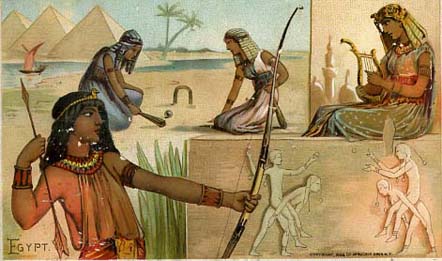
previous post I began a series on coffee advertising cards with Middle Eastern themes. One of the most colorful collections is that provided by the Arbuckle Coffee Company. In my great, great aunt’s album there is a card depicting ancient Egypt, which is shown above.

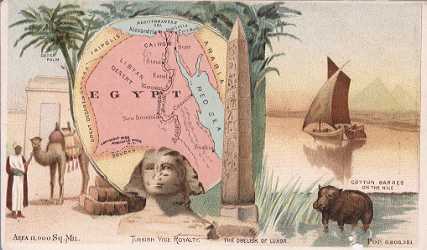
In the 1889 series depicting the nations of the world, Egypt also appears:


Area: 11,000 sq. mi
Population: 6,806,381
Government: Turkish Vice Royalty
Scenes: Date Palm; The Obelisk of Luxor; Cotton Barges on the Nile

My name is Khan

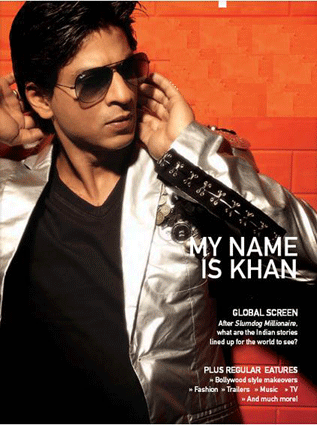
Anyone who is interested in issues of Islam in America must certainly go see the new Shahrukh Khan film My Name is Khan. Despite all of its Bollywood silliness and melodrama, the film is surprisingly discerning on the experiences of Muslims in American society. Though it is set almost entirely in the U.S. (beginning in San Francisco and ending in Georgia), this film will go down as one of the most important Bollywood movies Shahrukh Khan has ever done.

Most obviously of course, the film reminds audiences all around the world that Bollywood’s biggest star ever is in fact a non-violent Muslim (the film’s most repetitive line is “My name is Khan, and I am not a terrorist”). But it also does a number of other absolutely fascinating things, such as performing a reinterpretation of the Qur’anic Abraham-Ishmael story, and in a surprising turn, it spotlights the U.S.’s government abandonment of poor African-American communities. Continue reading My name is Khan

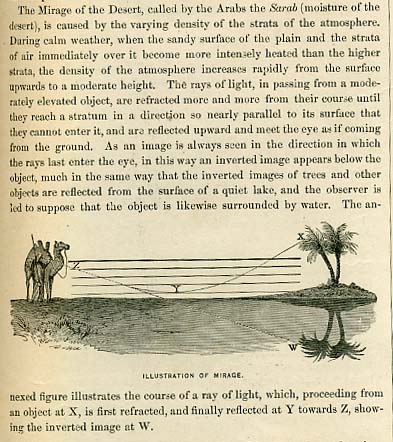
Warren’s Geography #2: Mirage in the Desert

In a previous post I discussed two lithographs from the 1873 edition of Warren’s geography. One of the more fascinating illustrations is one explaining the desert mirage. Here is the discussion and image from the text.

Excerpt from D. M. Warren, An Elementary Treatise on Physical Geography. Revised by A. von Steinwehr. (Philadelphia, Cowperthwait & Co., 1873), p. 67.

to be continued …

Exercises in Struggling with Loneliness


Shaqi Shafiq, Adeni poet

Exercises in Struggling with Loneliness

by Shawqi Shafiq, Translated by Sinan Antoon, Banipal

Rub the heart’s ring

rub it well

to erase the dust of depression

Rub it again carefully

so that the wall of forgetfulness shines

or

draw a circle/put a dove, or two, inside it/watch the wings move (that is if there are any)

You will ask: What if the circle crumbles?

What if the dove flies away

or if I am bothered by the wings’ noise

I will say to you: erase the circle

for all the traces to disappear

or put a fresh woman

instead of the dove

to seek revenge

for the aridity of an apartment

devouring your mouth

Diversity and Perversity


Dr. Jamil Khader, Stetson University

A little more than a week ago a story was reported about an experiment at Stetson University by Professor Jamil Khader. The idea was for 15 coeds to wear veils and see the reactions of their fellow students. But that is only part of the story. First read the story, then check out the comments by the readers. The comments are somewhat chilling, demonstrating once again the extraordinary extent of Islamophobia out there.

Stetson students don veil for diversity experiment
By MARK HARPER, Dayton Beach News Journal Online, February 11, 2010
Education writer

DELAND — For five days, Andreana Mangie wore a pink veil on and around campus.

At the student union, people stared at her. Another student in line near her told another, “Muslims aren’t worth anything.” She was denied entrance to a party.

“This needs to be thought about,” she told a group of about 150 students Wednesday. “This is a big deal.”

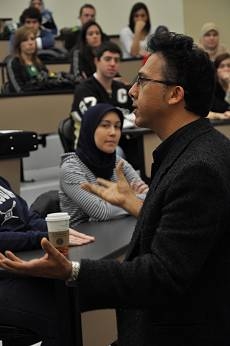
Mangie was one of about 15 Stetson University women to participate in the experiment dubbed “Veil for a Day” by Jamil Khader, a professor of English and gender studies. The women discussed their experiences as part of the DeLand school’s Town Meeting on Diversity.

The university canceled classes Wednesday so students could, for one day, go outside their comfort zone and learn about others. Other sessions touched on residence hall life, environmental justice and “How We Live Homophobia.” Continue reading Diversity and Perversity

Warren’s Geography #1

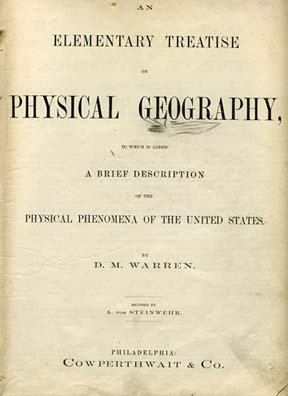
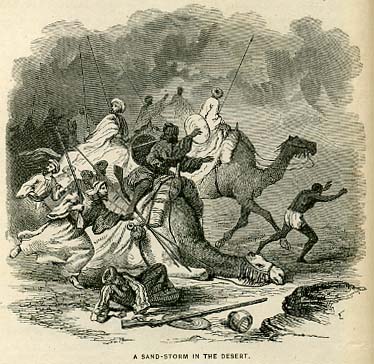
An Elementary Treatise on Physical Geography at the start of the civil war. While rummaging through old books and pictures of my late grandmother I found a copy of the 1873 edition of Warrens’ basic geography text which belonged to my great, great aunt, Ida Hoyt. There are several interesting lithographs in the text on Middle Eastern themes, which I show here.

Continue reading Warren’s Geography #1

Yemen – the return of old ghosts


The British Residency Office, Aden

YEMEN – THE RETURN OF OLD GHOSTS

by Adam Curtis, BBC blog, January 8, 2010

What I find so fascinating about the reporting of the War on Terror is the way almost all of it ignores history – as if it is a conflict happening outside time. The Yemen is a case in point. In the wake of the underpants bomber we have been deluged by a wave of terror journalism about this dark mediaeval country that harbours incomprehensible fanatics who want to destroy the west. None of it has explained that only forty years ago the British government fought a vicious secret war in the Yemen against republican revolutionaries who used terror, including bombing airliners.

But the moment you start looking into that war you find out all sorts of extraordinary things.

First that the chaos that has engulfed the Yemen today and is breeding new terrorist threats against the west is a direct result of that conflict of forty years ago.

Secondly it also had a powerful and corrupting effect on Britain itself. To fight the war both Conservative and Labour governments in the 1960s set up international arms deals with the Saudis. These involved bribery on a huge scale which led to the Al Yamamah scandal that still festers today. Continue reading Yemen – the return of old ghosts

What do Pakistanis want?

Secularism vs Islamism

By Iqbal Akhund, Dawn.com, 22 Feb, 2010

In a recent TV debate on this subject, the applause meter would have given the win to Islamism. The debaters, three on each side, faced a small mixed audience — quite a few girls, many wearing hijabs, also young men in jeans and a handful of beards.

The ‘secularists’ appealed, in measured tones, to the intellect, made references to European history, called for tolerance, pluralism and progress. The ‘Islamists’ were assertive, emotional and received applause when they spoke of the ‘moral decadence’ of the West and condemned, to louder applause, the West’s aggression against Muslims in Palestine, Chechnya and Iraq.

So do the people of Pakistan want an Islamist state? Well, yes and no. Continue reading What do Pakistanis want?