
If you would like to look at (or buy) old postcards and images from and about the Arab world, including North Africa, this site of cardcow.com is worth a look…
If you would like to look at (or buy) old postcards and images from and about the Arab world, including North Africa, this site of cardcow.com is worth a look…
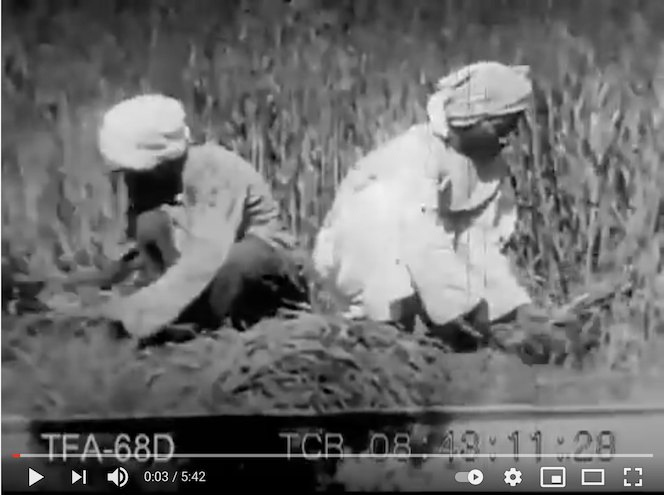
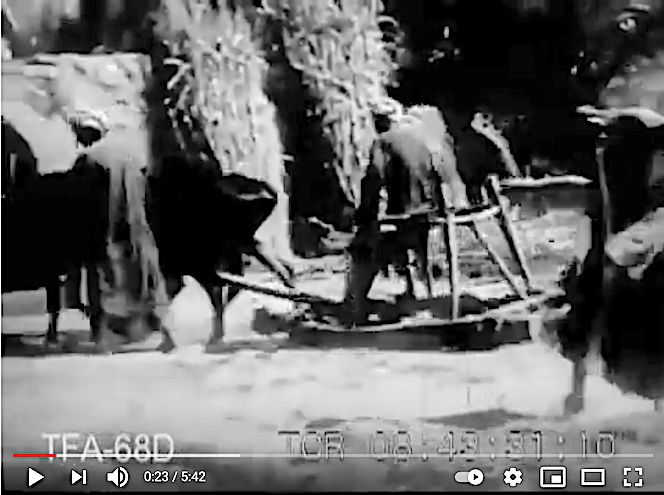
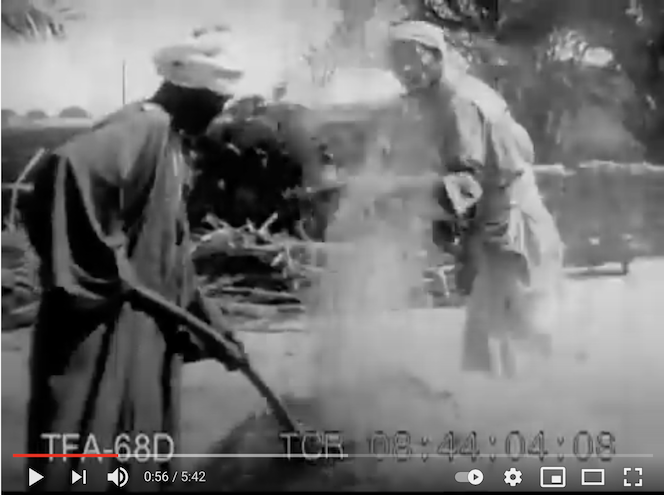
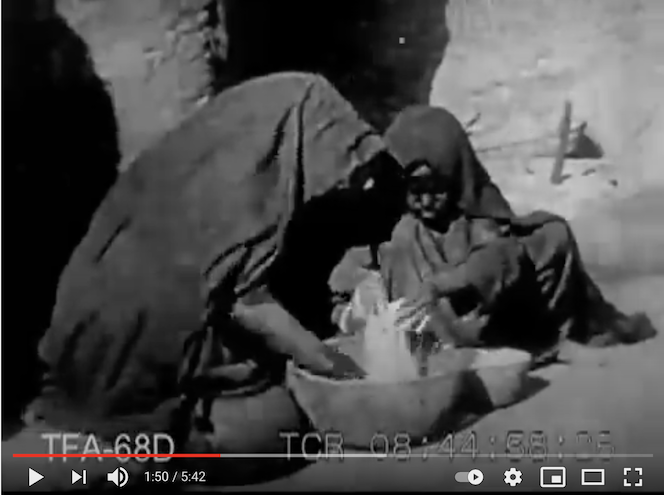
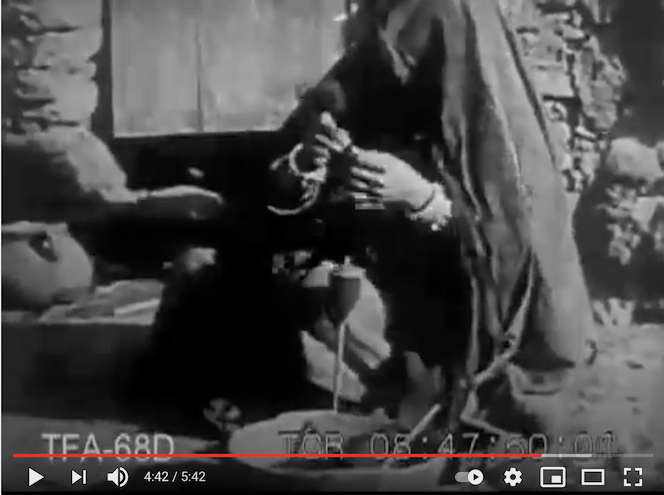
There is an early 1920 video on Youtube with views of agriculture, bread making, spinning and weaving in Egypt at the time. No details are provided on the Youtube page.


There is a recent article in the Arab News on the Al-Khalidi library in Jerusalem.
You can also visit the website of the library here. I attach the description from the library website. There are several online works in Arabic by Tarif Khalidi.
“The Khalidi Library (Al Khalidiyya), established in Jerusalem in 1900 by Haj Raghib al Khalidi (d.1951), is the first Arab public library established by private initiative in Palestine. The Khalidiyya is located in the Old City of Jerusalem in Tariq Bab al Silsilah about 150 yards away from Bab al Silsilah, one of the main gates to al Haram al Sharif. The Khalidiyya contains the largest private collection of Arabic manuscripts in Palestine and one of the largest such collections in the world. The Khalidiyya MS holdings contain approximately 1200 titles, the oldest of which is about 1000 years old, while its printed collection, mostly of 19th century vintage, contain around 5,500 volumes. In addition there is a massive archival corpus of family papers going back to the early 18thCentury.”


For anyone who works on Arabic manuscripts or would like to know how that is done, this new website at Leiden University is a welcome introduction. Check it out here: https://mouse.digitalscholarship.nl.

I arrived a little early to the Great Mosque of San‘a’ in Yemen to continue my research in the small upstairs room which was the “Western Library.” I sat down in a corner waiting for Qadi al-Sharafi to arrive and open the door. All of a sudden a crazed individual, thinking I was a tourist, started shouting at me. I tried to calm him down but immediately others came to my rescue, explaining that I was a researcher studying manuscripts in the library and should not be bothered. When the Qadi arrived, I followed him upstairs, asked for the manuscript I was working on (which was stored in another room) and spent the day sharing a table with a man reciting Quran and another man reading another manuscript. The Qadi was hard of hearing, so when the phone would ring, it was a comedy routine in Arabic of “what did you say?”. This day is forever stored in my pleasant memory department.
Over the past four decades I have spent many hours in libraries, as an undergraduate browsing little-read, dust-covered books on biblical archaeology at Wheaton College, a graduate student browsing the well-stocked stacks at the University of Pennsylvania, requesting rare 19th century Arabic texts in the Oriental Studies room of the New York Public Library, being served tea while reading manuscripts in the Egyptian National Library (Dar al-Kutub), in awe at the one-of-a-kind Bodleian in Oxford, enjoying the lakeside view from the library of the Institute for Advanced Study in Princeton, being amazed at the private library on the Arabian Peninsula of a shaykh in Qatar, to name only the obvious.
I love libraries, because I love books and I love manuscripts. Of course, I read for information, the goal of research. However, this feeling of love is nurtured by actually touching the hardness of a book, absorbing the aroma of yellowed paper or gazing at the original ink or fading print. The book in hand is no less both subject and object than the libraries where they have a home. My age betrays me; my joy is for the bibliophilic memories but my lament is for the current explosion of the pdfs, the Profoundly Dull Facsimiles, that have transformed the research environment. Yes, I know that the pdf is an amazing gift for anyone who works on old books and ancient manuscripts. Blessed be archive.org and its cyber siblings. A digital copy is definitely a “helpmeet” in the tired old biblical sense, but it is still a lifeless robot beside the paper-and-ink flesh of the original.
In 1981 on my way home from a consulting assignment in Egypt, I carried a rapidly purchased suitcase of dubious quality from the Cairo suq full of the hefty 9-volume set of the mother of all Arabic dictionaries, the Taj al-‘Arus of al-Zabidi. This was the 1306/1889 Egyptian version without vowels. For someone just finishing up a dissertation this was a century-old godsend. The suitcase was so heavy that I gave the airport porter extra bakshish. Somehow it made the weight limit on TWA and I arrived with the precious volumes intact at JFK. As I was lugging the suitcase through the doorway into our home, the suitcase exploded and the volumes poured out on the floor, like an offering to the guardians of the house. I now have downloaded the far superior Kuwait edition of the dictionary in pdf and my revered copy, well thumbed over several decades, catches the inevitable dust-off of no longer being useful. Even the pdf has been superseded by an online searchable site of al-Zabidi and several other major Arabic lexicons, including the archaic-yet-eternal Arabic/English lexicon of Edward Lane (http://arabiclexicon.hawramani.com/).
My own library, especially of Arabic books, was built up over several decades. Every trip I made to the Middle East involved checking out bookstores for interesting books in Arabic. Several of the books I purchased, perhaps most, are now available somewhere on the web in pdf and a few are even searchable online. As I look to downsize the far-too-many books that have accumulated, I do appreciate that I can still have access to the information without having to find space for the physical volumes. Like all researchers these days, I have access through pdfs of books and manuscripts I never knew existed or would only find in the storage recess of a major university library, if there. My lament is not for the benefit of progress, just as I would not turn in my Acura TSX for the horse and buggy my grandparents rode more than a century ago. My memories of books, libraries and bookstores are well embedded inside me; any sadness I feel is for those who may not have or take the opportunity to engage with books face-to-face in a space that no digital version can replace.
This is not an obituary. Libraries, especially those useful for scholars of all stripes, are not going to disappear in the near future. There are books upon books in the market and many more coming into print every year. Johannes Gutenberg need not roll over in his grave, although I suspect this 15th century inventor might turn sommersaults over the website named for him (https://www.gutenberg.org/). The lament is not that you cannot share what I have experienced, but that you actually do not have to; but you should.
In September 2005 I started the blog Tabsir (“Insight”) with several other colleagues to provide information on the Middle East as a supplement to the news and to note items of interest. The blog has been in hibernation since late 2018 as I simply had no time to keep it going. I am reviving the blog for posting items time to time and hope to involve several other academic colleagues as well.

In April Secretary-General Antonio Guterres called the situation in Yemen the world’s worst humanitarian crisis. After more than three years of a lopsided war between a Western-supported Saudi/Emirati coalition and a rebel group in control of the capital Sanaa and most of the estimated 28 million Yemenis, the crisis is only getting worse.
Now coalition forces are attempting to wrest control of the vital port of Hodeidah from the Huthi forces, thinking that such a loss would force the Huthis to accept their terms for a total submission. Since this port supplies most of the food and aid entering Yemen, loss of the port would likely trigger a siege to literally starve the Huthi areas into submission. The Huthis know this and are not likely to give up the port without a bloodbath. Meanwhile several hundred thousand residents fear for their lives and many have already fled to areas with no resources whatsoever. The UN fears a renewed outbreak of cholera, which has already affected more than one million Yemenis. Negotiations continue by the UN Special Envoy Martin Griffiths to stop the impending violence.
But in the midst of all this turmoil, one recent pundit argues that the eastern province of Marib, firmly in control of the Saudi/Emirati alliance, shows how one province succeeds in the midst of Yemen’s war. Not only is this sparsely populated and oil-rich area considered a success, it is said to be “thriving.” A football stadium with German turf and according to FIFA standards is being constructed and there is a new university for 5,000 students. The biblical land of the Queen of Sheba and famous Marib dam mentioned in the Quran (which was bombed at one point by the Saudis) is said to be “regaining a slice of its historical importance.”
So what is the lesson for Yemen’s future from this miracle in the desert? For journalist Adam Baron “Marib’s experience holds wider lessons for Yemen’s future: embracing decentralisation, empowering local actors, and focusing on ground-up stabilisation are all strands of the story that international and local players interested in bringing peace and stability to Yemen should note.” The main local actor here is a tribal sheikh named Sultan Arada, drawing on support of the conservative Islah movement. With outside money pouring in, he has morphed into the sultan of a fiefdom. The current “stability” is grounded not on local concerns but from the top-down flow of money from the neighboring international players, Saudis and Emiratis.
Yemen’s future is not in Marib, nor in building state-of-the-art FIFA stadiums in a country with a ravaged infrastructure, ongoing water crisis and sectarian violence fueled by the grueling three years of war. Marib is currently a colony of the Saudis, just as the Emiratis would like to take control of the island of Socotra and the port of Aden. The two wealthiest states of the now moribund GCC are carving out their zones of influence on the backs of people in the poorest country in the Arabian Peninsula. Without the billions of dollars worth of weapons and strategic intelligence from the West, this war dividend could never have been realized.
Welcome to the latest, post-Cold War twist in the land once thought to be Holy. It is no longer direct Western intervention but a shared geocolonialism, in which the proxy war between Saudi Arabia and Iran is applauded and abetted by Western leaders. Muhammad bin Salman’s recent trip to the U.S. sold his snake-oil reform in exchange for buying more weapons and all that he assumes oil-drenched money can buy. Meanwhile the Saudi abysmal track record on human rights and the war crimes of the Saudi-led coalition in Yemen are ignored. If Marib is the model for Yemen’s future, then the only democracy, for its flaws, in the Arabian Peninsula will be geocolonized into yet another make-believe kingdom or emirate.