All posts by tabsir

South Park, but not so funny

Who’s Afraid of the Free Speech Fundamentalists?: Reflections on the South Park Cartoon Controversy

by Jeremy F. Walton, The Revealer, April 28, 2010

Recent days have, alas, been marked by a sense of déjà vu all over again for scholars of contemporary Islam. On April 14th, the American cable network Comedy Central aired the first half of a double episode of the immensely-popular cartoon sitcom “South Park.” The episode specifically parodied Islamic prohibitions on the pictorial representation of the Prophet Muhammad by portraying him in concealment, first within a U-Haul truck and then inside an ursine mascot costume. On the day prior to the episode’s airing, the American website revolutionmuslim.com posted the following comments by one Abu Talhah al-Amrikee:

We have to warn Matt and Trey [Matt Stone and Trey Parker, co-creators of South Park] that what they are doing is stupid and they will probably wind up like Theo Van Gogh for airing this show. This is not a threat, but a warning of the reality of what will likely happen to them.

Continue reading South Park, but not so funny →

Tea Party Monkey Business

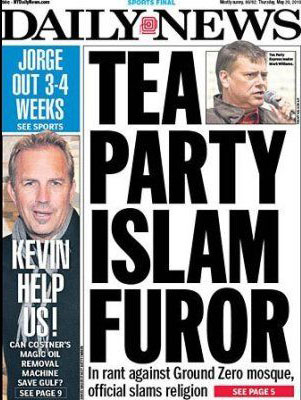
One of the major problems with the blogosphere in which I dip is the ease with which the most ludicrous and obnoxious statements can spread. Witness Mark Williams, the blogging head of the so-called Tea Party, who ranted against a proposed new mosque in lower Manhattan by calling Allah as worshipped by Muslims a “monkey god.” There are many who have denigrated Islam, most often claiming that Allah started out as a moon god in Mecca. But Mr. Williams probably confused Islam with Hinduism, only to compound his ignorance by issuing an apology to Hindus for accidentally offending Hanuman, who is indeed a monkey god. Here is the “apology”: Continue reading Tea Party Monkey Business →

New M.A. In Islamic Studies at GTU


Dr. Munir Jiwa, Graduate Theological Union

Announcing a new area of concentration in Islamic Studies for fall 2010

We are pleased to announce this new concentration with a primary focus on the study of contemporary Islam within its theological, historical, and cultural contexts. The application deadline for this program has been extended until May 21. To apply, follow the instructions on this webpage.

Islamic Studies
A specialized program offered by the Graduate Theological Union faculty at the Center for Islamic Studies and Associate Faculty

The primary focus of this area is on the study of contemporary Islam within its theological, historical, and cultural contexts. In addition to the core courses in classical Islamic scholarship, students have the opportunity to develop expertise in specific topics such as Muslim Cultures (especially Muslims in America), Islamic Education, or Islam and Media. Interdisciplinary and interreligious approaches to the study of Islam in which Muslims are understood in their diversity and in dialogue with other religious traditions are an implicit part of the program, fostered by the unique environment of the GTU.

For more information, contact
Munir Jiwa, Ph.D.
Director and Assistant Professor
Center for Islamic Studies
Graduate Theological Union
2400 Ridge Road
Berkeley, CA 94709
Office: 510 649 2562

Miss USA (and no burqa)


[Editor’s Note: For a change we can report something about a Muslim woman and not have to discuss the issue of wearing hijab. For videos from the pageant website, click here.]

Arab-American Crowned 2010 Miss USA

The Independent, May 17

Lebanese immigrant Rima Fakih says it was a certain look from Donald Trump that tipped her off that she had won the 2010 Miss USA
title.

The 24-year-old Miss Michigan beat 50 other women to take the title last night, despite nearly stumbling in her evening gown.

She told reporters later that she believed she had won after glancing at pageant owner Trump as she awaited the results with the first runner-up, Miss Oklahoma USA Morgan Elizabeth Woolard.

“That’s the same look that he gives them when he says, ‘You’re hired,”‘ on Trump’s reality show “The Apprentice,” she said.

“She’s a great girl,” said Trump, who owns the pageant with NBC in a joint venture.

Fakih took top honours at the pageant at the Planet Hollywood Resort & Casino on the Las Vegas Strip after strutting confidently in an orange and gold bikini, wearing a strapless white gown that resembled a wedding dress and saying health insurance should cover birth control pills. Continue reading Miss USA (and no burqa) →

Colorful Lithographic Orientalism #2: Seraglio

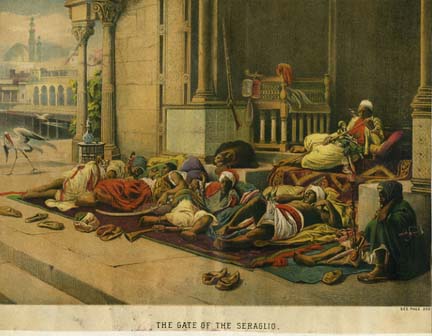
As noted in a previous post, I recently went through a late 19th century scrapbook that belonged to my great, great aunt. She had cut out pictures that interested or amused her. Several of these have Orientalist themes. Sometimes a picture is worth a thousand words; other times the picture says enough for itself. In this series, I leave the image to speak for itself. If you would like to comment on what you see or imagine, please do so in the comments section.

For #1, click here.

Nutrition in Colonial Aden, #2

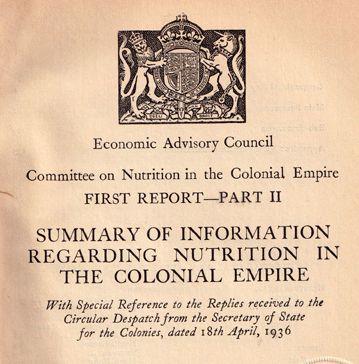
Say what you will about colonial empires, but at least they generate reports. I recently came across a British report to Parliament in 1939 entitled “Summary of Information Regarding Nutrition in the Colonial Empire.” Four pages are devoted to Aden Colony, which is said to have an area of 75 square miles, a population in 1931 of 45,992, a birthrate in 1937 of 32.07 per 1,000, an infant mortality rate in 1937 of 196.61 per 1,000, and a death rate in 1937 of 31.72 per 1,000. For part 1, click here. I attach more excerpts below:

3. Diet and Health (deficiency diseases and other relevant considerations). – On the whole, Aden can boast a high standard of public health. The greatest drawback is overcrowding. Large families occupy inadequate and ill-ventilated accommodations in which, as often as not, the domestic goat also claims a quota of space. In consequence of these conditions, respiratory and alimentary diseases are all too common. Diseases directly attributable to qualitative dietary deficiency are not a prominent feature of hospital returns in Aden and the more classical of the tropical diseases – beriberi, scurvy and pellagra – do not occur. Evidence of qualitative deficiency is found, however, in the incidence of rickets among children and of certain eye infections. An examination of 527 unselected children (consecutive cases treated in the Civil Hospital) showed that 33, 0r 6.2 per cent, were suffering from rickets. Continue reading Nutrition in Colonial Aden, #2 →

Islam and Feminism


Photograph by Tom Hartwell

Islam and Feminism

by Hania Sholkamy, Contestations, Issue #1

Islam and feminism have had a troubled relationship. Over the last two decades, scholars and activists have questioned the western credentials of feminism and claimed justice as a purpose and possibility that can be captured via religious routes. Religion provides women with an ethical framework and a moral foundation that recognizes their rights as individuals and as a collective, albeit redefining equality in the process. The mosque movement in Egypt has empowered women to find dignity, companionship and comfort through piety and conformity to a religious ideal and challenge the less-than-perfect world around them. Moreover by engaging with religion, Muslim women are able to redefine the tenets that have endowed Islam with an unnecessary bias for men; one which feminist scholars of Islam are certain is antithetical to the spirit and philosophy of our religion.

Such serious engagements are, however, quite separate and distinct from the popularization of religion as a veneer that enables anyone to get away with anything! Continue reading Islam and Feminism →