All posts by tabsir

The future of Islam in Europe


by Khalil El-Anani, Al-Ahram, 17-23 June, 2010, Issue 1003

The current Western obsession with the niqab, or full- face veil, often seems part of a subconscious plot to restrict anything Arab and Islamic, symbolic as that may be. The niqab is not really Islamic garb, this I am sure something that Western politicians know. And yet it is becoming a target of hate because it is seen as a cultural symbol that is extraneous, and indeed dangerous, to European societies.

Sometimes I wonder, what if it were Indian women, or Sikhs and Buddhists for that matter, who wore the niqab ? Would European parliaments still spend entire sessions discussing the niqab ?

Theological debate on niqab aside, Western outrage against the niqab seems to be a by-product of Islamophobia, a phenomenon that is raging like wildfire across Europe, asserting itself sometimes as mosque- phobia and at other times as minaret-phobia. Should this trend continue, the day may come when European parliaments ban men from wearing their beards long and shaving their moustaches. I wonder what kind of phobia we’ll name that one! Continue reading The future of Islam in Europe →

Kafka, Egyptian Style


Atef Botros’s Kafka Study
A Jewish Writer from the Arab Perspective

Franz Kafka (1883-1924)

by Julian Tangermann, Qantara, June, 2010

Passionate literary criticism? Is this possible? As an academic discipline it is forbidden from emotion or passion. Nevertheless in Atef Botros’s Kafka, ein jüdischer Schriftsteller aus arabischer Sicht (Kafka, a Jewish writer, from the Arab perspective) this question is posed anew.

His well-founded, comprehensive critical analysis of Kafka’s reception in the Arab world closes with a passionate appeal for freedom in the Middle East. This does not, however, impair the academic rigour of the work in the slightest. In fact, his concerned, incisive view of the Middle East conflict and his excellent literary criticism feed off each other and make this work what it is.

The bulk of the book is concerned with the analysis of Kafka’s reception in the Arab world from 1939 to the present day; with how Kafka’s works have been understood and interpreted over the last seventy years in Arab countries and cultures. It posits three phases of responses to Kafka during this period, which are all examined according to their social, intellectual and literary implications. Continue reading Kafka, Egyptian Style →

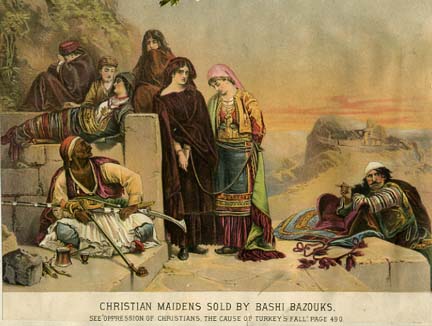
Colorful Lithographic Orientalism #3: Bazouks

As noted in a previous post, I recently went through a late 19th century scrapbook that belonged to my great, great aunt. She had cut out pictures that interested or amused her. Several of these have Orientalist themes. Sometimes a picture is worth a thousand words; other times the picture says enough for itself. In this series, I leave the image to speak for itself. If you would like to comment on what you see or imagine, please do so in the comments section.

For #2, click here.

From Islamist Watch to Islamic Mimbar: The Politics of Hypocrisy


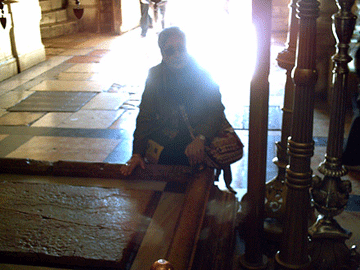
Raheel Raza at the Church of the Holy Sepulchre in Bethlehem

by Huma Dar, Dept. of South and Southeast Asian Studies, University of California at Berkeley

On Thursday, June 10, 2010, Jerome Taylor, the Religious Affairs Correspondent of The Independent posted an article headlined, “First Woman to Lead Friday Prayers in UK.” Two-thirds of the way down this article, we find that:

“Ms Raza’s appearance in Oxford is a repeat of a similar prayer session in 2008 which was led by Amina Wadud, an American-born convert and Muslim feminist. But this is the first time a Muslim-born woman will lead a mixed prayer service in Britain.”

Taylor’s differentiation between “American-born convert” and “Muslim-born woman” and labeling of the latter as the “first woman” in the headline create a false hierarchy and subtly delegitimize Dr. Wadud, a leading Muslim scholar and author of Qur’an and Woman: Rereading the Sacred Text from a Woman’s Perspective, a path-breaking text in the study of gender and Islam. Taylor’s late admission of “repeat” after the (mis)leading announcement of “First” in the headline does not quite cover up for the critical sins of omission and commission, especially as Raheel Raza, the Pakistani-Canadian woman leading the prayer at Oxford, is neither an ‘Alima or a scholar of Islam nor is she known for her advocacy of Muslims at large.

In fact Raza is a rather polarizing figure amongst Muslims in North America and her record does not indicate much learning in the letter or spirit of Islam, as in speaking truth to power and standing with the oppressed. Continue reading From Islamist Watch to Islamic Mimbar: The Politics of Hypocrisy →

Death to Arabic?


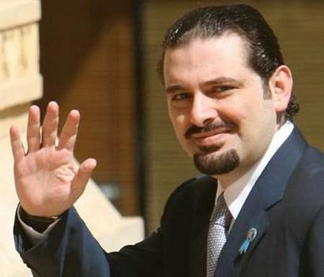
Saad Hariri


Arabic will die out if it is locked up in classrooms
by Achraf El Bahi, The National, April 08. 2010

In his inaugural address to parliament last December, the Lebanese prime minister Saad Hariri kept mispronouncing words and whole phrases in Arabic, smirking the entire time.

Not only did the Georgetown-educated, English-speaking Mr Hariri laugh at his mistakes, but he also cackled when Nabih Berri, the speaker of parliament, asked him if he needed someone to help him out.

Being bad at Arabic is almost like being bad at an obscure sport, say croquet: no one particularly cares if you fail to grasp the quaint and overly complex techniques needed for mastery of the subject.

In Lebanon, French is the language of the learned and the sophisticated. The same is true in Algeria, Tunisia, Morocco and other former French colonies in the Arab world. Failing to speak proper French in those countries is a handicap in professional and social life. Continue reading Death to Arabic? →

Satire is Religion


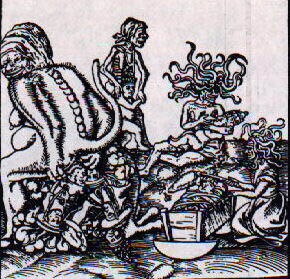
Birth and Origin of the Pope by Lucas Cranach, illustration for Martin Luther’s “Against the Papacy at Rome, Founded by the Devil,” 1545

Satire is Religion

By Austin Dacey, Religion Dispatches, May 12

Scatological humor. Crude drawings mocking revered religious figures. I am speaking, of course, of Lucas Cranach’s Birth and Origin of the Pope [image above], one in a series of woodcuts commissioned by Martin Luther in the 1540s under the title “The True Depiction of the Papacy.” In it, an enormous grinning she-devil squats in the foreground, excreting the Pope along with a heap of bishops while in the background another infant pontiff suckles at the teat of a serpent-haired wet nurse.

Forget the South Park dust up; forget Everybody Draw Muhammad Day. If you want to see truly shocking anti-religious cartoons, you have to go back to the sixteenth century. Near the end of Luther’s life, his propaganda campaign against Rome grew increasingly vitriolic and his language grotesquely pungent. He took to calling his ecclesiastical enemies ‘asses,’ ‘dogs,’ ‘pigs,’ ‘blockheads,’ ‘basilisks,’ and ‘pupils of Satan,’ and the Pope himself ‘Her Sodomitical Hellishness’ and ‘fart-ass’ (no, it doesn’t sound much more dignified in German—fartz-Esel). Eric Cartman would be in awe. Continue reading Satire is Religion →

Eclipse of the Greater Jihad

Eclipse of the Greater Jihad
by Syed Manzar Abbas Zaidi, Journal of Religion, Conflict, and Peace, Volume 3. Issue 1, Fall 2009

[The following is a brief excerpt from an interesting article on the debate over the “greater jihad” in light of Quranic and hadith references. I recommend reading the entire article, which can be done by clicking here.]

The word jihad derives from the Arabic root jhd, signifying intense struggle or effort. It has the connotations of a moral struggle within one’s own self, besides denoting an armed struggle. It thus carries the hermeneutical meaning of a moral endeavour directed toward one’s own improvement or self-elevation on a moral plane, which Muslim jurists of eminence have been quoted as calling jihad-e-akbar, or greater jihad. On the other hand, preparations and participation for defense against an armed conflict that is the consequence of foreign aggression has been known as qitaal, or jihad-e-asghar, lesser jihad… Continue reading Eclipse of the Greater Jihad →