All posts by tabsir

America’s “Good Muslims” Are Being Left Out to Dry


by Abbas Barzegar, Huffington Post, August 19, 2010

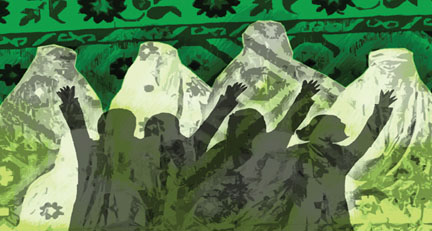
There were a few things I did and didn’t expect when I first heard about the now controversial Cordoba Initiative’s Muslim community center project in Manhattan. Of course, right wing fringe hysteria and contrived national debate — that was easy to predict. But in truth, I never thought it would get as far as it has. And never did my jaded skepticism expect to see Mayor Bloomberg and other NYC authorities support Muslim rights to religious freedom so unequivocally. But the real shockers for me are 1) the national polls which reveal a deep seeded anti-Muslim bias in American society and 2) the way in which Democrats are balking on one of our country’s greatest values because of a midterm election. That the construction of a “Muslim YMCA” has devolved into a lame discussion of “why there?” is not only insulting to our constitutional principles, it shows how little we have come as a society since 9/11, despite incessant overtures by American Muslims to be fully accepted in our society.

Let there be no mistake. For decades American Muslims have struggled to reconcile a falsely conceived identity crisis which pits their American and Muslim loyalties at odds. Continue reading America’s “Good Muslims” Are Being Left Out to Dry

Speaking up


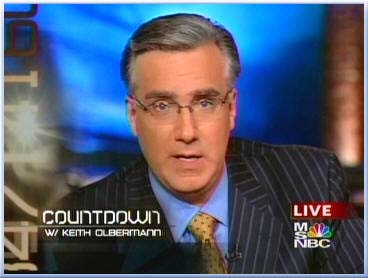
The right wing smells blood, perhaps not knowing in the case of the so-called Ground Zero Mosque, that it is from a self-inflicted wound. For a passionate rebuttal to the ludicrous Islamophobic comments of Newt and Sarah, listen to Keith Olbermann of MSNBC’s Countdown.

An if you want a more humorous spin that out-foxes Fox News coverage, see the latest by Jon Stewart.

30 Mosques in 30 States


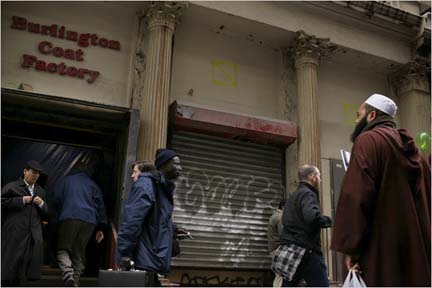
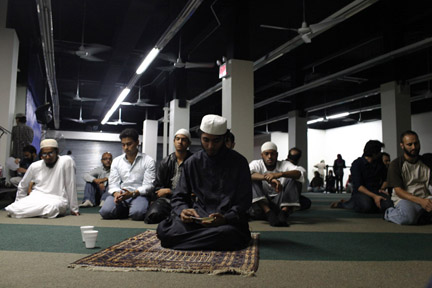
The imam takes a gander at some notes before getting ready for the next round of prayers

There is an interesting blog called 30 Mosques, 30 States, where Aman Ali and Bassam Tariq are posting each day during Ramadan about their visits to different mosques, a different one each day of the month of Ramadan. They started out at the mosque closest to Ground Zero:

Day 1 – New York, Ground Zero Mosque
by Aman Ali, August 12, 2010

Dude, it’s just a mosque.

Bassam and I walked into Park 51, the site of the so called “Ground Zero Mosque,” expecting to feel transformed, knowing the fact that I was praying inside the place that’s practically been mentioned in the news every 20 minutes.

But all it felt like – was praying inside a mosque.

Bassam and I spent days debating whether or not we should visit Park 51, because we didn’t want to get sucked into the bickering over the building that’s dominated the news cycle for weeks.

But at about 8 p.m. tonight, we said to each other “Whatever, let’s go for it.” Since we broke our fast at the Mosque of Islamic Brotherhood in Harlem, we decided to pray Taraweeh, the Ramadan night prayer, at Park 51.

We hopped in our car and drove about 100 blocks to the place and found a security guard standing outside the building. In light of all the protests and animosity towards the mosque, I guess you can never be too careful. Continue reading 30 Mosques in 30 States

Yemen: not on the verge of collapse

by Steven C. Caton, The Middle East Channel, August 11, 2010

The Republic of Yemen is often spoken of in the press and in policy circles as a society on the verge of collapse (last year it was “another Somalia”), based largely on two claims, the first being the supposed weakness of its state, the other the supposed lawlessness of its tribal population that makes up the majority ethnic group (about seventy-five percent are settled agriculturalists in the mountains and another five per cent, nomadic Bedouin in the eastern desert). And supposedly being on the verge of collapse, Yemen is seen as vulnerable to take-over by terrorist organizations such as al-Qaeda that threaten America’s and the region’s security. Let us consider how tribe and state, law and conflict operate in Yemen that few analysts seem to grasp when they make these pronouncements.

History may provide some perspective. There has been a state or dawlah in Yemen for thousands of years, whether the Sabaean state that built Marib Dam and was the reputed homeland of the Queen of Sheba, or the Islamic state created shortly after the advent of Islam which lasted for a thousand years, or the republican state that came into being in 1962 and has lasted until the present day, despite two bitter civil wars. To be sure, the state has waxed and waned in power and contracted or expanded in territory during this history, and it has faced formidable outside opponents, beginning with the Romans and most recently with al-Qaeda, but it has never fully collapsed or disappeared from the scene. It is unlikely to do so in the present in spite of arguments that the current regime is at a tipping point and about to fall apart because of an unprecedented number of seemingly intractable problems facing it (an ever weakening economy, unsustainable water consumption, projected diminished oil reserves, conflicts between the state and certain regional populations, rampant corruption, and let us not forget al-Qaeda). Continue reading Yemen: not on the verge of collapse

Go ye into all the war zones


How American Right-Wing Christians Are Waging ‘Spiritual Warfare’ in Northern Iraq
By Michael Reynolds, AlterNet
Posted on July 12, 2010, Printed on July 28, 2010

On a barren hillside outside Sulaymaniyah in southeast Iraqi Kurdistan sits a small compound of buildings clustered behind battered gray and ochre walls. Atop one wall is a large white sign glittering with gold and azure lettering that reads in English and Arabic: Classical School of the Medes. It is one of three new private schools in the region that teach a “Christian worldview,” the handiwork of American evangelicals from Tennessee.

Since the US occupation took hold, American evangelicals have established not only schools, but printing presses, radio stations, women’s centers, bookstores, medical and dental clinics, and churches in northern Iraq, all with the blessings and assistance of the Kurdistan government. Many of these efforts were funded in part by US taxpayer dollars, channeled through Department of Defense construction contracts and State Department grants.

In September 2003, just four months after US forces took down Saddam Hussein’s regime, 350 evangelical pastors and church leaders assembled in Kirkuk, where they were warmly welcomed by Massoud Barzani, president of the Kurdistan Regional Government. At that gathering, George Grant, a leader of Servant Group International, the evangelical organization in Nashville that set up the chain of Christian schools, declared that “Jesus Christ is Lord over all things; He is Lord over every Mullah, every Ayatollah, every Imam, and every Mahdi pretender; He is Lord over the whole of the earth, even Iraq!” Continue reading Go ye into all the war zones

Imams as schoolboys

Educating Imams in Germany: the Battle for a European Islam

By Paul Hockenos, The Chronicle Review, July 18, 2010

Berlin

In the snow-swept courtyard of the white-marble Sehitlik Mosque, Berlin’s largest Islamic prayer house, the resident imam greets the faithful with handshakes and embraces. A slightly built, cordial man wearing an open parka, Mustafa Aydin is a Turkish civil servant on a four-year posting abroad, as are many of the Islamic preachers in Germany, where the Muslim community is overwhelmingly of Turkish heritage. Aydin understands basic German, which he’s been learning, but he communicates with me through a Turkish-to-German interpreter. The services’ prayers are in Arabic, he says, but his sermons and chats with congregants—including those born and schooled in Germany—are in the language of their parents’ Turkish homeland, and that, he assures me, is perfectly adequate for his parish’s needs. “We don’t have any problems with Turkish,” he says.

In a Germany struggling to come to grips with its burgeoning, four-million-strong Muslim population (about 5 percent of the populace), the use of imams sent from Turkey and other foreign countries, including Saudi Arabia, has come under sustained fire from integration-minded critics. After all, argue some intellectuals, politicos, and other citizens across Germany’s political spectrum, including the more moderate currents in the Muslim community, how can the foreign clergy advise believers—many of whom grapple with profound disadvantage in Germany—without mastering the lingua franca and knowing the world they live in? The imams have, in part, been held responsible for Muslims’ ghettoization, as well as fundamentalism in some pockets of the country. Continue reading Imams as schoolboys