All posts by tabsir

Ottoman Palestine


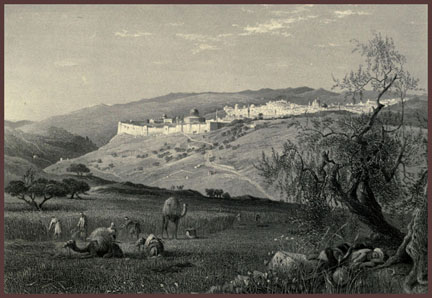
A friend recently brought my attention to an Arabic website with a fascinating collection of illustrations and photographs about Palestine under Ottoman rule. I also came across another site with illustrations of Jerusalem in the Ottoman era. I attach two examples here from the latter website, although the site does not specify the source or date of the images. Continue reading Ottoman Palestine

The Music of Rebellion


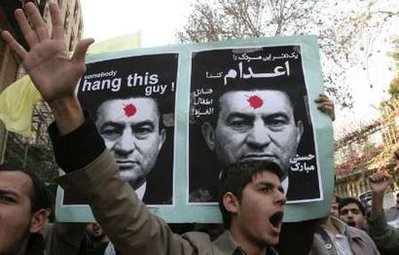
The revolution in Egypt never would have happened as fast and as ultimately peacefully as it did without the new digital age in full bloom. Now that Mubarak has resigned, the protesters are attempting to go back to life with an air of freedom conquering the stale odor of fear. Last night was one of jubilation as Egyptians of all stripes danced in the streets. The withdrawal of Mubarak was music in the ears. And, indeed, music was part of the process. Here is a hip-hop protest on Youtube with a range of video and still photographs by the Egyptian rap group known as Arabian Knightz. Other rap groups also found the recen protests worthy of Youtube. For yet another early video on the protests, click here. And here is a collage from the rapper Marcel Cartier.

Mozart in Arabic


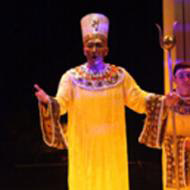
Ashraf Sewailam as Sarastro in Mozart’s “The Magic Flute,” Bibliotheca Alexandrina (Alexandria, Egypt), Jan. 2011

The New York Public Library for the Performing Arts, Dorothy and Lewis B. Cullman Center, Bruno Walter Auditorium at Lincoln Center is presenting a performance of scenes and arias from Mozart operas sung in Arabic by Mona Rafla, Cynthia Samaha-Melki, Ashraf Sewailam, and Raouf Zaidan, with pianist Mohamed Shams. Performances are Thursday, February 10, 2011 at 6 pm and Saturday, February 12, 2011 at 2:30 pm. For details see the website.

New book on Hanna Batatu and Iraq


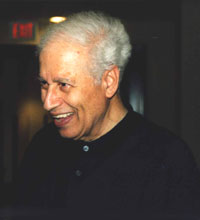
Professor Hanna Batatu (1926-2000)

In 2008, CCAS invited prominent scholars of Iraq to reflect on the lessons of Hanna Batatu’s legendary 1978 work, The Old Social Classes and the Revolutionary Movements of Iraq. The end result of that conference is Uncovering Iraq: Trajectories of Disintegration and Transformation, edited by Middle East Report editor Chris Toensing and CCAS editor Mimi Kirk. The book’s seven chapters explore three aspects of Batatu’s scholarship: his contribution to current understandings of Iraqi history (chs. 1 & 2); his categories of analysis as applied to Iraqi sociopolitical affairs (chs. 3, 4, & 5); and his influence (or lack thereof) on portrayals of Iraq by non-academic producers of knowledge (chs. 6 & 7).

Table of Contents: Continue reading New book on Hanna Batatu and Iraq

When in Lebanon …


Miss World 2010 top model Luna Ramos and Adriana Pena (Miss Venezuela in 2007)

As much as I have been glued to coverage of the protests in Egypt and elsewhere, there are times when a little levity is needed. So why not turn to Lebanon, despite its lack of a functioning government (or maybe because of it)? I suppose the phrase “When in Lebanon…” might be concluded with “do as the Lebanese would want to do, even if it gets harder and harder to do.” While postwar Beirut has lost much of its playful lustre, Lebanon is still (barely as this picture shows) an oasis of Western style in a political arena that has seen a rise in hijab fashion rather than skirt length. The main news may not fully cover stories about uncovering, but at least the Huffington Post (all the news that’s fit to entice, ‘specially if it’s lefty, naughty and oh so nice – at least before it merged with AOL) offers an alternative to Hamas, Hizbullah and Ahmadinijad. I realize it is a slippery slope, but now that the World Cup finals are over, what better way to promote South American beauty queens than wearing bikinis on skis in mountains that used to boast the cedars of Lebanon. If you prefer a video collage with a beat, see the shots on Youtube.

2011 RIFT VALLEY INSTITUTE FIELD COURSES


Dhow near Lamu at sunset

2011 RIFT VALLEY INSTITUTE FIELD COURSES:
SUDAN, HORN OF AFRICA AND GREAT LAKES

SUMMARY

This year’s Rift Valley Institute field courses stress the historical background to political developments in the region: the two-state future in Sudan, the effect of recent and upcoming elections in the Great Lakes, and the continuing challenges to political evolution in the countries of the Horn of Africa. The courses are seminar-based, one-week, high-intensity events to be held between May and July. Faculty includes internationally-known regional specialists, researchers and civil society activists from Sudan, Ethiopia, Somalia, Rwanda, Burundi, and the DRC.

The application deadline for all courses is Monday 28 February. You can apply online here.

Summaries of each course are included below. Prospectuses containing further details are attached to this message and can be downloaded from www.riftvalley.net/courses. (Or write to courses@riftvalley.net.)

DATES AND GENERAL INFORMATION

Dates for this year’s courses are as follows:

The Sudan Course, Wednesday 25 May to Tuesday 31 May, in Rumbek, Southern Sudan.

The Horn of Africa Course, Saturday 4 to Friday 10 June in Lamu, Kenya.

The Great Lakes Course, Saturday 9 July to Friday 15 July in Bujumbura, Burundi.

The courses are intensive, graduate-level, residential programmes. They are designed for local and expatriate peacekeepers, aid workers, diplomats, researchers, campaigners, business people and journalists.Taught by leading regional and international specialists, the courses provide a fast-track introduction to the history, political economy and culture of a country or region, challenging assumptions and offering new perspectives on politics, development and other current issues. Continue reading 2011 RIFT VALLEY INSTITUTE FIELD COURSES

Why Egyptians Should Insist that Citizen Mubarak Stay


by Mohammed Fadel, Palestine Note, February 2, 2011

Following a week of unprecedented anti-regime demonstrations that culminated in the “million-person” march, Hosni Mubarak, Egypt’s president for the last thirty years, finally announced that he would not seek re-election in September. He reiterated his determination, however, to remain in office until the expiry of his term, in part, to assure a smooth transition in power and help effect the reforms demanded by the people. Pointing to his record of military service defending Egypt, as well as the achievements of his regime, he reiterated his determination to live out the rest of his days in Egypt and to die on Egyptian soil with the dignity of an Egyptian citizen.

Predictably, reaction to his speech has been almost uniformly negative, with many Egyptians dumbfounded, and others just enraged, that he still believes he is in a position to negotiate with the Egyptian people over the terms on which he will give up office. I may be the only Egyptian who is willing to take him up on this offer, but only if he is serious about the “citizen” part. Continue reading Why Egyptians Should Insist that Citizen Mubarak Stay

Alwan for Egypt and Tunisia


Egyptian Christians holding hands to protect, if in name, if in symbolism only, their Muslim countrymen during prayer as the protests continue; photo by Nevine Zaki in Cairo

Alwan for the Arts is sponsoring a fundraiser: In Solidarity -The Morning After on
Saturday, February 5, 2011 12:00 pm at Alwan for the Arts (16 Beaver Street
4th Floor, New York, NY 10004 (646) 732 3261

12:00-2:00 Reception
2:00-4:00 Al-Jazeera Live Feed
4:00-5:00 Skype and phone Conversations with Egypt and Tunisia
5:00-5:30 Break
5:30: Live Concert by Arab Performers

Suggested Donations: $25

Over a pier, the first beacon inflamed —
The vanguard of other sea-rangers;
The mariner cried and bared his head;
He sailed with death beside and ahead
In seas, packed with furious dangers.

By our doors Great Victory stays …
But how we’ll glory her advent?
Let women lift higher the children! They blessed
With life mid a thousand thousands deaths —
Thus will be the dearest answered.- Anna Akhmatova Continue reading Alwan for Egypt and Tunisia