All posts by tabsir

Darwinism (but not a woman’s body) exposed in France


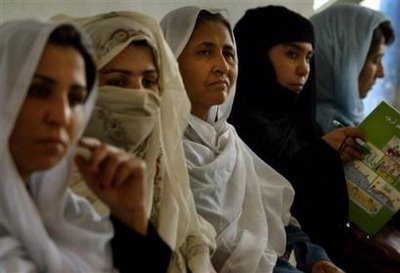
[Webshaykh’s Note: The pseudoscientific nonsense of Harun Yahya has upended the recent burqa controversy. It is one thing to cover one’s body from head to toe, and quite another to cover one’s mind from the consensus of all contemporary science. In a sense arguing that only atheists accept “evolution” is not unlike those who insist that a woman’s body must be totally taken out of view. Both do a disservice to Islam by only encouraging the negative stereotyping so prevalent against Muslims in the West.]

Muslim creationists tour France denouncing Darwin
By Tom Heneghan, Religion Editor, Reuters, May 16, 2011

AUBERVILLIERS, France (Reuters) – Four years after they first frightened France, Muslim creationists are back touring the country preaching against evolution and claiming the Koran predicted many modern scientific discoveries.

Followers of Harun Yahya, a well-financed Turkish publisher of popular Islamic books, held four conferences at Muslim centers in the Paris area at the weekend with more scheduled in six other cities.

At a Muslim junior high school in this north Paris suburb, about 100 pupils — boys seated on the right, girls on the left — listened as two Turks from Harun Yahya’s headquarters in Istanbul denounced evolution as a theory Muslims should shun.

“We didn’t descend from the apes,” lecturer Ali Sadun told the giggling youngsters. Charles Darwin’s theory of evolution, he said, was “the scientific basis to defend atheism.” Continue reading Darwinism (but not a woman’s body) exposed in France →
Making room for Hafiz


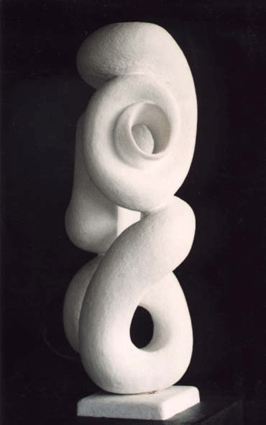
Spiritus, by Sami Rifai, Lebanon, Micheal-Angelo white Marble, 133x40x40 cmby, 1988

Ghazal 98: News From Abroad
by Hafiz, translated by A. Z. Foreman

Last night, the wind brought wind of one I love who’d gone away.
I too shall yield my heart unto the wind, now. Come what may.

At length my love has come to this: I can confide in none
but blazing lightnings every night and dawn winds every day.

Defenseless in your deep curled locks, and out of me, my heart
never once said “Let me recall the body where I lay”

Today, I see my friends were wise to counsel against lovefall.
Elate my counselors’ souls, O Lord, for all the truth they say.

Remembering you, my heart was bloodstruck every time wind blew
open the rosebud’s robe out on the grass in gentle play.

My weakened being leaked out through my fingertips till dawn,
whose wind blew hope of you, and brought the life back to my clay.

Your spirit of good will, Hafiz, will earn you what you yearn for.
When good-willed men cry out, all souls are ransomed to obey.

Rumi over Khamenei

Iran’s spiritual leader isn’t a hardline Islamist, but a mystic poet

By Melody Moezzi, Christian Science Monitor, May 11, 2011

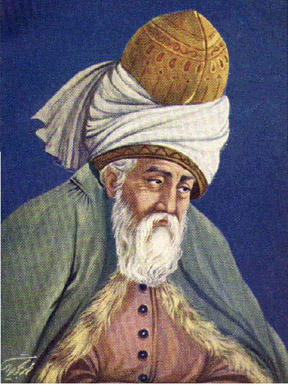
Iran’s officially recognized “spiritual leader” today may be Ayatollah Khamenei, but for hundreds of years before the current establishment of mullahs and ayatollahs, Iranians of all creeds have looked to another spiritual leader: Jalal ad-Din Rumi. While this 13th century Persian Sufi poet is known in much of the West as “Rumi,” he is referred to more affectionately in Iran as “Mowlaana,” or the master.

Among Iranians, he is a spiritual guide and guru whose words hold unmatched moral authority. Over 700 years after his death, it is nearly impossible to spend a day walking around any Iranian city, suburb, or village and not hear his echo. His words live on in everyday parlance: No matter one’s station, religion, or occupation, everyone in Iran knows at least a handful of Rumi’s poems by heart. They are taught in classrooms as an essential part of the basic curriculum, but more than that, they are learned in homes, cafes, bazaars, parks, and houses of worship. No place is beyond this poet’s influence. Continue reading Rumi over Khamenei →

Muslim Women and the Challenge of Authority


Call for Papers: Muslim Women and the Challenge of Authority

A conference to be held at Boston University, March 31, 2012 

“The gender jihad is a struggle to establish gender justice in Muslim thought and praxis. At the simplest level, gender justice is gender mainstreaming – the inclusion of women in all aspects of Muslim practice, performance, policy construction, and in both political and religious leadership” Amina Wadud, Inside the Gender Jihad

Scholarship on female religious authority in Islam dates back at least to the 1970s and has gone through  several important phases. For two decades, most scholarship focused on demonstrating Muslim women’s poor social status and sought to locate the source of women’s oppression within religious doctrine. By the 1990s scholarship had turned to locate an egalitarian impulse within Islam that had been thwarted by the pressures of its patriarchal contexts. Over the next decade, female authored studies of the Qur’an claimed  an unimpeachable basis for female rights by holding up the Qur’anic ideal of equality as a standard by  which to judge social realities. More recently, scholars have sought to complicate the view of Muslim women’s unrelenting oppression. They have worked instead to recover evidence of past and present  female resistance and agency, demonstrating that Muslim women are carving out spheres of interpretive autonomy and successfully negotiating their public and private lives within the constraints of broader social structures.  This conference builds on the foundation of the foregoing work and aims to bring together considerations of religious, social, and interpretive authority across geographical and temporal boundaries. Continue reading Muslim Women and the Challenge of Authority →

Tabsir Redux: Tancred or the New Crusade


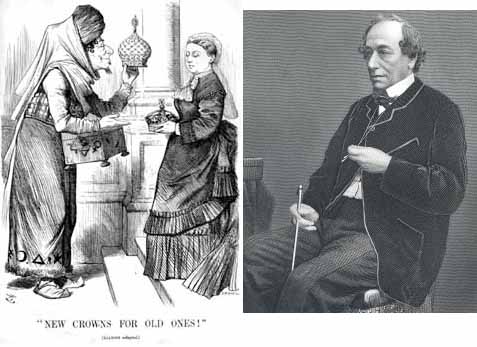
Benjamin Disraeli
(1804-1881) was one of the most colorful and literary of British Prime Ministers in the latter half of the 19th century. Among his novels was one about a young conservative English lord named Tancred who made a spiritual quest to the “Holy Land.” This is his Tancred, of The New Crusade, originally published in 1877. In the novel Tancred is disillusioned with the lack of morality in British politics. Instead of taking his inherited place in high society, he chooses instead to go on a quest for spiritual meaning to the land where his religion began. Disraeli, as novelist, uses the Levant as a backdrop for his psychological portrait of young Tancred, but it is as much about the foibles of the British political scene as it is an “Orientalist” rendering of the cradle of Judaism, Christianity and Islam. The novel is full of intrigue, as adventure stories should be. It has not made canonization as a “great” work, but it is still worth a read (if you can find a copy). Continue reading Tabsir Redux: Tancred or the New Crusade →

What Syrians want …


What do we want?

by Amina A., A Gay Girl in Damascus, May 9, 2011

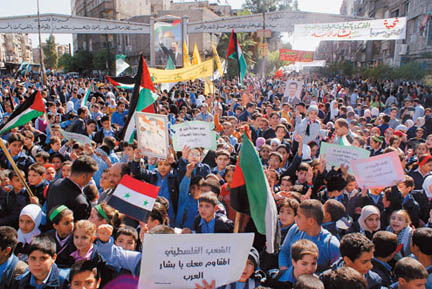
The regime claims that they have no idea what we in the opposition want. I find that hard to believe … haven’t they been watching us, listening to our slogans, reading what we write? Do they have facebook? Seriously, it’s spelled out there: “The solution is simple: Stop shooting at demonstrators, allow peaceful demonstrations, remove all your photos and those of your father, release all political prisoners, allow political pluralism and free elections in six months.”

And for Asad? “You will be the pride of contemporary Syria if you can transform Syria from a dictatorship into a democracy. Syrians would be grateful for that, and it is possible to do”
But maybe they do not get it. Maybe it is too simple. Didn’t Emma herself claim in that awful Vogue article that they practice democracy inside the royal household?
Well maybe more specifics would help …

We want an end to dictatorship. We want free and fair elections. We want freedom. Continue reading What Syrians want … →

Watery Grave, Murky Law


by Leor Halevi, The New York Times, May 7, 2011

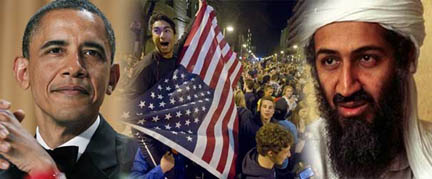
After Osama bin Laden’s corpse was slipped into the North Arabian Sea, the White House’s chief counterterrorism adviser declared that the United States had buried him “in strict conformance with Islamic precepts and practices.” According to a senior military official, the body was washed, shrouded and dispatched with a funeral prayer.

Despite its best efforts, the United States government still has much to learn about the intricacies of Muslim funerary law. Its strictures are more nuanced, and perhaps also more flexible, than it imagined.

According to the Koran, the origins of burial stretch back to the dawn of humanity. Cain, full of remorse after killing his brother, was inspired by a ground-scratching raven to hide the naked corpse in the earth. Islamic law insists on this ritual as the ideal one. Continue reading Watery Grave, Murky Law →

Tabsir Redux: The Book Of Death #28


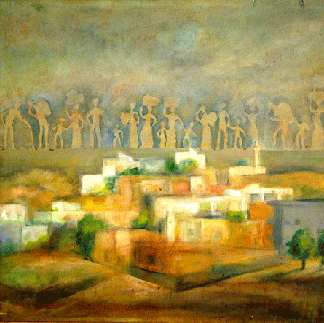
[Illustration: “Refugees” by Palestinian artisit Ibrahim Hijazy, 1996.]

by George El-Hage

Today, the seventh day of the month of Death, I decided to end our relationship. I decided to pack my suitcase and leave. Everything in our spring-like room I left for you: the velvet drapes, old books, notebooks of memories and red roses. All the silk pillows, and the ivory chairs, and the chandelier of carnations, the big bed in the other corner of the room remain for you. I took with me one bleeding suitcase which is my heart. It was so filled with surprise and sorrow that I did not have room for one little pencil. I left empty-handed except for an armful of ashes. I held dejection to my breast, the harvest of a full year of love. I embraced it with anguish and washed its forehead with dew from my eyes. Continue reading Tabsir Redux: The Book Of Death #28 →