Al Jazeera is reporting that King Abdullah of Saudi Arabia has brokered a one-week ceasefire in Yemen and there are rumors that President Salih has been taken to Saudi Arabia for medical treatment. For pictures of the mosque which was hit yesrerday by the rocket, click here.
All posts by tabsir
Yemenia suspends service
Reports this morning indicate that the national airline Yemenia has suspended service due to a pilot’s strike in response to the insecurity in Yemen. Yesterday the main Yemeni office in Sanaa was engulfed in fire. The situation in Yemen continues to worsen each day.
The al-Ahmar Family: Who’s who
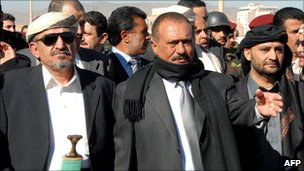
Sadiq al-Ahmar and Ali Abdullah Salih before the shelling started
by Gregory Johnsen, Waq al-Waq, June 3
The news is coming fast and furious out of Sanaa. Not much is known for certain and it will likely be a while before we have all the details, but here is the broad outline:
Today, following Friday Prayers, forces loyal to President Salih opened shelling directed in the general direction of Hamid al-Ahmar’s house in the wealthy Sanaa suburb of Hadda.
Making things more complicated is the fact that Ali Muhsin, the defected general and head of the 1st Armored Division, is Hamid’s next door neighbor. And given how inaccurate Yemeni troops can be at lobbying shells towards a target it is unclear which one of the two enemies of Salih they were aiming at. Maybe both.
Shortly after that two shells hit the mosque inside the presidential palace, reportedly wounding a number of top officials – although the information at this point is mostly contradictory rumors, so I’ll hold off speculating on the identities of the injured.
What I would like to do, instead, is to give a quick run down of the al-Ahmar family, particularly the four eldest. Continue reading The al-Ahmar Family: Who’s who
Ali Abdullah Salih wounded
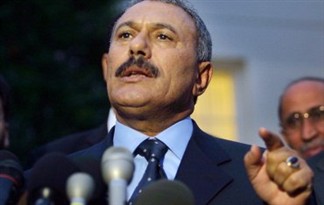
Reports just coming out of Yemen indicate that President Ali Abdullah Salih was wounded today in an attack on his compound in Sanaa. After the attack he was apparently treated for injuries. He later issued an audio statement which can be heard here. Both the Prime Minister and the Speaker of Parliament were said to have been injured. The attack happened with major demonstrations after a funeral for those recently killed in violence. More details are available at the BBC and Al Jazeera. For more details in Arabic, click here.
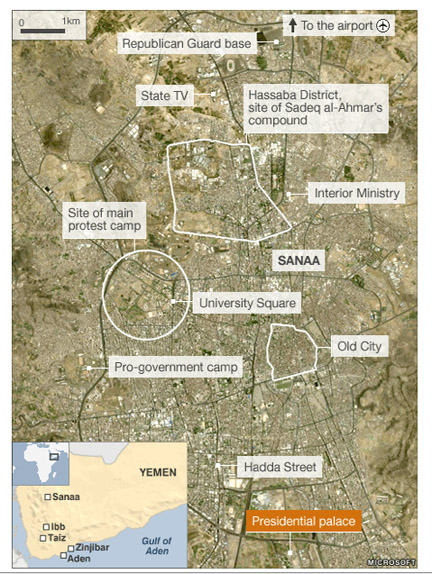
map showing areas of conflict in Sanaa
These ‘virginity tests’ will spark Egypt’s next revolution
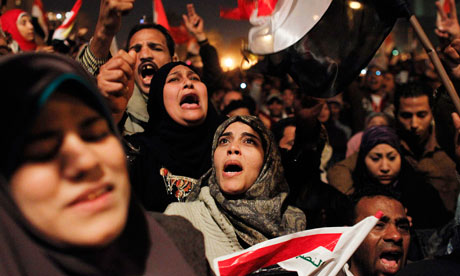
Egyptian women protest in Tahrir Square, Cairo. A general has admitted that women detained during protests in the square a month after Mubarak’s overthrow had been subjected to ‘virginity tests’. Photograph: Tara Todras-Whitehill/AP
by Mona Eltahawy, The Guardian, June 2, 2011
There’s a thin line between sex and politics, and it is nonsense to keep repeating the mantra that Egypt’s revolution “wasn’t about gender”. What revolution worth its salt can be fuelled by demands of freedom and dignity and not have gender nestled in its beating heart – especially in a country replete with misogyny, religious fundamentalism (of both the Islamic and Christian kind) and which for 60 years has chafed under a hybrid of military-police rule?
If the “it wasn’t about gender” mantra is stuck on repeat so that we don’t scare the boys away, then let them remember the state screwed them too, literally – ask political prisoners, and remember the condoms and Viagra found when protesters stormed state security headquarters. Continue reading These ‘virginity tests’ will spark Egypt’s next revolution
With Marechaux in Yemen
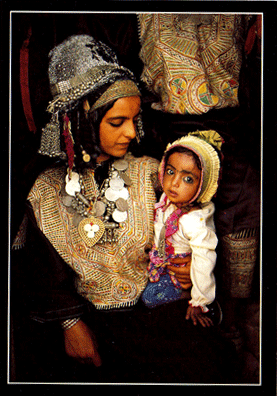
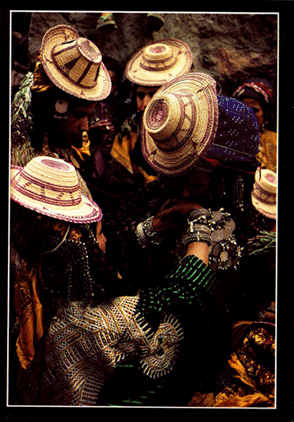
The news out of Yemen continues to be dismal. There are reports of several thousand Hashid tribesmen arriving at the gates of Sanaa. The day-to-day nightmare continues. Such ugliness in such a beautiful country. The scenes of blood-soaked bodies are available on several Arabic websites, but our thoughts must also be with those who live. Here are two pictures from the superb French photographers, Pascal and Marie Maréchaux.
Muslim World Music
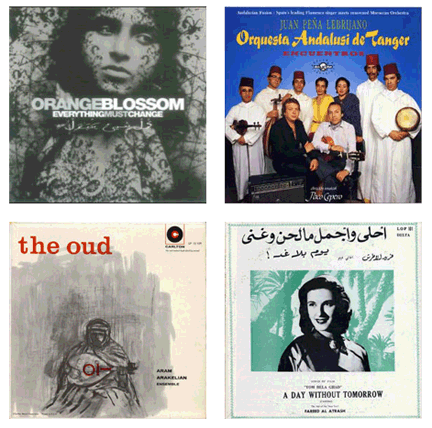
Muslim World Music Day is an online effort to identify and catalog all the recordings of Muslim music in the world. It will remain active as an online resource to make this culturally significant body of work readily available to people around the globe for study and enjoyment.
Burqa: both burlesque and Berlusconiesque
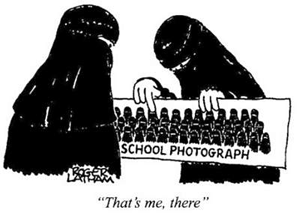
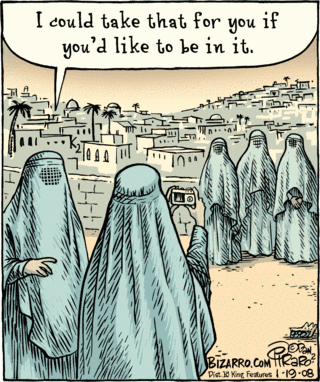
If you type “burqa cartoon” into Google, you will find a wide variety of cartoons making fun of the burqa and the controversy over it. Here are just a few samples…