All posts by tabsir

Tabsir Redux: A Taylor Made Bath in Damascus

The American man of letters Bayard Taylor (1825-1878) was one of many travelers to the Near East of his time. His tour in 1853 resulted in a travel account above the common lot of Holy Land roller overs. Of particular interest is his frank account of a Turkish bath in Damascus.

“The Bath is the ‘peculiar institution’ of the East. Coffee has become colonized in France and America; the Pipe is a cosmopolite, and his blue, joyous breath congeals under the Arctic Circle, or melts languidly into the soft airs of the Polynesian Isles; but the Bath, that sensuous elysium which cradled the dreams of Plato, and the visions of Zoroaster, and the solemn meditations of Mahomet, is only to be found under an Oriental sky. The naked natives of the Torrid Zone are amphibious; they do not bathe, they live in the water. The European and Anglo-American wash themselves and think they have bathed; they shudder under cold showers and perform laborious antics with coarse towels. As for the Hydropathist, the Genius of the Bath, whose dwelling is in Damascus, would be convulsed with scornful laughter, could he behold that aqueous Diogenes sitting in his tub, or stretched out in his wet wrappings, like a sodden mummy, in a catacomb of blankets and feather beds. As the rose in the East has a rarer perfume than in other lands, so does the Bath bestow a superior purification and impart a more profound enjoyment… Continue reading Tabsir Redux: A Taylor Made Bath in Damascus →

Old World Travel 90 years on: #3 An Arab Cafe


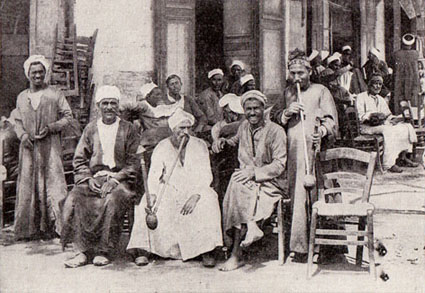
“These cafes are picturesque places where one sees the street life of Cairo at its best. Note the more humble style of Turkish pipe smoked by this Arab without being set on the floor.

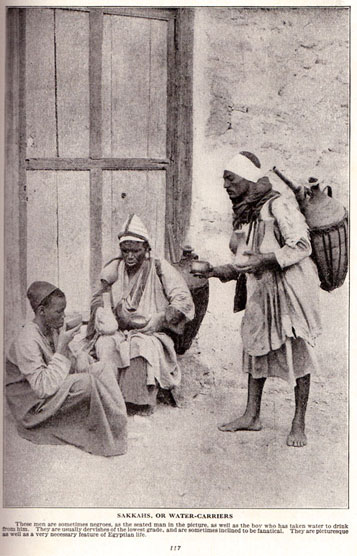
Exactly 90 years ago a four-volume set of encyclopedia-like human interest books was published as The Human Interest Library: Visualized Knowledge by Midland Press in Chicago. In a previous post I commented on its thoroughly “Orientalist” flavor. The section on Egypt covers mainly the archaeological history with only a few brief comments on the then contemporary state of Egypt. On one plate (volume 4, p. 114) there is a photograph of “An Arab Cafe” (shown above) underneath one of the mummy of Sethi the First. There is also a scene of two water carriers (shown below).


“These men are sometimes negroes, as the seated man in the picture, as well as the boy who has taken water to drink from him. They are usually dervishes of the lowest grade, and are sometimes inclined to be fanatical. They are picturesque as well as a very necessary feature of Egyptian life.”

It is not until the last page of the article that “Egypt today” is uncovered. Not surprisingly, the Pharaonic past is for more than prologue here:

Egypt today, as the case with most of these ancient countries is merely the shadow of its former self; its inhabitants lack the energy and popwer which seem to have belonged to their ancestors. The French some years ago constructed the Suez Canal and on a sandbar which was built up from the the dirt out of the canal the modern city of Port Said was located. It is in some ways the most cosmopolitan city in the world being the gateway between the Occident and the Orient. In visiting Egypt the former usually lands at Port Said or Alexandria, then there is a ninety mile trip by rail to the city of Cairo. It seems quite odd to be riding by street car the six miles out from Cairo to the pyramids. It seems such an awe-inspiring thing to connect these ancient monuments with such a modern achievement. It is, however, typical of Egypt today in that ancient and majestic relics are on the one hand in contrast with the impudent signs of modern native life on the other; the little Bedouin children plan and the burros graze over spots the penetration of the sanctity of which once demanded the penalty of death.

Ah, the sentiments of the Occidental tourist in an antique land where the “impudent signs of modern native life” mar the view of ancient relics. Selah.

Dueling Manifestos


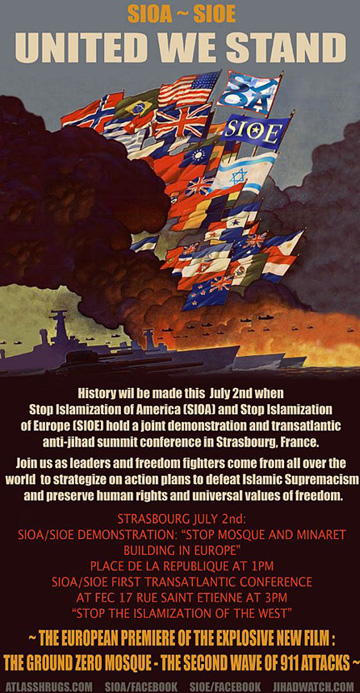
A manifesto for a Muslim-free Europe, an Infidel-free Middle East

by Imran Khan, Al Jazeera, July 24, 2011

I have just finished reading a terrifying document. It’s called 2083: A European declaration of Independence.

It’s full of advice for the budding Christian martyr. Handy tips on how to build bombs and make poisons; on how to use video games to hone your shooting skills.

I came across it on a far right website.

At 1511 pages long it’s a work of extreme prejudice – against Muslims predominantly.

Ultimately, the author wants a Muslim-free Europe.

The author’s name is Andrew Berwick. He datelines the document London 2011. He spent 3 years of his life writing it and clearly believes, with a passion, every single word.

The Norwegian media claim this document is written by Anders Behring Breivik, the suspect behind the brutal attacks in Norway.

At the end of the book are pictures of Breivik himself, dressed as a blond haired and blue eyed hero of the Knights Templar.

Christian crusaders, the book suggests, have returned and are alive, well and living in London.

His last diary entry is dated 22 July 2011. There seems to be little doubt that Berwick is Breivik.

I have covered extremists of all hues for a decade now. What worries me about this document is the parallels that exist between this and another document found in a Manchester, United kingdom flat in 2005.

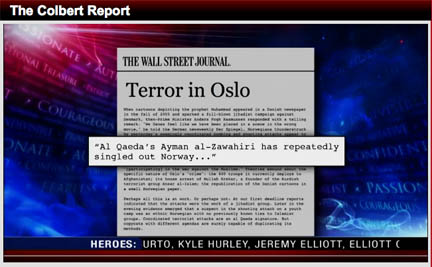
That document was dubbed the ‘al-Qaeda military manual’. It has a similar theme to the 2083 document – An infidel-free Middle East; Handy tips on bomb making, etc. Continue reading Dueling Manifestos →

Yemen in 1911


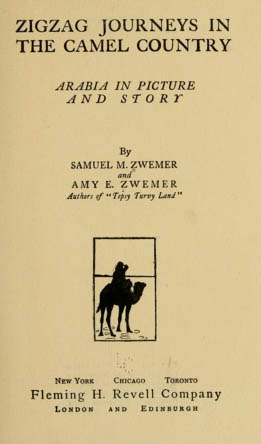
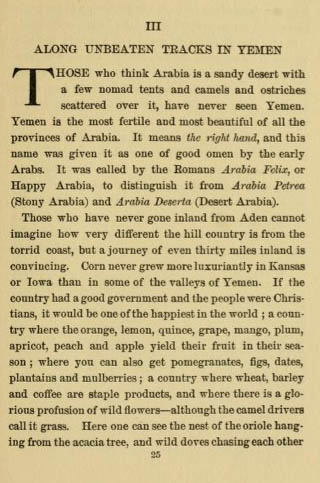
A century ago Yemen was still very much a terra incognita for Europeans and Americans. The British controlled the port of Aden, but few individuals were allowed to travel up through the highlands to visit the realm of the Zaydi imam. One of the few was Samuel Zwemer, an American missionary who spent several years in Yemen and other parts of Arabia. His desire to convert Arabs to Christianity seeps through his description, but the photographs published in his Zigzag Journeys in the Camel Country, written with his daughter Amy, are valuable documentation. I attach below a chapter on a trip he made up to Sanaa a century ago. The photographs will follow in a future post. For an earlier post on Zwemer, click here.


Continue reading Yemen in 1911 →

From Pamela Geller to Anders Behring Breivik


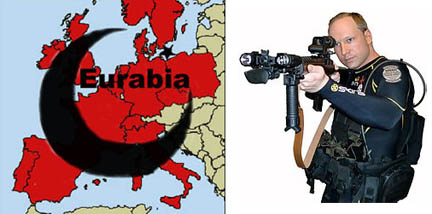
From Pamela Geller to Anders Behring Breivik — how Islamophobia turned deadly in Norway

By Paul Woodward, War in Context, July 23, 2011

When terrorism has a white face it invariably gets marginalized in the popular narrative. The lone wolf, the outsider, the sociopath — in many cases these portraits of misanthropic, isolated individuals who turn to violence are quite accurate.

The Oslo killings, however, should be seen in a different light since there is a wealth of evidence to suggest that the perpetrator of this atrocity, even if it turns out he was acting alone, was very much part of a political movement — a movement whose leading ideologues regularly appear on Fox News and have high public profiles.

Anders Behring Breivik, the 32-year-old Norwegian man widely assumed to be responsible for the mass murder that took place in Oslo yesterday, is being referred to as a Christian fundamentalist in many press reports. Continue reading From Pamela Geller to Anders Behring Breivik →

The Future of Jerusalem: Sacred Space or Open City?


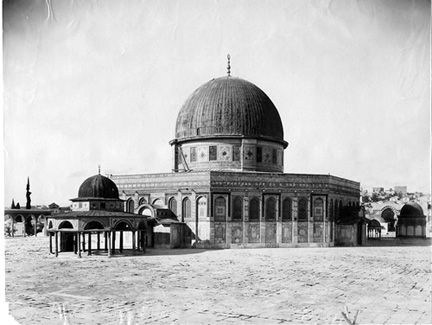
Bonfils, ca. 1870. Negative inscribed: “278. Jerusalem. Mosquee d’Omar.”

by Salim Tamari, Al-Shabaka Policy Brief, July 11, 2011

Overview

Even before the crusades, Jerusalem has had an enchanting hold on people’s imagination. Visitors imposed their aspirations, inner anguish, and dreams on what they saw as an eternal sacred city, whereas the worldly city was at great variance and often in contradiction with these imageries. Indeed, this vision of the city of God has always been in contrast with the living physicality of the city. As revealed in the leaked “Palestine Papers,” this view of the metaphoric Jerusalem has been adopted in the negotiations between Israelis and Palestinians.

In this policy brief, Al-Shabaka policy advisor Salim Tamari examines the historical origins of the sacrilization of Jerusalem and how it has obscured changes on the ground affecting the city’s current state and its future. He argues that proposals for the future of Jerusalem ignore the fact that at its core the conflict over the city is a case of colonial subjugation which must be addressed and resolved equitably.
Jerusalem and the “Palestine Papers”

The “Palestine Papers” revealed that Jerusalem occupied a central position in the implicit agreements between President of the Palestinian Authority (PA) Mahmoud Abbas and Israeli Prime Minister Ehud Olmert.1 They demonstrate that the PA has moved considerably from positions held at and since the 1991 Madrid Peace Conference. Previous Palestinian and Arab positions on Jerusalem were based on UN Security Council Resolution (UNSC) 242, passed after the June 1967 War. The resolution considers East Jerusalem occupied territory and its status no different from that of the West Bank, Gaza Strip, or the Syrian Golan Heights. Moreover, the “land for peace” arrangement that is at the heart of UNSC 242 also applies to occupied East Jerusalem.

From the official Palestinian perspective, the PLO’s approval of the two-state formula in 1988 “resolved” the status of Jerusalem as the capital of two states — Israel and the prospective Palestinian state. Jerusalem at this stage became the subject of a seemingly symmetrical formula of reciprocal political arrangements. West Jerusalem would be the capital of Israel, and East Jerusalem would be the capital of the Palestinian state.

However, with the signing of the Oslo Accords in 1993, Jerusalem was deferred to final status negotiations, along with borders, settlements, and refugees. During the second stage of negotiations, in the late 1990s, the focus shifted to Jerusalem’s “special status.” This status emanated from its sacred character, the presence of the holy basin, and the interests of other parties, including Jordan, the broader Islamic world, the Europeans, and the Vatican. This removed negotiations over Jerusalem from an issue that could be addressed simply within the rubric of UNSC 242, that is, restoring the territories to their status before the war. Continue reading The Future of Jerusalem: Sacred Space or Open City? →
Gems of Arabic Literature #1: Wise Words


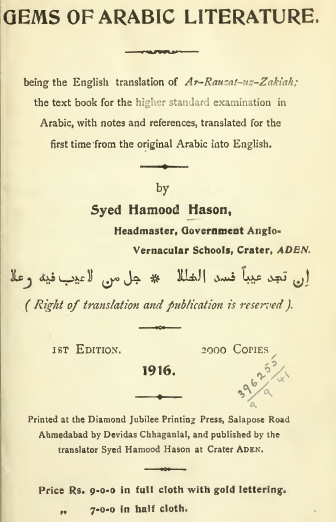
With the virtual flood of book digitalization online quite a few obscure books are now available online either at archive.org or through Google. I recently came across a gem: a translation of a high school Arabic text used in Aden by the British at the start of the 20th century. The title page is shown above. The text has translations into English of classical Arabic texts, including fables, anecdotes and travel accounts. The full text can be downloaded as a pdf here. I include an anecdote about Salah al-Din below. Continue reading Gems of Arabic Literature #1: Wise Words →