All posts by tabsir

Picturing Yemen #1


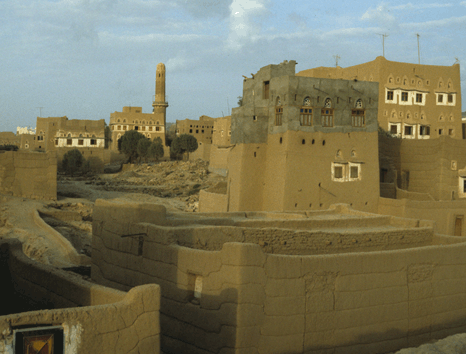
Sa’da, May, 1978; Photo by Daniel Martin Varisco

With this post I start a new theme for Tabsir: my photographs taken in Yemen since my initial fieldwork in 1978 in the springfed irrigated valley of al-Ahjur. As Yemen is currently embroiled in political turmoil, it is easy to lose sight of the marvelous scenery and cultural heritage of this land. It is said that a picture is worth a thousand words, but for most of these pictures few words are needed.

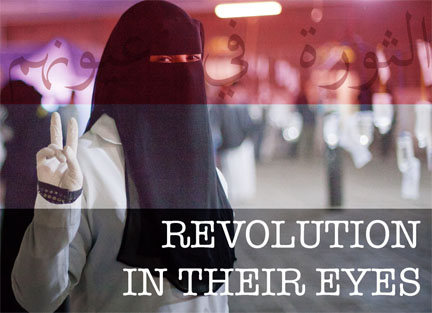
Revolution in Their Eyes: Activist Photography from Yemen’s Revolution

Revolution in Their Eyes: Activist Photography from Yemen’s Revolution

Opening Friday, January 27, 2012, 6.30 to 8.30 pm

The Exhibition

The images in this show are the work of several activist-photographers. They provide a glimpse of the reality—both brutal and beautiful—of daily life inside Change Square, the heart of the revolution in Yemen’s capital, San’a.

The Revolution

Since February 2011, hundreds of thousands of citizens from every walk of life have taken to the streets of Yemen’s cities and towns to demand the ouster of President ‘Ali ‘Abdullah Saleh’s regime, which has ruled the country for 33 years. In spite of violent repression, the revolutionaries have pledged to persevere until Yemen is free.

The Yemen Peace Project

Founded in early 2010, the Yemen Peace Project is an international network of activists and scholars whose mission is to develop and promote peaceful solutions to the challenges faced by the people of Yemen. It provides up-to-date, accurate information about events in Yemen, and is a conduit to Yemeni activists so their voices are heard in the U.S. The Yemen Peace Project has also launched a series of fundraising campaigns to support medical and humanitarian efforts among Yemen’s most vulnerable citizens.

Cosponsored by the Yemen Peace Project

Opening Friday, January 27, 2012, 6.30 to 8.30 pm
Room 6304.24 (MEMEAC space)
Photos will be on view until June 2012

CyberOrient Call for Papers


“The Net Worth of the Arab Spring”

Call for Papers

CyberOrient: Online Journal of the Virtual Middle East
Editor-in-Chief: Daniel Martin Varisco

Guest Editor: Ines Braune

Submission deadline: 31 May 2012

Aim


As the first anniversary of the “Arab Spring” nears, several long-standing dictators have been toppled, protests still continue in other countries and new governments are being formed. Arguably, throughout this last year digital media have played an important, if not defining, role through Twitter, Facebook, blogs and the extensive news coverage in cyberspace. This is a call for papers across disciplines aiming for critical and evidence-based evaluation of the use of social media in the Arab Spring, the coverage of the Arab Spring in cyberspace and beyond, and the remediation and appropriation between social media and traditional media outlets, including satellite TVs and the press. First-person and ethnographic accounts are welcomed, but CyberOrient welcomes contributions from any field.


About CyberOrient


CyberOrient (http://www.cyberorient.net/) is a peer-reviewed journal published by the Middle East Section of the American Anthropological Association in collaboration with the Faculty of Arts of Charles University in Prague. The aim of the journal is to provide research and theoretical considerations on the representation of Islam and the Middle East, the very areas that used to be styled as an “Orient”, in cyberspace, as well as the impact of the internet and new media in Muslim and Middle Eastern contexts. The articles will be published online with free access in early autumn, 2012.

Submission

Articles should be submitted directly to Ines Braune (ines.braune@uni-marburg.de) and Vit Sisler (vsisler@gmail.com).

Lechery, Immodesty and the Talmud


Lechery, Immodesty and the Talmud
By DOV LINZER, The New York Times, January 20, 2012

IS it possible for a religious demand for modesty to be about anything other than men controlling women’s bodies? From recent events in Israel, it would certainly seem that it is not.

Last month, an innocent, modestly dressed 8-year-old girl, Naama Margolese, living in Beit Shemesh, described being spat on and vilified by religious extremists — all men — who believed that she did not dress modestly enough while walking past them to the religious school she attends. And more and more, public buses in Israel are enforcing gender segregation imposed by ultra-Orthodox riders in and near their neighborhoods. Woe to the girl or woman who refuses to move to the back of the bus.

This is part of a larger battle being waged in Israel between the ultra-Orthodox and the rest of Israeli society over women’s place in society, over their very right to have a visible presence and to participate in the public sphere.

What is behind these deeply disturbing events? We are told that they arise from a religious concern about modesty, that women must be covered and sequestered so that men do not have improper sexual thoughts. It seems, then, that a religious tenet that begins with men’s sexual thoughts ends with men controlling women’s bodies.

This is not a problem unique to Judaism. But the Talmud, the basis for Jewish law, offers a perhaps surprising answer: It places the responsibility for controlling men’s licentious thoughts about women squarely on the men.

Put more plainly, the Talmud says: It’s your problem, sir; not hers. Continue reading Lechery, Immodesty and the Talmud